How to Use an Appliance Dolly: Move Heavy Loads Safely
Moving heavy appliances can feel daunting—you’re worried about damaging floors or risking injury. Using an appliance dolly correctly makes the job safer and easier, but knowing how to prepare and handle it is key.
By understanding the right steps, from inspecting the dolly to maneuvering through tight spots, you’ll be able to move even large loads smoothly.
Keep reading to learn the essential techniques for safe, efficient appliance moving.
Why a Hand Truck Isn’t Enough for Appliances
A standard two-wheel hand truck isn’t sufficient for moving appliances because it lacks the stability needed for their weight and shape. Appliances like refrigerators or washers have a high center of gravity that shifts with every tilt, making them prone to tipping over. Without built-in straps, there’s no secure way to hold the item in place during transport, increasing the risk of toppling. The basic frame also offers poor support for tall, top-heavy shapes, which can make balancing difficult. Additionally, these hand trucks often block your view from around the appliance, reducing control and increasing the chance of accidents. Using the wrong tool for the job can lead to tip-overs, damage to your appliances or property, and personal injury. For safe, efficient movement of appliances, specialized equipment designed to provide stability and security is essential, such as a top beach wagon which offers a lower center of gravity and better load security for heavy, awkward items. A proper attachment system, including secure straps and locking pins, is critical to prevent the load from shifting during transport. For example, a yard cart designed for lawn mowers similarly prioritizes a low, stable platform to handle heavy, unbalanced loads without tipping.
Prep the Route and Protect Your Floors First
To prep the route and protect your floors first, start by mapping the entire path from start to finish. Measure the clearance of all doorways, hall pinch points, and stair turns, then compare these measurements to your appliance’s dimensions to identify tight spots that might cause issues. Sweep the route thoroughly to remove grit and debris that could scuff or scratch your floors during transport. A similar principle applies when installing a truck bed extender to ensure a secure fit and prevent load shifting during transit.
Next, lay down protective materials such as hardboard or Ram Board along the entire route—not just at the starting point. Overlap the sheets and tape the seams securely to prevent shifting as you roll the appliance over them. Open all doors fully, and remove rugs, cords, or furniture that could narrow the pathway. For heavy items, consider using a garden cart with seat to aid in managing loads during transport. Ensuring the path is dry and secure before moving your appliance will help prevent accidents and floor damage. Choosing a model with padded stair rollers can further reduce the risk of gouging your floors when navigating steps.
How to Tilt and Slide the Dolly Without Back Strain
To tilt and slide the dolly without back strain, position it at the appliance’s side, not the front or back. This reduces the need for awkward reaching or twisting. Before starting, align the lift plate with the base and ensure the dolly is square and flush against the appliance.
Tilt the appliance just enough to slide the plate underneath—avoid lifting it high. Use a proper grip with palms facing inward, keep your feet shoulder-width apart, and maintain a straight back by bending at your knees and hips. Engage your core before shifting the load. Securing the load with a cargo net for truck box can prevent shifting during transport.
Slide the dolly smoothly until the plate is fully underneath the appliance, centering it for stability. Then, tilt the dolly back gradually, allowing the weight to settle on the wheels. Keep all movements slow and controlled, pivot with your feet instead of twisting your torso, and take short, steady steps to reduce strain. Using a heavy-duty wheelbarrow for similar tasks can also help manage loads with less effort. Building a DIY bike kayak trailer can save significant costs by repurposing similar tilting mechanics for heavy loads.
Strap the Appliance Dolly Tight for a Safe Move
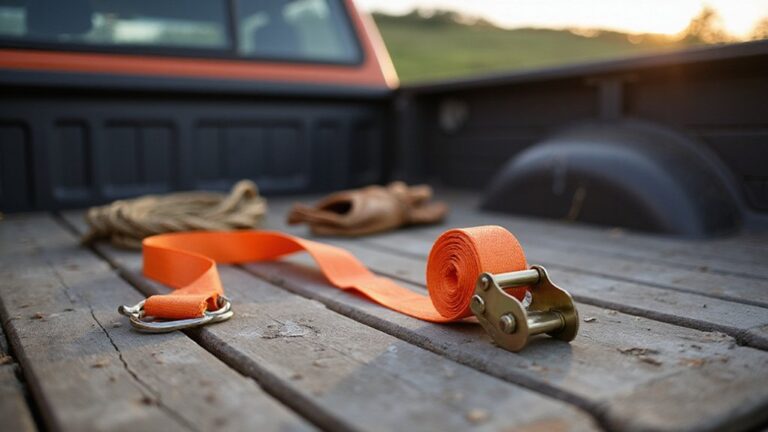
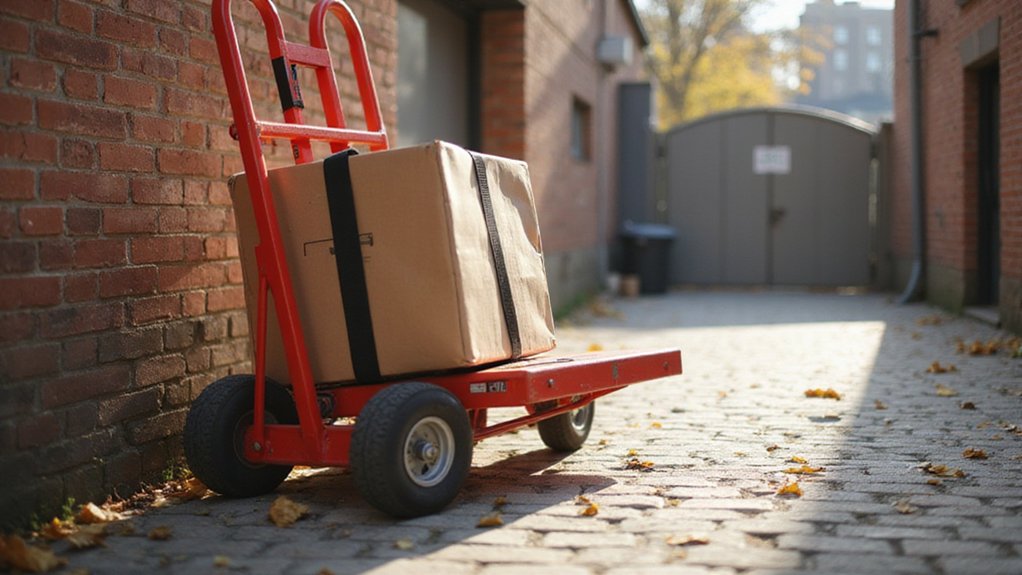
To strap the appliance securely on the dolly, position the strap near the center of the load for balanced control. Ensure the strap runs flat and untwisted through the dolly’s slot or frame; twists weaken tension and control. Always inspect the ratchet mechanism for proper release and engagement before use to prevent sudden slipping during tightening. Keep the strap on sturdy surfaces like the appliance’s base or sides, avoiding handles or fragile trims to prevent damage. After threading, remove all slack and tighten the ratchet or crank until the load feels firmly secured. The strap should be snug enough to prevent rocking or sliding but not so tight it causes damage. Use built-in ratcheting hardware for better tension holding compared to bungee cords or rope. For further guidance, store extra straps in a tidy manner using organized storage methods to keep them tangle-free and accessible. Before moving, gently rock the appliance to check for shifts, and re-tighten after starting to roll over bumps. Only release the strap once the appliance has reached its destination and is fully positioned. Achieving a secure hold also benefits from understanding hitch mounting alignment to ensure the straps remain properly centered during the move.
Going Down Stairs? Use a Spotter and Slow Steps
When moving an appliance dolly down stairs, always use a spotter and take slow, controlled steps. Clear roles are essential: one person controls the dolly, another stabilizes, and a third watches the route. The lower-side helper should back down first, managing the pace and stopping if necessary. The upper helper keeps the load centered and away from walls to prevent scraping or tipping. Use clear verbal cues like “step” to synchronize movement and “stop” if sudden adjustments are needed. For additional safety, consider a wagon with seat that offers stable transport for lighter loads. Never rush this process. Move one step at a time, making sure each tread is fully planted before advancing to the next. This practice helps maintain balance and reduces sudden load shifts. Before starting, remove any obstacles from the stairs so you can react quickly and avoid unexpected hazards. Do not attempt to do this alone—solo effort greatly increases the risk of losing control or tipping over. Keep unauthorized people away from the stair zone, and wear sturdy, non-slip footwear for added safety. The evolution of ratchet straps has greatly improved the security of loads on dollies by providing a reliable method to cinch items tightly in place. Following these steps makes stair descents safer, smoother, and more controlled. For moving long items, you can adapt a simple DIY canoe cart design to create a wheeled framework that keeps loads balanced on stairs.