How to Strap a Kayak on a Roof Rack: Safe Tie-Down Guide
Strapping a kayak onto your roof rack might seem straightforward, but doing it safely is key to preventing damage or accidents.
Properly securing your kayak involves more than just slapping on some straps — you need to position it correctly and choose the right tie-downs to keep it stable.
By following a few simple steps, you can make sure your kayak stays secure all the way to your destination.
The full process reveals how to do it right from start to finish.
Center Your Kayak on the Roof Rack First
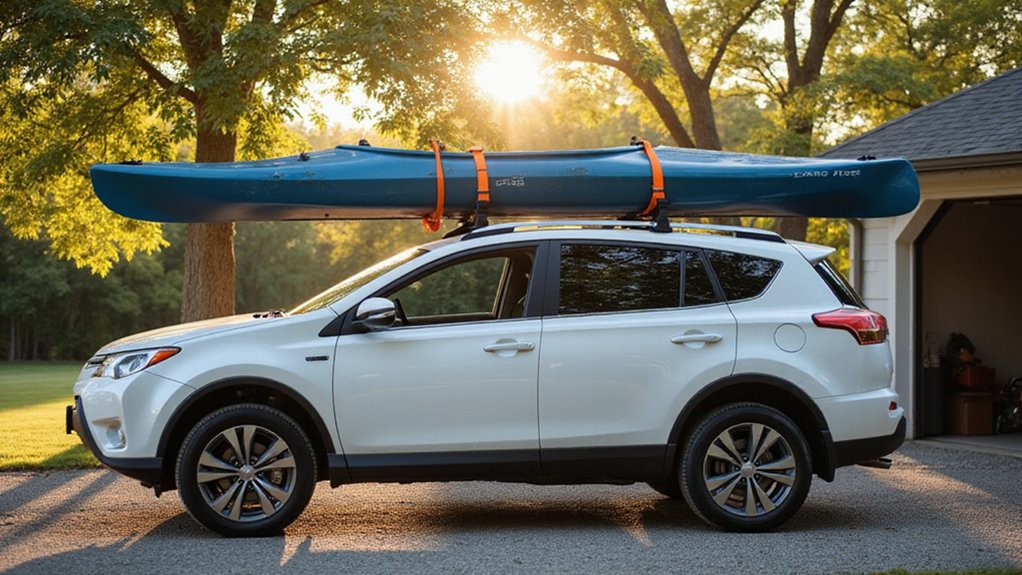
Center your kayak on the roof rack first by aligning it parallel to your vehicle and ensuring its centerline matches the vehicle’s. Distribute the weight evenly across the crossbars, avoiding any bias toward the front or rear to maintain balance. Keep the kayak straight from side to side so the hull sits square, which prevents uneven pressure on the straps. Minimize overhang at either end of the vehicle to reduce wind resistance during transit. These packing steps apply regardless of your roof rack type, whether basic bars or specialized cradles. Before tightening, perform a shake test to confirm the kayak’s position is secure and balanced, similar to how you would perform a final safety check after attaching a bicycle trailer. Once properly centered, proceed with fully strapping down the kayak to ensure safe transportation. For additional stability during transport, consider selecting the best cart tires to support your kayak when it is not on the roof rack. Using a simple DIY drywall cart can help you move a heavy kayak from storage to the vehicle with less strain.
Best Straps for a Kayak on a Roof Rack (No Ratchets)
Cam buckle straps are the best choice for securing your kayak on a roof rack without risking hull damage. They allow you to manually tighten the strap with just your hands, providing enough tension to keep the kayak stable without crushing its hull. Compared to ratchet straps, cam buckles are quicker to use, simpler to adjust, and less likely to cause scratches on your kayak’s surface. Similar to installing a truck bed extender, final safety checks after tightening ensure all straps are secure and free of slack. Unlike ratchets, cam straps apply a controlled, gentle tension that prevents over-tightening and hull deformation. When moving a kayak up or down stairs, using a dolly with stair climbers can help protect both your back and the boat from damage.
Choose straps made from 1-inch polyester webbing that’s resistant to UV rays and corrosion. This material endures exposure to sun, rain, and road spray, making it reliable for long-term use. Opt for straps around 12 to 16 feet in length, with a working load limit between 300 and 600 pounds. Most straps are rated to break above 1,300 pounds, ensuring a safety margin. Features like padded buckle housings and tail management help prevent flapping during transit. Always inspect your straps for fraying or UV damage before each trip, and pair them with bow and stern tie-downs to enhance highway stability.
How to Thread Straps Without Slipping Off
To prevent straps from slipping off when securing your kayak, you need to thread them around the crossbar instead of just over the kayak. Loop each strap around the bar and between the towers, creating friction that resists sliding during travel. This wrapping reduces lateral shifting that a draped-only strap cannot prevent. Ensure the strap lies flat without twists, as twists weaken its holding ability. For cam buckle straps, first shorten the end, then thread the tail through the open cam and pull tight before locking. This method guarantees a secure connection and keeps the hardware accessible. Run the strap down and back up around the bar at least once; this additional wrap further resists side-to-side movement. The straps feature sturdy metal cam buckles for durability and easy fastening. Tighten the strap enough to secure the kayak firmly without deforming the hull. Always double-check the strap path and tension before driving to ensure everything stays in place.
When to Add Bow and Stern Tie-Downs (Yes, Do It)
Adding bow and stern tie-downs is essential after you have secured your kayak with crossbar straps. These additional lines primarily serve as redundancy, especially when traveling on highways where gusts of wind can cause your kayak to shift or slide. To prevent your kayak from end-over-end, attach the front line to a tow hook or hood loop and the rear to a hitch point, running each at roughly 45 degrees. Keep the lines short and taut for maximum effectiveness. If your vehicle’s rack feels light, flexible, or older, do not omit this step. Tie-downs dramatically increase safety by preventing your kayak from becoming a loose projectile during sudden stops or passing traffic. Use them every time your conditions are uncertain or extra exposed, as they provide critical protection beyond crossbar straps alone. For reliable strap tension, consider pairing your setup with top foam blocks that offer stability and grip for the hull. For example, when comparing top collapsible folding wagons for easy transportation, you apply similar logic by ensuring secure straps prevent cargo shifts during travel. A high-quality cam buckle strap can maintain tension more reliably than a simple ratchet, reducing the risk of loosening during long highway drives.
Tightening Straps: Stop Before You Crush the Hull
Simply put, you should tighten the crossbar straps just enough so that your kayak doesn’t shift when you push it sideways. Hand-tighten the cam-buckle straps until they are snug—no need to force them. If the kayak stays still without any movement, that’s an indicator of proper tension. Avoid overtightening, which can lead to hull damage, dents, or “oil canning” in plastic boats. Ratchet straps might seem secure, but applying excessive pressure risks cracking the hull or causing permanent deformation. Your goal is controlled pressure that prevents movement without squeezing the boat too tightly. You may notice a slight hull give, but visible dents or indentations indicate you’re tightening too much. Proper tension not only protects your kayak’s structural integrity but also preserves equipment by avoiding stress cracks. Tighten straps evenly and check that contact points are flat. Stop tightening as soon as you feel resistance beyond a firm pull—security doesn’t mean crushing your boat. For lighter items stored in the kitchen, selecting a cart with adjustable shelf heights can similarly prevent damage from uneven pressure. Additionally, ensure your mounting hardware is clean to avoid any slipping or misalignment during the process. For a reliable hold without damaging your kayak, consider top cam straps that allow precise tension control.
Final Safety Checks Before You Drive
Before you hit the road, perform a thorough safety check of your kayak setup. Start by giving the kayak a firm shake; it should move with your vehicle without any shifting. If there’s front-to-back or side-to-side movement, re-seat and resecure the straps until the kayak feels solidly attached. A furniture dolly can be useful for moving a heavy kayak from storage to your vehicle.
Next, double-check every strap. Make sure the buckles are positioned so they don’t block roof access or doors. Ensure the bow and stern lines are attached at both ends and that no strap ends are loose or flapping. Look for signs of wear, rubbing, or twisting that could compromise the straps’ integrity. Confirm the hull sits centered and level, without support that constricts or distorts its shape. Consider the load handling capacity of your roof rack to ensure it supports the kayak’s weight without exceeding manufacturer limits. Inspect all straps for frayed edges or cuts that could lead to failure during transit.
Also, verify that all windows, mirrors, and lights are unobstructed to maintain visibility and safety. Make sure gear is securely stowed, with nothing extend past the rear of your vehicle in a way that could come loose or cause danger.
Finally, consider weather conditions. Wet or windy roads require tightening straps further and paying closer attention to the security of your load. Plan to perform a recheck after driving for 10 to 15 minutes, especially before highway speeds, to ensure everything remains tight and secure.