DIY Lumber Cart: Build a Heavy-Duty Wood Hauler
If you’re tired of struggling with flimsy carts that can’t handle heavy or long loads of lumber, building a durable, heavy-duty wood hauler might be just what you need.
The right design can support 16-foot boards and sheet goods while keeping everything stable and manageable.
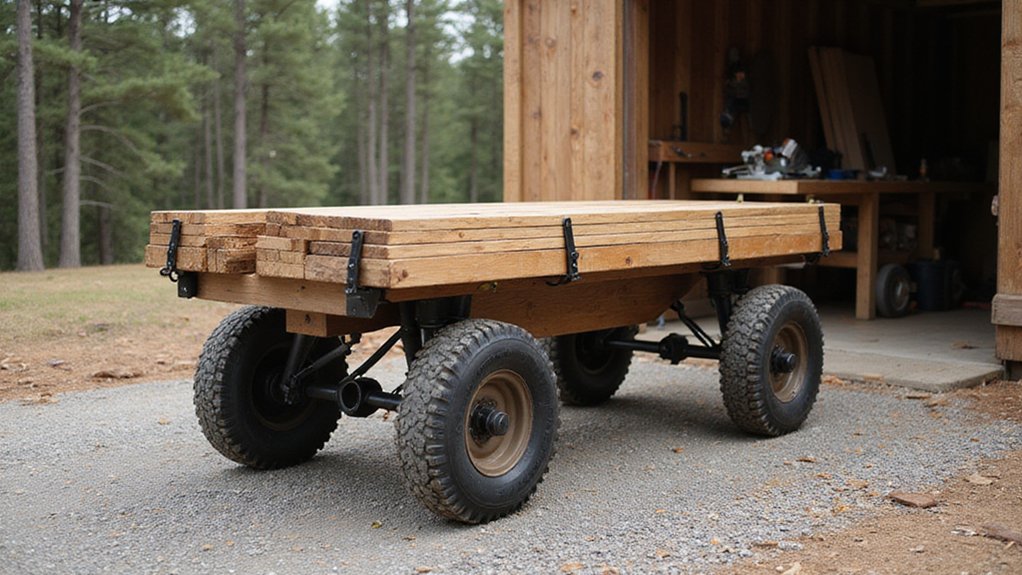
This guide covers how to create a sturdy flatbed with reinforced framing, impact-resistant wheels, and internal dividers.
Keep reading to see how to build a cart that outperforms any utility wagon for your woodworking projects.
Pick the Right Dimensions and Materials for Your Lumber Cart
Selecting the right dimensions and materials for your lumber cart depends on the space you have and the size of lumber you plan to store. Typical carts measure around 5 feet long and 2 to 3 feet wide, providing enough room for standard stock while fitting into most shop layouts. Ensure the length accommodates your longest pieces, and leave aisle clearance for easy rolling and turning. For those moving particularly heavy loads, a heavy-duty dolly can offer a similar capacity for transporting stacked materials. Many top picks in the market support over 1,000 pounds, making them ideal for workshop transfers.
Cart height usually ranges between 44 and 55-1/2 inches, but wheel size plays a significant role. Smaller casters, around 3 inches in diameter, produce a deck height close to 9-3/4 inches, making heavy boards easier to lift. Larger wheels, such as 5-inch casters, support heavier loads up to approximately 1,000 pounds and help the cart glide smoothly over uneven surfaces. For securing stacked lumber during transport, consider using top cam straps for additional stability. Locking casters are recommended to keep the cart stable during loading and unloading. Always match your wheel size to the weight of your lumber to ensure safety and ease of use.
Build a Heavy-Duty Frame and Deck for Maximum Strength
Use 3/4-inch exterior-grade plywood for the deck, attaching it securely to every joist with screws spaced six inches apart. Drill pilot holes beforehand to prevent the plywood from splitting during installation. Adding a layer of strong construction adhesive between the plywood and the joists can significantly increase stiffness and reduce flexing. If you opt for a steel frame, choose materials that are powder-coated or welded for enhanced corrosion resistance. These finish coatings help protect against rust and wear over time. A well-designed, tightly fastened deck with a sturdy frame ensures even load distribution, preventing flexing or failure under heavy use. For example, using a smooth underside on the cart deck can mimic the low-friction principles found in top furniture sliders for carpet, making the loaded cart easier to push on soft flooring. For carrying a heavy cooler, consider adding cross-bracing to the frame to mimic the stability found in top cooler cart designs. Always perform a final safety check on all fasteners and welds before use, just as you would when securing a truck bed extender to prevent load shifts.
Choose Casters for Heavy Loads and Rough Floors
To haul heavy loads over rough floors, select casters that are appropriately sized for the full load plus a safety margin. A good rule is to size the caster wheels so they can handle at least three times the total weight—divide your total load by three to account for uneven contact with the floor. Larger diameter wheels are essential because they can clear debris, seams, and obstacles more easily, reducing the risk of getting stuck or damaged. Tire tread patterns are another key factor to consider, as they directly influence grip and stability on various surfaces.
For side loads and impact resistance, kingpinless swivel casters are preferable—they offer greater durability and stability under heavy use. When working on rough concrete or similar uneven surfaces, softer wheels made of polyurethane or rubber absorb shocks and vibrations better than steel wheels, protecting both your load and your flooring. Always remember to attach brakes to prevent accidental movement during loading or unloading, ensuring safety. Regular maintenance like checking for debris buildup and inspecting tread wear help keep the wheels rolling smoothly and extend their lifespan. Matching the material of your wheels to your floor surface ensures longer durability without causing damage to your workspace. For sandy or soft terrain, consider balloon wheels that provide a wider footprint and lower ground pressure, which are specifically designed for flotation and maneuverability on unstable surfaces. When transporting your lumber, a rear rack bike bag can also be useful for carrying smaller tools and supplies.
Add Custom Storage With Dividers, Shelves, and Side Rails
Adding custom storage with dividers, shelves, and side rails helps keep your lumber organized and secure. Start by creating vertical compartments using plywood dividers, attaching them with pocket-hole screws for a strong, concealed connection. These compartments allow you to separate boards by length or thickness, stabilizing narrow stock during transportation.
Next, install multiple shelves made from 3/4-inch plywood to establish storage tiers. Secure each shelf with glue and finish nails or support them with cleats for added strength. Position heavier lumber on the lower shelves and shorter offcuts above to balance weight and improve accessibility.
Finally, attach side rails approximately 30 inches above the base. These rails prevent lumber from slipping off and reinforce the structure. Mount them inside the frame using pocket-hole screws and glue to ensure rigidity. For secure transport, consider using a top cargo carrier hitch to easily haul your cart behind a vehicle. Incorporating these features transforms your cart into a highly organized, durable transportation and storage solution.
Why a Purpose-Built Lumber Cart Beats a Utility Wagon
A purpose-built lumber cart outperforms a utility wagon in nearly every way when it comes to hauling wood and building materials. Its flatbed design is tailored to match sheet goods, making stacking and loading plywood or large panels straightforward. The steel upright frame keeps long boards secure, preventing shifting or falling during transport, unlike traditional wagons with deeper tubs that make controlling load movement difficult. The broad wheelbase and the option for a six-wheel configuration significantly enhance stability, especially under heavy, tall stacks—something a general-purpose wagon struggles with due to its compromised frame and narrower stance. For kitchens, a utility cart with a similar heavy-duty flatbed design is the best utility cart for hauling large supplies efficiently. Choosing a dedicated cart also allows you to assess key features like the top options for wheel size and material capacity, as reviewed in comparisons of rolling cooler carts. For heavy loads, the best models feature collapsible folding wagons that balance portability with rigid support.
Loading and unloading become much easier with a purpose-built cart—its layout is specifically engineered to handle building materials efficiently. You avoid the compromises that come with versatility features like removable panels, which often weaken load control. Though other materials might seem cheaper initially, the balanced weight distribution and optimized geometry of a purpose-built cart ensure safer, faster, and more reliable transport. Don’t be swayed by aesthetics; a dedicated lumber cart isn’t just visually appealing—it’s designed for performance, security, and efficiency on the job site.