
DIY Beach Cart Wheels: Build Balloon Tires for Sand
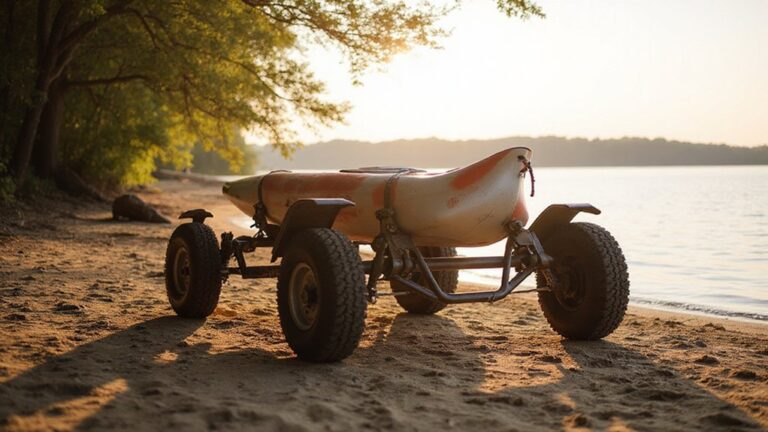
If you’ve ever struggled with your beach cart sinking into soft sand, you know it can be frustrating. The secret is building balloon tires that run at just 2 to 5 PSI.
These low-pressure tires spread out over the sand, keeping your cart floating instead of sinking.
With a few simple materials and some basic steps, you can make tires that perform better on the beach. The full setup details follow below.
Why Do Standard Wheels Sink in Soft Sand (And Balloon Tires Don’t)?
Balloon tires stay afloat in soft sand because they run at just a few PSI, which vastly increases the contact patch. This wide footprint distributes your load across many sand grains, preventing the tire from digging in. Instead of forming a trench, the tire slightly flattens and floats over the surface, making it easier to roll. This surface-level contact reduces sinking and helps you move more effortlessly across loose, dry sand. For everyday use on pavement or packed trails, however, standard wheels paired with a collapsible folding wagon offer superior rolling efficiency and durability. Many beachgoers find that top beach carts with wheels combine these balloon-style tires with a sturdy frame for optimal sand travel. Just as a wide tire footprint prevents sinking, a secure trailer hitch pin prevents your load from shifting when towing to the beach.
Step-By-Step: Convert Your Cart Wheels With Balloon Tire Inner Tubes
First, remove the wheel from the cart and fully deflate the tire by releasing all air from the valve core. Then, carefully separate one tire bead from the rim—only one side needs to come off to install the tube. Check that the rim and tire are compatible by inspecting the valve hole location; ensure the valve stem passes through cleanly and sits straight once mounted. Partially inflate the tube so it takes shape without fully expanding. Gently feed the tube evenly around the inside of the tire, working by hand to prevent twists or pinching. Push the valve stem fully into the hole before reseating the bead. This process incorporates self-sealing inner tubes suitable for 18-20 inch wheels, which can be cut and adapted to fit your custom-sized rim assembly. Unlike heavy loads that work best with a push vs. pull wagon design, these balloon tubes provide better flotation on soft sand without sinking the load. Start re-seating the bead at the valve and work your way around, gradually inflating the tire. Keep the pressure low if you plan to use the wheel in soft conditions like sand, allowing the wheel to sag and spread the load. Stop once the tire holds the cart with a gentle flex, then inspect for any pinching or leaks before testing the setup. For a durable and cost-effective build, you can reinforce the tube’s valve area with a simple rubber patch, avoiding any need for professional tools.
Tools & Materials Needed for Your DIY Balloon Tire Build
To convert your cart wheels for DIY balloon tires, you’ll need specific parts and tools. A low-pressure, self-sealing inner tube is essential to handle beach hazards and rough terrain. Your rim can be made from plywood discs with foam insulation, which are easy DIY substitutes, or you can opt for polypropylene or aluminum rims available in kits. PVC pipe serves as internal spacers to prevent compression on the tube.
Secure the assembly with steel or galvanized carriage bolts, washers, and lock nuts. For the axle, choose steel or aluminum options and incorporate nylon spacers along with quick-release locking clips for easy adjustments. To control tire pressure effectively, use a pump equipped with valve stem extensions. Shaping your plywood or foam cores requires power tools such as belt sanders, drills, and saws. Standard wrenches are needed to tighten bolts and nuts, and measuring tools ensure accurate bolt spacing and spacer lengths, preventing misalignment. When sourcing materials, consider how a top furniture dolly uses similar heavy-duty hardware for stability during moves. Pay attention to mounting alignment tips when securing your DIY wheels to the carrier to avoid wobble and ensure stability on soft sand. For additional inspiration, look at how camping trailers designed for bikers integrate durable, low-maintenance components to withstand rugged terrain.
Pick the Right Balloon Tire Size and Hub Fit for Your Cart
To pick the right balloon tire size and hub fit for your cart, start by considering your typical load and terrain. For soft sand, 12 to 13 inch diameter tires with 4 to 7 inch widths are ideal, providing good flotation without adding unnecessary weight. If you’re hauling heavier loads or navigating challenging terrains, larger sizes like 16 or 21 inches offer better support and movement. For example, a set like the Bonnlo 16″ Balloon Wheels supports a load capacity of 176 lbs per wheel. Reviewing comparisons of top options can help you balance weight rating with flotation needs. For a truly portable build, consider adapting a welding-free design from a swing-away hitch carrier to simplify your cart’s assembly.
Tire inflation is crucial; some TPU tires expand from 11.8 to 13 inches when inflated, which improves flotation and stability on loose surfaces. Accurate hub measurements are essential: measure your axle diameter and hub bore precisely. Common matches include a 22 mm axle with a 23 mm bore, or a 1-inch axle with a 26 mm hub. When selecting tires, look for models that offer consistent performance across different terrains, similar to how top bungee cords maintain reliable tension under load.
Hub width also matters—most carts require between 6.25 and 7.375 inches. Confirm that your frame has enough clearance for wider tires, and use axle extenders if your hub width exceeds your axle setup. Always verify all specifications before purchase to ensure smooth rolling performance and avoid fitment issues.
How Low Should You Go for Maximum Flotation?
To achieve maximum flotation on soft sand, target a pressure between 2 and 5 PSI. This range allows your tire to deform enough to create a wide, flat footprint, distributing your cart’s weight over a larger contact area. Keeping pressure within this band prevents the tire from collapsing or bulging excessively, which would compromise stability and cause the ride to feel mushy. Start near 4 PSI and gradually decrease, checking the tire’s shape after each quarter-turn of the valve. If the rim sinks into the sand or the entire cart wobbles when rolling, you’ve gone too low. Remember, foam padding inside the tire isn’t involved here; air volume alone controls flotation. For a cooler cart, choosing a heavy-duty cart ensures the wheels can handle the load without stressing the frame. A hand truck’s weight distribution relies on low tire pressure to prevent sinking in soft terrain. If the tube is punctured, replacing the tube requires the same basic tools used for a wheelbarrow tire.
Balloon Tire Load Limits and Pulling Ease After the Upgrade
Balloon tires have specific load limits that you need to follow to ensure safe and effective use. For example, a 13-inch TPU balloon wheel generally supports up to 121 pounds per wheel, which is suitable for light loads and small carts. In comparison, 16-inch balloon tires typically handle between 150 and 176 pounds per wheel. Keep in mind that a rating of 176 pounds per wheel totals 352 pounds for a pair, so your total cart weight should stay well below that, especially if your load is uneven. Always check the rated capacity at your chosen inflation pressure to avoid overloading and reduce the risk of tire damage or safety issues. For those deciding on a cart type, reviewing top wheelie tool carts can provide insight into quality construction and wheel compatibility that transfers well to beach cart upgrades. A review of yard cart options confirms that robust wheel hubs are essential for handling the heavier loads common with upgraded balloon tires. Many of these carts also benefit from evaluating tire tread pattern performance, as deeper treads improve traction on loose sand.
After upgrading to balloon tires, pulling becomes significantly easier on soft sand. However, expect some limitations because the effectiveness still depends on factors like tire tread pattern, which influences traction, and wheel hub compatibility, which ensures your balloon wheels fit your axle properly. For heavier loads, choose a setup rated at 150 to 176 pounds per tire, while for light beach trips or casual use, a 121-pound capacity may suffice. It’s essential to verify the load rating aligns with your inflation pressure for optimal performance and safety.