How to Transport a Kayak Without a Roof Rack: 7 Methods
Getting a kayak to and from your water adventures without a roof rack might seem tricky, but there are several effective ways to do it.
Whether you’re using foam blocks, pool noodles, or even a trailer, you can secure your kayak safely without specialized equipment.
With a few simple techniques, you’ll be ready to hit the water in no time.
The full guide below will walk you through each method step by step.
Foam Blocks and Pool Noodles: DIY Padding for Your Roof
Foam blocks are a reliable, low-cost option for padding your kayak on your car’s roof. They are typically made from durable minicell or EVA foam, which withstands frequent trips without wearing down quickly. When placed near the front and rear contact points, they cradle the hull gently while distributing the load evenly across painted roof panels, preventing damage. Ensure the foam pads are aligned straight to avoid sliding during loading. Remember, foam blocks alone do not secure your kayak; you still need cam straps for safety. Foam blocks tend to last longer and provide consistent support, making them a preferred choice for repeated use. For added protection on carpeted surfaces, some foam blocks feature sliders for carpet that prevent scratching during transport. The foam blocks are designed with an angled, hull-shaped profile to compress and fit various kayak hulls, creating a buffer between the kayak and vehicle roof. For heavy loads, the same durable foam construction used in appliance dolly pads ensures stability without damaging your equipment. For a more structured alternative, some users prefer top wheelie tool carts to move heavy gear like kayaks across garage floors.
Cam Straps Through Doors: How to Secure the Kayak
Routing cam straps through your vehicle’s door frames, rather than the windows, is the safest way to secure your kayak. Open the doors and loop the strap above the headliner, placing the buckle on the opposite side. Carefully close the doors to pinch the strap in the gap without forcing the latch, ensuring it stays secure. Use polyester strap material because of its strength and weather resistance, which helps maintain tension and prevents damage over time. Before routing, always place soft foam padding on the roof to protect both the vehicle paint and the kayak’s hull from scratches or pressure points. For added protection, you can also pad the strap where it contacts the door frame to reduce wear. For beach trips, a collapsible wagon can make transporting your gear much easier once you arrive, and these wagons are often reviewed for their quality, performance, and value to help buyers choose the best option.
Check vehicle compatibility beforehand by ensuring straps stay clear of weather seals and moving hardware to avoid interference or damage. Position the first strap near the front support point and the second near the rear, spacing them about two to three feet apart for balanced support. Tighten each strap until the kayak is secure and won’t shift by hand, but avoid over-tightening to prevent deforming the hull, especially if it’s plastic.
After driving a few miles, recheck the tension to make sure everything remains tight. Secure any excess webbing to prevent it from flapping and causing wind noise or damage. This method works best for securing a kayak over short to moderate distances, providing a safe, stable load without risking damage to your vehicle or kayak.
Bow and Stern Tie-Downs: Prevent Front-to-Back Sway
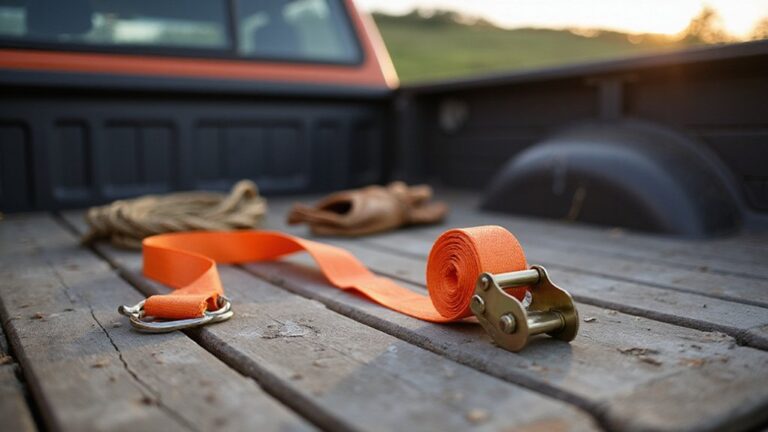
Bow and stern tie-downs are essential for preventing front-to-back sway of your kayak during transport. Attach your bow line to a sturdy grab handle or deck point at the front of the kayak, and the stern line to a secure rear loop. Use structural vehicle points like tow hooks rather than plastic parts to ensure strength. Snug the lines with a slight downward angle using a trucker’s hitch to maintain tension without over-tightening. It’s important to check the tension after driving a few miles, as webbing can settle and loosen. For added security, consider using mounting hardware designed for vehicle cargo nets to anchor your lines to compatible tie-down points. Regularly verifying these tie-downs at highway speeds keeps your kayak stable and prevents a destabilizing “see-saw” effect during sudden stops or acceleration. For maximum hold, pair these lines with high-quality moving straps that feature cam buckles for quick, secure tightening. For securing other gear like a mattress, ratchet straps often provide more precise tension control than cam-style tie-downs.
Pickup Truck Bed: Kayak Transport Without a Roof Rack
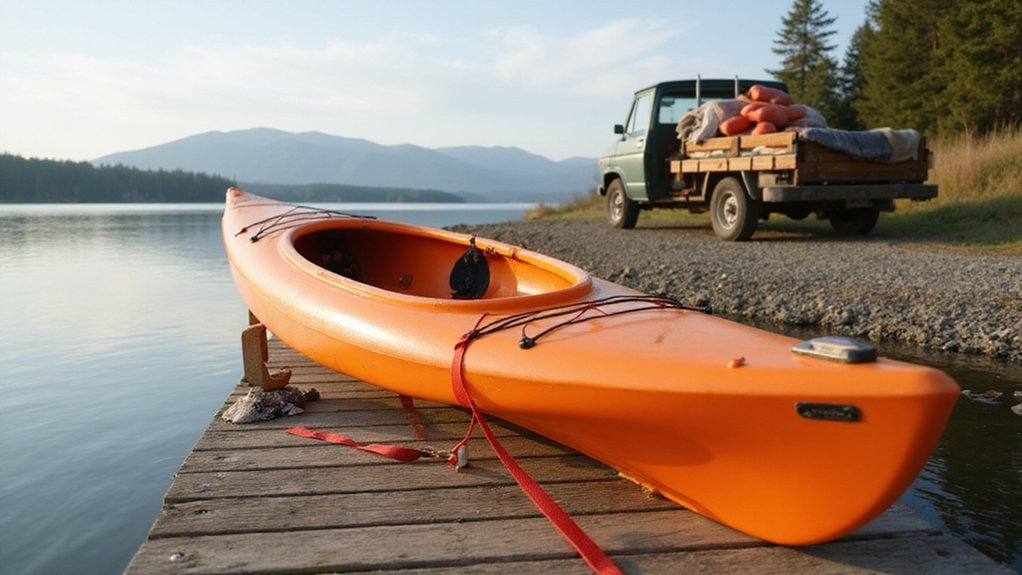
To securely transport a kayak in your pickup truck bed without a roof rack, use the bed itself as your base. First, prepare the bed by laying down a bed mat, carpet, or foam padding to protect the hull from scratches and damage. Load your kayak either diagonally with the stern first or straight in with the tailgate down, depending on length. Use two cam-buckle straps from the bed rails or floor loops to secure the kayak, keeping the straps flat and snug but not overtightened to avoid hull deformation. Fasten the bow and cockpit areas firmly to ensure stability during transit. For longer kayaks, install a bed extender to prevent overhang. Always check local laws regarding overhang; if the kayak extends beyond your truck’s rear edge, attach a red flag for visibility. Confirm that the kayak does not block your lights, license plate, or impair rear visibility more than regulations allow. Straps must be threaded through tie-down points and looped through handles or scupper holes for added stability in transit. For placing heavy gear in the bed, consider using a furniture dolly to easily slide the kayak into position without straining your back. Knowing the cargo net’s design helps prevent shifting of smaller gear placed alongside the kayak in the bed. If you also need to move gear across soft sand, a beach wagon with wide tires can make the trip much easier.
Kayak Trailers: Best for Heavy or Multiple Boats
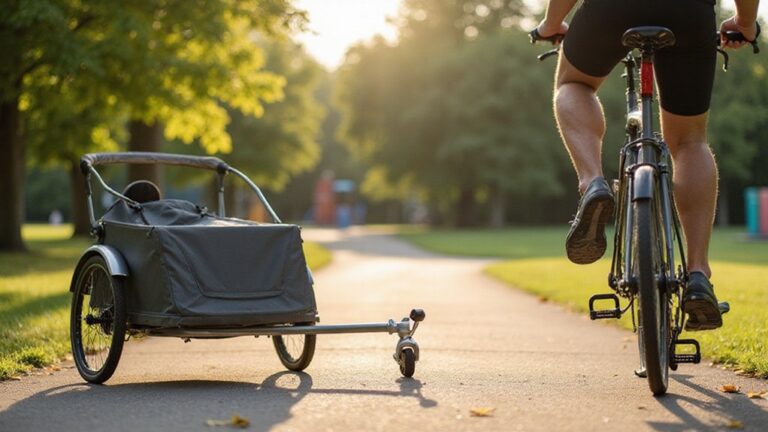
A kayak trailer is ideal for heavy or multiple boats. Most trailers can handle between 250 and 800 pounds, but you should never exceed the trailer’s weight capacity, even if your boats are lighter. This makes ground-level loading easier and safer, especially for heavy fishing rigs or tandems.
Trailers designed for multiple kayaks typically carry 2 to 4 kayaks, but stacked models can hold six or more for larger families or group trips. Always match the trailer’s weight rating to the combined weight of your kayaks and gear. Look for safety features such as submersible lights and galvanized construction to resist rust and corrosion. Similarly, when choosing a rear rack bike bag, you should also prioritize durable materials and proper weight limits for safe transport.
Keep in mind that heavier trailers require more careful maneuvering and parking. Although this adds a bit of hassle, the convenience of unloading at ground level and transporting large fleets often outweighs the extra effort, making a kayak trailer the best choice for frequent group outings or heavy fishing kayaks.
Soft-Top Carriers: Temporary Roof Support for Occasional Trips
Soft-top carriers provide a quick, temporary way to transport a kayak without a permanent roof rack. They use foam blocks and straps to secure the load. First, clean your roof to remove dirt and debris, preventing scratches. Position the foam blocks near the front and rear of the roof for better support. For bare roofs, aim to center the blocks over reinforced areas, avoiding the middle section. Place the kayak on the foam blocks carefully, ensuring it sits evenly. Route the straps through open doors, then tighten them from inside your vehicle. Proper tension is important because foam cushions — not clamps — hold the kayak in place. Add bow and stern tie-downs for extra stability. These systems are ideal for users who only need occasional hauling capability without a permanent installation. For a more versatile approach, consider a garden cart for hauling gear like kayak accessories around your property. Common failure points include strap loosening or foam shifting during transit. This method works best for a single kayak on short trips. It offers a low-cost, quick fix suitable for occasional use, but it is not a permanent hauling solution.
Avoid Hull Damage: Tighten Straps Without Crushing the Kayak
To avoid hull damage, use cam straps instead of ratchet straps when securing your kayak. You don’t need to apply excessive force; a firm, even tension is sufficient. Tighten the straps until the kayak stops shifting under pressure, but be careful not to cause visible hull deformation at contact points. If you notice indentations or “oil canning,” you are tightening too much.
Proper hull padding, such as foam blocks or padded crossbars, helps distribute load evenly and prevents point stress that can damage the hull. After initial tightening, check the tension after a few minutes of travel, as straps tend to settle. Re-adjust as needed to maintain secure hold without overtightening. Remember, stability and gentle pressure are more important than crushing the hull.