How to Measure a Wheelbarrow Tire: Get the Right Size
Figuring out your wheelbarrow tire size can seem tricky at first, especially if the markings are worn down or hard to read. But knowing how to measure correctly ensures you get the right replacement quickly and without issues.
Once you understand how to decode the numbers or measure the tire, you’ll be set for a perfect fit every time. Keep reading for simple steps to identify your tire’s size and compatibility details.
Decode the Numbers on Your Tire
Decoding tire markings can seem tricky at first, but understanding the numbers on your tire sidewall is straightforward once you know what to look for. In a two-number code like 4.00-6, the first number indicates the tire’s width in inches. For example, 4.00 means the tire is four inches wide. The number after the hyphen, 6, represents the rim diameter in inches; matching this closely to your wheel is essential to ensure a proper fit. In three-number formats such as 16 x 4.80-8, the first number is the overall height or diameter of the tire, not the width, and the second number (4.80) indicates the width in inches. For those choosing a tire for their outdoor equipment, it can be helpful to compare a lawn mower cart to ensure the cart’s wheel match a chosen rim size. Additionally, just as moving jobs require safe and easy lifting techniques, selecting the correct tire prevents strain on your equipment. Similarly, hauling gear over soft sand requires a beach cart with wheels designed for easy travel across challenging terrain.
Other markings are just as important. The slash separating two values indicates width measurements, while an ‘x’ often orders dimensions like height, width, and rim diameter. Always check for additional details stamped on the sidewall, such as the recommended tire pressure limits and tread depth indicators. Ignoring these details can lead to improper fit, uneven wear, and compromised performance. To be certain you’re selecting the correct tire, always verify the full code rather than relying on assumptions about what a single number might mean.
How to Measure Your Wheelbarrow Tire’s Diameter and Width
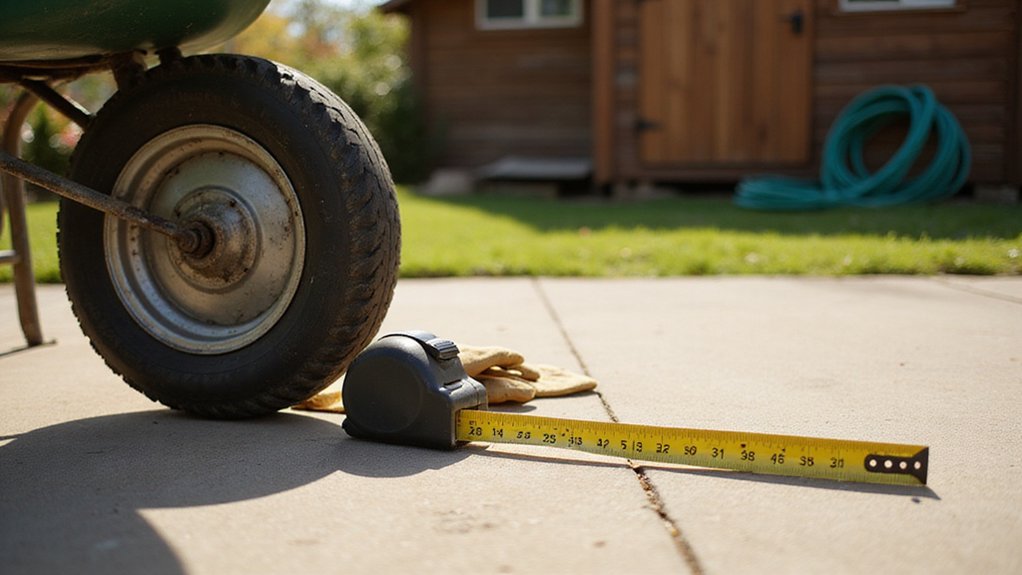
Start by inflating the tire to its normal operating pressure to ensure accurate measurements. Use a straight tape measure to determine the overall diameter by placing the tape from outside edge to outside edge, passing over the center, and ignoring the rim. Measure the width at the tire’s widest point, from one sidewall to the other, keeping the tape level and centered. Because tread patterns can influence the width measurement, always measure at the widest point for consistency. Don’t rely solely on the markings on the sidewall, as they may not be precise. Repeat your measurements a few times to confirm accuracy. Typical diameters are around 13 or 16 inches, with widths such as 4.00 or 6.50 inches. In contrast, furniture dollies for moving often use a different tire size that prioritizes smooth rolling on floors. Knowing these measurements ensures you select a proper fit for your wheelbarrow. For heavy loads like soil or gravel, a collapsible folding wagon can be be a more convenient alternative to a wheelbarrow. When building a cart from scratch, you can reference the load capacity of a DIY push cart to ensure your tire choice supports the intended weight.
Find the Rim Diameter Without Removing the Tire
The rim diameter can be identified without removing the tire by checking the sidewall size marking. The last number in the size code, such as the “8” in 4.80 x 8, indicates the rim diameter in inches. If the sidewall’s worn or the marking is illegible, you can estimate the rim size by measuring the tire’s overall diameter from top to bottom while mounted. For example, a tire with a 16-inch overall diameter often corresponds to an 8-inch rim. Understanding the receiver hitch components is not directly useful for wheelbarrow tires, but both involve measuring or identifying structural parts. When handling a heavy tire assembly, remember that proper lifting technique can help prevent injury, similar to safe handling when moving heavy objects like a piano. A common error is overtightening the strap during removal, which can bind the load and require a gentle release of tension before the tire can be measured safely.
Avoid relying on tread pattern or color coding, as these do not indicate rim size. Instead, focus on the full size code printed on the sidewall. For tubeless tires, the valve hole position may offer clues about the wheel setup, but the most reliable method remains checking the printed size directly. If that information is unavailable, measuring the rim diameter directly after removing the tire is the most accurate approach. Typical rim sizes are often 6 or 8 inches in diameter, so start your verification with these common options.
Check Hub Length and Bearing Size to Match Your Axle
To ensure a replacement wheelbarrow wheel fits your axle, you need to check both the hub length and bearing size. The hub length is the measurement through the center of the hub from one bearing face to the other. Do not measure across the outer tire or inner rim. This measurement is crucial because it determines whether the wheel will fit properly between your axle brackets. Common hub lengths are 3, 4, or 6 inches. For moving heavy appliances up stairs, a stair-climbing dolly often requires precise wheel fitment similar to these hub measurements.
Next, verify the bearing compatibility by measuring the inside diameter of the bearing bore. This diameter must match your axle’s diameter, which is often 5/8 or 3/4 inch. Be sure to measure the actual axle itself rather than relying on assumptions or previous measurements. A mismatch in these measurements can cause the wheel to fit loosely or bind, making it unsafe to use. Some wheels use bushings to adapt to different axles, but even then, the bore must match your axle’s size for secure mounting. Without confirming both the hub length and bearing size, your new wheel may not attach securely or function properly. Getting these two measurements right is essential before purchasing or installing a replacement wheel. Similarly, when selecting a bike cargo trailer, the hub length and bearing size of the trailer wheel must match your bike’s axle to ensure a secure and safe attachment. For faster, safer handling of heavy loads, use moving straps to distribute weight and reduce strain during transport.
Final Wheelbarrow Tire Fit Check Before You Buy
Before purchasing a replacement tire, perform a full fit check. Confirm the sidewall size code exactly—don’t rely on just the diameter—matching it to your original tire, including rim size. Check the construction type, whether tubeless or tube-type, by observing the valve stem behavior. Pay attention to the tread pattern: a smoother tread suits hard ground, while an aggressive pattern is better for soft soil. Examine the ply rating to ensure it meets or exceeds your current tire’s load capacity. Physically compare the overall diameter and width to your wheelbarrow’s frame, ensuring there is enough clearance for the tray and forks. The tire’s color and branding logo won’t impact function but can help verify that you’re selecting the correct model. If the bead profile or valve area doesn’t match your existing tire, avoid the purchase. Your current tire remains the best reference for achieving a perfect fit. Top-rated models in reviews often highlight the importance of matching the ply rating to your typical load weight for durability. For added assurance, consider how a hitch cargo carrier can be a useful alternative for moving loads if your wheelbarrow tire is incompatible. Similarly, building a DIY canopy wagon can provide a versatile, covered transport solution that bypasses wheelbarrow tire compatibility issues altogether.