DIY Canopy Wagon: Add Shade to Any Pull Wagon
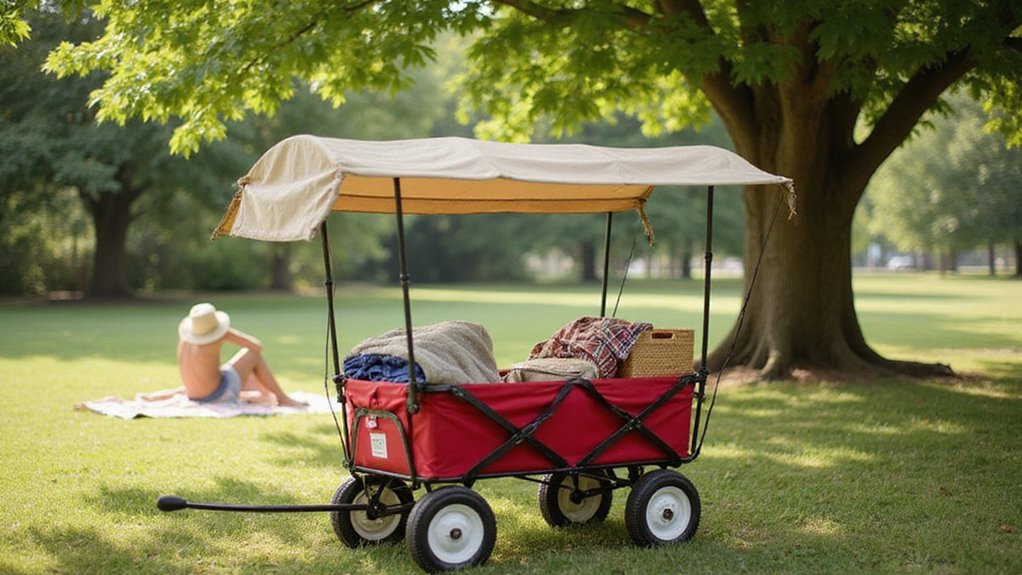
Looking to add shade to your pull wagon without dealing with permanent fixes? A DIY canopy is a simple way to keep you and your gear cooler outdoors.
By the end of this, you’ll know how to measure, choose materials, and assemble a portable shade that stays secure without damaging your equipment.
Let’s get started with the basics so you can enjoy a shaded ride on your next adventure.
Measure Your Wagon for a Perfect Canopy Fit
To ensure a perfect fit, you need to measure your wagon accurately. Start by measuring the outside frame width and length at the widest points, ignoring the interior cargo area. This measurement precision helps your canopy clear the side rails and flared panels. Record the height from the top edge to your desired canopy peak, noting both side and center heights. This will determine the roof slope and overall clearance. Don’t forget attachment points: measure from outer rail to outer rail and check front-to-rear spacing, as widths can taper. Additionally, add a 6–12 inch fit tolerance for fabric hems and tubing thickness. This extra space simplifies material selection and prevents binding on the frame. Always verify all final dimensions against your physical wagon before ordering fabric or hardware to ensure a proper fit. For added comfort, review top garden carts that often include built-in shade features for inspiration. For securing the canopy frame, consider high-quality ratchet straps that provide reliable tension and durability. When comparing designs, look for wagons that feature extra-wide wheels to handle soft sand without sinking.
Choose the Best Frame for Your DIY Wagon Canopy
A rectangular frame offers maximum flat coverage, making it ideal if you want a broad, level canopy surface. Conversely, a hoop design tends to shed rain more effectively because its curved shape discourages water pooling. When choosing your frame, match your canopy fabric to its strength: heavier fabrics need sturdy supports like steel, while lighter fabrics can be supported by aluminum. For added security when attaching fabric to the frame, look for bungee cords with clips that provide a tight and adjustable hold. For portability and ease of setup, aluminum frames are best suited for daily use, as they are lighter and easier to carry. Steel frames, on the other hand, provide more durability for permanent setups. Avoid plastic frames as your primary support, since they tend to buckle under tension and won’t hold up over time. Striking the right balance between durability and weight ensures your wagon remains both easy to pull and long-lasting. For maximum stability, consider using steel frames for permanent wagon canopies. For heavy loads, choose a furniture dolly with a high weight capacity to easily move materials and tools.
Build a PVC Wagon Canopy Frame in Under an Hour
To build a PVC wagon canopy frame in under an hour, start by measuring your wagon’s interior dimensions to determine the length and width for the frame. Cut four vertical posts and two top rails—one for each length and width. Understanding the differences in mount vs tow hitch designs will help you decide on attachment methods for your project. Use three-way connectors to join the top rails into a rectangular shape, then insert the vertical posts into each corner to form a box-like structure. Dry-fit all pieces first to ensure proper alignment; skip the glue if you want removable storage options for off-season use. For added strength without extra weight, substitute standard PVC with schedule 40 PVC. Keep joints square during assembly on the ground before standing the frame upright. Confirm the frame sits level inside the wagon and remains stable with light shaking. Using slip-fit joints makes the process faster and requires minimal tools, helping you complete the project quickly. For extra durability and portability, choose a design that mirrors the collapsible folding wagons praised for easy transportation. Before securing the frame, perform a final safety check to ensure all connections are tight and the structure won’t shift during use, just as you would verify a truck bed extender’s stability before driving.
Attach and Secure Canopy Fabric to Your Wagon
To attach and secure the canopy fabric to your wagon, use elastic ball bungees or stretch cords. These stretchy fasteners allow the fabric to shift slightly during movement without tearing. Thread bungee loops through grommets in the fabric, then hook them back onto the frame to hold the canopy in place. Place multiple attachment points evenly spaced around the perimeter to distribute tension and prevent sagging. If your fabric lacks grommets, you can secure it with Velcro straps or plastic tarp clamps as effective alternatives. Avoid rigid fasteners like rope or wire, as they restrict movement and increase the risk of tearing. Reinforced tabs and top corners of the fabric handle lifting forces best, so secure these areas firmly. Regularly check the fasteners during use because tension can shift as the wagon moves. Loose ties or worn grommets indicate the need for adjustment. Keep the tension even and slightly loose—too tight can strain seams, while too loose can cause sagging. For quick removal, clips or clip-based attachments make it easy to detach the canopy for storage or weather changes.
Secure the Canopy Without Drilling Permanent Holes
You can secure a canopy without drilling into your wagon frame by using clamp-on mounts. These mounts grip square or tubular rails up to 1.75 inches in size, with rubberized faces that prevent scuffing and protect the finish. Because they don’t require permanent modifications, your factory warranty remains intact. For added security, straps can be routed under the frame and over the canopy, with non-stretch cam-lock versions ensuring tightness. Adding a second strap crosswise further prevents fore-aft sliding. Quick-release brackets provide flexibility, allowing you to remove or fold down the canopy easily, which is ideal for seasonal use. Always pair these mounting methods with a rigid frame structure; loose fabric alone cannot hold the canopy securely. For increased stability on hard surfaces, weighted footings can be used instead of drilling, such as concrete decking blocks that add roughly 30 pounds each for wind resistance. Check slippage regularly before each pull to ensure safety. For beach use, consider large wheels that roll smoothly over sand and prevent the cart from tipping under the canopy’s weight, and comparing tire options for sand can help match the best traction and flotation. Select durable materials for contact points, avoid thin fabric edges, and keep tension firm but not enough to deform the frame for the best results. When using straps for the canopy, inspect them for fraying or wear and follow cargo net safety practices to prevent load shifting during transit.