DIY Beach Cart: Build a Sand-Ready Hauler Cheap
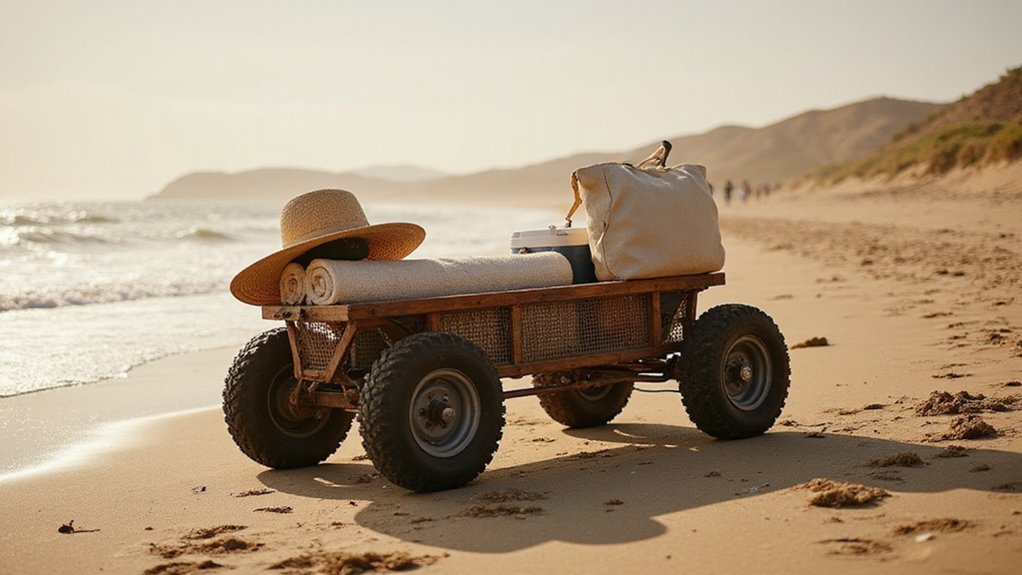
Want an easy way to haul your beach gear without sinking into the sand? You can build a simple, budget-friendly beach cart that handles soft sand with wide balloon tires set at just 2–5 PSI for true flotation.
A lightweight PVC frame keeps costs low and won’t rust, while positioning your cooler over the wheels improves stability.
Keep reading for the full build details.
Why a Cheap Beach Cart Actually Works on Sand
Low-pressure balloon tires with a pressure of just 2 to 5 PSI are key to a cheap beach cart’s ability to handle soft sand. These tires spread the cart’s weight over a much larger area, creating a broad contact patch that allows the cart to float rather than sink. Wider tires, measuring between 6 and 8 inches across, further distribute the load, preventing trenching or sinking into loose, dry sand. Larger diameter tires, such as 11.8 inches or more, help you navigate ruts and ridges smoothly. It’s the tire shape and size, rather than a fancy frame, that do most of the heavy lifting. You can also customize your cart’s appearance by choosing colors for the wheels or frame, making your setup stand out on the beach. Just remember, overinflating these tires will reduce their flotation and increase the risk of sinking. Keep tire pressures low to maintain optimal performance. For reliable options, review the top collapsible folding wagons which often use similar tire designs for easy transportation. When selecting a cart, consider how cargo capacity compares to your family’s typical haul, as the best family-focused designs balance tire flotation with enough room for gear. Unlike solid rubber wheels, pneumatic tires provide the necessary cushioning and low-pressure flotation for soft sand.
3 Ways to Save Big on Wheels (the Most Expensive Part)
Saving on wheels starts with considering used options. Salvage old cart wheels or toy vehicle wheels, which you can often find for free or cheap. Check classifieds for mismatched sets that have good bearings—just make sure to inspect for cracked hubs before buying. Buying only the replacement balloon-style wheels separately is often cheaper than buying a whole cart; pairs typically start around $35, which is much less than a branded cart that can cost hundreds. For maximum durability on sand, prioritize wheels with top caster quality that feature sealed bearings and reinforced hubs. If you already own a kayak, note that the same secure strapping techniques used for roof-free transport can help fasten your gear to the cart frame. Lastly, choose the smallest wheel that can still float on sand. Larger wheels cost more but improve rolling over soft surfaces. Balancing size and budget is key—tiny wheels require more effort to pull, which defeats the purpose and can ruin your savings. Focus on these tips to build a beach cart that handles soft sand without draining your wallet. Even when saving money, check that your chosen wheels align with the overall performance benchmarks for rolling resistance and load capacity noted in buyer comparisons of top wagons.
PVC vs. Timber vs. Aluminum: Which Beach Cart Frame Wins on a Budget?
PVC is the most budget-friendly option for your beach cart frame, typically costing significantly less than wood or aluminum. It’s lightweight and resistant to rust, which keeps maintenance simple, making it ideal if you only plan occasional trips. However, PVC is less stiff and durable over time, meaning it may bend or crack with frequent use or under heavy loads. If your priority is saving money upfront and you don’t mind replacing or repairing the frame sooner, PVC offers the best initial value. For example, a similar shelter like the UPF 50+ protection found in many beach canopies can be paired with a PVC cart for affordable sun safety. To securely haul such gear, you should also consider top ratchet straps designed for quality and performance. Pairing a PVC cart with quality caster wheels ensures smooth rolling over sand. Learning how to replace caster wheels can extend the life of your cart when they wear out.
Timber is stronger and more durable than PVC but comes with higher maintenance needs. It requires regular sealing and treatment against moisture and rot, which adds to the long-term cost and effort. While it provides more stability and can handle heavier loads, the upkeep can be time-consuming and may lead to additional expenses over the years. Timber suits those who prefer a low-tech approach and are willing to invest in ongoing maintenance for increased strength.
Aluminum balances durability and weight better than PVC and timber, making it the most practical long-term choice. Although it costs more initially, its resistance to corrosion and lighter profile reduce replacement frequency. Aluminum frames tend to last longer with less upkeep, especially if you plan to use your beach cart frequently. The extra upfront investment pays off over time if you want a frame that stays durable despite exposure to harsh beach conditions.
Step-by-Step: Build a $100 PVC Beach Cart in an Afternoon
To build a sturdy PVC beach cart, start by measuring your cooler to determine the required dimensions. Cut 1-inch PVC pipe into a rectangular base, upright supports, and a top handle. Dry-fit all components first—assemble without glue—to ensure proper spacing and height. This step allows you to make adjustments, ensuring the frame will be durable and balanced before final assembly. Once you’re satisfied with the fit, clean the pipe ends, then cement the lower frame and add the upper sections. The lifting design inherently functions as a second-class lever, which reduces the effort needed to move heavy loads over soft surfaces. Drill axle holes carefully to allow the wheels to spin freely. Insert a 5/8-inch threaded rod through the axles, secure with washers and nuts, and attach wide balloon wheels suitable for soft sand. After the glue cures completely, enhance your cart with DIY accessories like zip ties or straps to keep gear secure, and wrap foam around the handle for comfortable handling. Keeping it simple ensures you build an effective, sand-ready beach cart for under $100. For a smoother rolling experience, consider how bike trailer wheels are engineered to handle varied terrain when selecting your balloon tires. Expect minor assembly errors from distractions, so always dry-fit before gluing to avoid wasting materials on misaligned joints. Perform a safety check on all joints and axle hardware to confirm stability before loading any heavy gear.
How to Choose a Load Capacity That Matches Your Frame and Gear
To choose a load capacity that matches your frame and gear, start by assessing your typical gear load. Common gear combinations like chairs, coolers, and shade often weigh between 150 and 220 pounds. Your frame’s material and wheel size are key factors: a steel frame offers better structural strength for heavier loads, while aluminum frames are suitable for lighter gear but may flex more off-center. The wheels also influence capacity—wide balloon tires distribute weight more evenly on soft surfaces like sand, reducing drag and making it easier to haul heavier loads. For example, the VEVOR Beach Dolly uses 12-inch balloon wheels designed for sandy terrains to improve mobility. Using a receiver hitch lock can secure your cart to a vehicle when transporting it to the beach.
Keep in mind that dynamic forces—such as starting, stopping, and turning—lower your cart’s effective load capacity. Always build in a safety margin by keeping your payload well below the maximum rating. For soft sand or loose terrain, expect to haul less than the rated capacity, since these conditions increase resistance and reduce stability. Staying within these limits ensures your cart remains stable, easy to control, and less prone to tipping or damage.
4 Ways to Keep Your Beach Cart Rust-Free and Sand-Ready
To keep your beach cart rust-free and ready for sand, follow these key steps. First, ensure your cart is made from corrosion-resistant materials, such as powder-coated or galvanized steel, which withstand salt and moisture better than bare metal. Proper surface preparation before coating—like sandblasting or degreasing—helps the protective finish adhere more effectively and last longer. For help selecting a suitable hauler, review comparisons of the best furniture dollies for insights on durable, corrosion-resistant options suited for heavy loads. Unlike standard casters, marine-grade caster wheels resist saltwater corrosion far more effectively.
After each beach session, rinse your cart thoroughly with fresh water, paying special attention to joints and crevices where salt deposits can hide. Dry the cart completely to prevent moisture buildup. Store it in a climate-controlled area or use moisture-absorbing products to reduce humidity, especially in humid environments.
Regular maintenance is crucial. Inspect the hardware for chips, scratches, or corrosion signs and address them promptly with touch-up paint or protective coatings. Use corrosion-resistant bearings and water-resistant grease on moving parts for added protection. Stick to cleaning with mild soap and warm water, avoiding harsh chemicals that can damage the protective coatings over time.
How the $100 PVC Cart Handled Soft Sand and a Heavy Load
When hauling more than 100 pounds of gear in a $100 PVC beach cart on soft sand, wheel choice is critical. Narrow plastic tires will sink immediately under a loaded cooler, making pulling extremely difficult. To improve performance, swap these for 12-inch balloon-style or low-pressure tires that provide beach grip. These wider tires float over loose sand, distribute the load more evenly, and prevent bogging down. Durability is also important—budget wheels rated for only 77 pounds often fail under heavier loads—larger 10- or 12-inch wheels can handle up to 165 pounds with ease. For the best performance, look for top rated wheelbarrows that use similar high-quality balloon tires for stability. Keep your cargo low and centered to minimize tipping risk. A sturdy PVC frame supports the weight, but the wheels do most of the work. Pulling the cart, rather than pushing it, makes handling heavy loads smoother, and wider tires turn a struggle into a more manageable haul. Many homeowners find that garden carts with seat models offer similar tire advantages for yard work. Centering the ice chest over wheels is key to minimizing front weight and maintaining balance on soft sand. For truck owners who want a similar upgrade for transporting gear, a bed extender for truck can help secure heavy loads and improve weight distribution on rough terrain.