Garbage Can Bungee Cords: Keep Lids Shut & Critters Out
Struggling to keep raccoons out of your trash? A simple and effective fix is using a heavy-duty bungee cord to secure your lid.
By locking it down properly, you can prevent critters from rummaging through your garbage and causing messes.
In this guide, you’ll learn how to secure your trash lids effectively and what upgrades to consider if pests persist.
Keep reading to make your trash less attractive to wildlife.
Why a Simple Bungee Cord Stops Most Lid-Lifting Critters
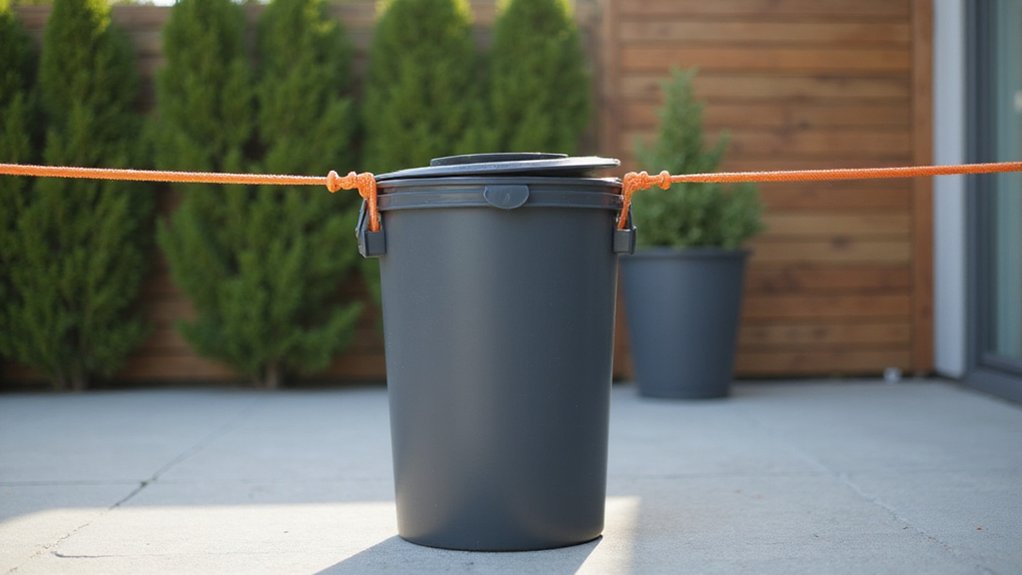
A simple bungee cord can effectively stop most lid-lifting critters because it reduces their initial grip points and makes prying much more difficult. Raccoons and similar animals target trash cans because they rely on paws and claws to lift and flip lids. By attaching a tightly stretched bungee cord across the lid, you press it down and eliminate the gap they depend on to smell or reach food inside. The tension created by the cord resists attempts to pry the lid open, especially against persistent animals. A properly secured, tight cord withstands repeated attempts, while a loose one can be pushed aside easily. This small, inexpensive fix works by disrupting the first step of a trash raid, forcing critters to expend much more effort or move on to an easier target. It’s especially effective against raccoons and medium-sized scavengers that rely on quick, simple access. For enhanced security, some designs incorporate a double-layer security system with a sliding latch and side-release buckle, ensuring animals cannot open the lid while allowing quick human access. This approach mirrors the quality and value found in well-reviewed rolling tool carts that prioritize durable, user-friendly components. Using a similar principle, choosing a bungee cord with a high tension rating ensures it remains secure against persistent scavengers. For those who frequently transport gear, a folding wagon offers similar durability and ease of movement for heavy loads.
How to Properly Secure Your Garbage Can Lid (Step-by-Step)
To properly secure your garbage can lid, start by placing the lid firmly onto the can, ensuring the rim sits evenly all the way around. Clean the rim and lid edge beforehand to remove dirt or ice, which can prevent a tight closure. Make sure the can is upright and stable, and inspect it for cracks or warped plastic that could cause gaps. Proper lid alignment is essential: select two symmetrical anchor points near the upper rim, positioned away from the hinge. Use a cord or strap, feeding it through the can’s point and the lid, then tying a stopper knot. Pull it snug enough to secure the lid without warping the plastic. This method helps prevent trash can lids from blowing off in the wind. Test the closure by lifting lightly; there should be no rocking or gaps at the corners. This process mirrors the final safety check used for truck accessories to ensure all fittings are tight and stable. Avoid over-tensioning, especially if your area experiences strong winds, and recheck the fit after filling the can, since added weight can change lid pressure. Always inspect the cord for fraying or wear before each use, just as you would a cargo net’s webbing to confirm it holds under stress. For heavy cans, consider using a stair-climbing hand truck to transport them without straining the lid’s seal.
What Kind of Bungee Cord Actually Works?
A heavy-duty elastic cord with strong hooks is the best option for effectively keeping critters out. Look for a durable material that maintains tension through repeated raccoon attempts. Strong metal hooks should grip the can handles securely without slipping off. Adjustable, lid-to-handle spacing allows you to fine-tune the fit because can models vary, and the ability to dial in the right fit without cutting is valuable. Crossing two cords or using a dual-cord setup provides greater resistance against determined critters. For maximum reliability, choose a purpose-built trash-can lock with hardware that stays attached to the can, reducing the chance of losing it. This system is designed to work with 30 to 50 gallon cans, accommodating both round and square designs. For tangle-free storage when not in use, neat coiling methods can be applied to keep the cords ready for quick deployment. Selecting a model with sturdy wheels and a stable frame can also help you maneuver the loaded can across sandy terrain, much like the best beach wagons prioritize mobility on soft surfaces. For quality assurance, check that the hooks are ratchet strap grade to prevent bending under stress.
Common Mistakes That Let Raccoons Beat the System
To prevent raccoons from getting into your trash, secure your hooks to sturdy bin handles—avoid weak plastic ones that can break easily. Raccoons are clever and can test your setup repeatedly, so using durable material makes a difference. Also, never leave cans out overnight; this gives raccoons multiple opportunities to find and exploit any weak spots in your system. Consistent, secure placement of your bins is key to keeping these persistent foragers at bay. For maximum protection, stainless steel construction resists corrosion and makes it harder for animals to chew through the lock. A successful installation requires proper fitment checks to ensure the locking mechanism aligns correctly with your bin’s structure. Before finalizing the attachment, perform a final safety check by shaking the setup to mimic the persistent testing raccoons will attempt. Just as furniture sliders rely on smooth, low-friction movement to protect floors from scratches, your bungee system needs smooth alignment to avoid gaps that critters can exploit.
When Bungee Cords Aren’t Enough: Upgrade Your Setup
When a bungee cord falls short, upgrading to a strap-style lid latch offers a more secure solution. Hardware latches provide a stronger closure, often with tool-free installation that attaches permanently to your can, so you won’t have to worry about misplacing parts. These systems clamp tightly around the lid, enhancing insulation and preventing animals from prying it open more effectively than elastic tension. They also improve your can’s appearance by replacing loose, dangling cords with a sleek, integrated look. For situations with high animal pressure or frequent wind, bolt-on latches deliver a more robust seal. This model includes an auto-release mechanism that automatically opens during waste collection and relocks afterward, ensuring seamless weekly operation. Additionally, auto-release locks secure lids during pickups but release automatically during collection, eliminating the need for weekly manual adjustments. For a more enjoyable outdoor experience, consider that an adult tricycle provides stable, comfortable transportation for hauling trash cans to the curb. When your bungee cord no longer cuts it, switching to a strap latch simplifies and strengthens your trash containment. For added durability, choose a latch made with cam buckle straps that offer superior tension control and long-lasting hold. For long-term reliability, inspect your latch’s wheel hubs periodically for wear, just as you would with hand truck wheels.
Pair Bungee Cords With These Other Deterrents
Pairing bungee cords with additional deterrents significantly enhances your trash protection. Mount motion-activated lights along access routes to startle wildlife like raccoons and foxes, especially at night. The sudden flash or noise can make them think twice before probing your trash again.
For scent deterrence, don’t rely solely on bungees. Instead, place ammonia-soaked rags around the base of your cans. Their strong odor masks food scents that attract animals. Refresh these rags after rain or wind to maintain their effectiveness. Combining scent masking with physical safeguards like metal latches or ratchet straps arranged in an X pattern over the lid offers better security. Bungees alone can usually be pulled loose by determined animals, but added restraints increase resistance. Moving cans away from fences and double-bagging your trash reduces odor and climbing options, lessening wildlife interest and testing of your setup. For additional strength, consider wheels from best large wheels for beach carts to easily relocate heavier cans away from vulnerable areas.