
What Is a Class 2 Receiver Hitch? Specs & Tow Ratings
If you’re wondering what a Class 2 receiver hitch is and how it fits your towing needs, you’re asking the right questions. These hitches typically feature a 1-1/4 inch square receiver tube.
They are suited for light- to medium-duty towing tasks. They’re commonly found on smaller vehicles like sedans, crossovers, and compact SUVs.
Keep reading to understand what they can handle and how to choose the right one for your setup.
What Exactly Is a Class 2 Receiver Hitch?
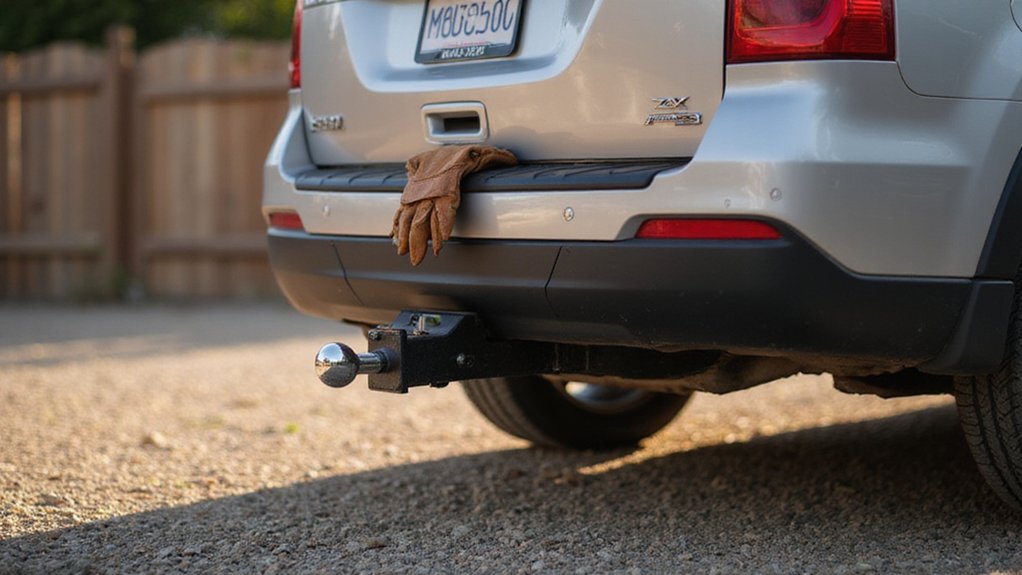
A Class 2 receiver hitch is a midsize hitch designed for light- to medium-duty towing. It typically supports weight capacities ranging from 3,500 to 6,000 pounds gross trailer weight, making it suitable for hauling small boats, campers, or utility trailers. The hitch features a square receiver tube that bolts directly to your vehicle’s frame, effectively transferring the trailer load into the vehicle structure. Unlike heavy-duty options, a Class 2 hitch does not require a weight-distribution system, simplifying setup and use. To ensure safe towing, match the hitch’s capacity to your vehicle’s towing limits and consider adding a suspension upgrade to improve stability when hauling heavier or unbalanced loads. Proper pairing enhances ride comfort, keeps the vehicle level, and reinforces overall towing safety. For securing heavy loads during transport, using top ratchet straps ensures cargo remains stable and prevents shifting. It uses a 1-1/4 inch receiver size for versatile towing options. This size accommodates a range of common hitch accessories like bike racks and cargo carriers. For transporting heavy gear, using a furniture dolly can help maneuver bulky items into position before hitching.
Key Specs: 1-1/4 Inch Receiver, 3,500 Lb GTW, 350 Lb Tongue Weight
The 1-1/4 inch receiver opening is characteristic of a Class 2 hitch, making it suitable for light-duty towing. This size supports a maximum gross trailer weight of up to 3,500 pounds and a tongue weight of 350 pounds. Your tongue weight rating is often the limiting factor for towing capacity, especially when trailers are loaded to approximately 15% of their total weight. Always calculate your trailer’s loaded tongue weight, including any carrier or cargo, to ensure safe towing. Refer to your vehicle’s owner’s manual for specific weight limits, as exceeding them can compromise safety and performance. For heavier loads, you may need to consider Class 3 and Class 4 receiver hitches, which offer higher capacity. For proper installation, confirm that your ball mount shank fits snugly into the 1-1/4-inch receiver. To prevent accidents, you must secure your trailer hitch pin effectively to avoid unintended disconnection. The lowest-rated component in your towing setup—whether that’s the hitch, ball mount, or vehicle—sets your actual towing capacity. This configuration is well-suited for small utility trailers and popup campers, which typically fall within these weight limits. Neat strap storage can help keep your towing gear organized and accessible when connecting a trailer. Always double-check all components and load calculations to maintain safe and reliable towing.
How Class 2 Compares to Class 1 and Class 3 Hitches
Class 2 hitches typically feature a 1-1/4 inch receiver, similar to Class 1, but offer a higher Gross Towing Weight (GTW) capacity, usually up to 3,500 lb. This makes them suitable for moderate towing needs, such as small trailers or campers. Unlike Class 1, which maxes out at 2,000 lb GTW, and Class 3, which increases to a 2-inch receiver and can tow up to 8,000 lb, Class 2 fills the middle ground. It is ideal when your towing demands exceed lightweight applications but do not require heavy-duty options. Remember, the receiver size alone doesn’t determine the hitch’s capabilities—always check the weight ratings to match your vehicle’s towing capacity. Proper installation involves verifying that your vehicle’s frame and bolts align with the hitch’s specifications, and routine maintenance should include inspecting for rust or wear, especially if you frequently switch between hitch classes. For securing larger loads during towing, you can rely on quality performance from top-rated tie-down equipment. For lighter towing jobs, a garden cart can be an excellent alternative for hauling heavy loads without needing a trailer. Ultimately, your choice depends on what you need to tow, with receiver size serving only as a guideline. For cargo carriers, the tongue weight limit is especially critical, as exceeding it can cause poor handling and suspension sag. A Class 3 hitch uses a larger 2-inch receiver to achieve its higher towing capacity.
Which Vehicles Are Best for a Class 2 Hitch?
Vehicles suitable for a Class 2 hitch generally include full-size sedans, crossovers, minivans, small and midsize SUVs, and compact pickup trucks. These vehicles are capable of handling the 3,500-pound gross trailer weight (GTW) and 350-pound tongue weight limits typical for Class 2 hitches. To ensure compatibility, check your vehicle’s factory tow rating first; it must meet or exceed these limits. The overall towing capacity is limited by the lowest-rated component, such as wiring or mounting hardware. Factory tow packages often include necessary cooling systems and structural reinforcements, making them a preferred choice. Additionally, confirm that your vehicle’s wiring setup is compatible if you plan to tow trailers with lights, brakes, or other accessories. For example, if you plan to haul heavy beach gear while surf fishing, a Class 2 hitch can provide a reliable mounting point for a cargo carrier or small trailer. Proper matching of vehicle and hitch specifications guarantees safe, reliable towing without risking damage or overloading. Class 2 hitches are commonly used on SUVs, trucks, Jeeps, and vans for a wide range of towing needs. When securing that cargo carrier or trailer, investing in quality caster wheels for a compatible dolly or cart can make positioning and maneuvering much easier at the campsite or launch area. For moving heavy items like a piano, selecting a piano dolly with appropriate casters can simplify transport and prevent damage to both the instrument and the vehicle.
Common Trailers and Loads for Class 2 Towing
Common Class 2 towing jobs include small utility trailers, lightweight boats, pop-up campers, motorcycle trailers, and compact cargo haulers. You’ll often tow pedal boats with a lightweight trailer, keeping the gross weight under 3,500 pounds. For small fishing boats or runabouts, be sure to account for fuel and gear in your total load to stay within your hitch’s capacity. Pop-up campers fit well within this class, but you need to manage tongue weight as water and supplies increase the trailer’s weight. For those looking to transport bikes, you might consider a receiver hitch bike carrier that mounts directly to your Class 2 hitch for easy loading and unloading.
When towing a motorcycle trailer, securing all tie-downs is essential to keep your load stable and prevent shifting during transit. For heavier enclosed trailers approaching the hitch’s limit, trailer brakes may be necessary; check local regulations to confirm. Most Class 2 setups don’t require brakes, but always verify your trailer’s weight and your vehicle’s hitch rating to ensure safe hauling. For lighter loads, you might also consider hauling adult tricycles on a small rack or trailer for weekend trips and recreational use.
Matching Your Vehicle’s Towing Capacity to a Class 2 Hitch
Your vehicle’s factory towing capacity is the critical limit to consider, not just the hitch’s rated capacity. For example, even if your Class 2 hitch supports up to 3,500 pounds, your vehicle might be rated for less—overloading it risks damaging the frame and brakes. Passengers and cargo weight also subtract from your available towing margin. It’s essential to check the tongue weight, which typically should be around 10 to 15 percent of the trailer weight. At a 15 percent ratio, a 2,330-pound trailer will place a tongue weight of about 350 pounds. If you plan to tow heavier loads, consider upgrading your suspension to manage sag and installing brake enhancements for safer stopping power. Always build your towing setup around the lowest-rated component—your vehicle’s capacity, the hitch’s limit, and the trailer’s weight—because exceeding any of these can compromise safety and control. For example, a DIY truck kayak carrier built with a Class 2 hitch must also respect the tongue weight limit, as the carrier’s load will add to the hitch’s vertical stress. Similarly, using a flat-free tire on a wheelbarrow prevents punctures and maintains stability under heavy loads, which is a comparable consideration for maintaining safe weight distribution. Before loading a hand truck, you should always perform pre-use safety checks to ensure the wheels, frame, and load straps are secure and free from damage.
Essential Accessories for a 1-1/4 Inch Receiver
A 1-1/4 inch receiver can accommodate a wide range of accessories to enhance your towing and hauling capabilities. Starting with a ball mount, choose a 3,500 lb. capacity option with a 4.75-inch drop to ensure stability and proper trailer connection. Secure the ball mount with a 1/2-inch hitch pin and clip to prevent accidental disconnection. For added security, use a hitch lock, especially if you often park in public or unattended areas. A collapsible folding wagon can be easily transported and attached using these accessories for added convenience during outdoor trips.
Off-road adventures call for specific accessories such as a tow strap or shackle mount to help recover your vehicle if stuck. An adapter that converts the receiver size from 1-1/4 inch to 2 inches adds versatility, allowing you to use larger cargo carriers or bike racks. When the receiver is not in use, protect it with a rubber tube cover to prevent dirt, debris, and corrosion from accumulating inside.
These bumper accessories enable you to carry bikes, utility trailers, or cargo securely and conveniently. With the right set of accessories, your 1-1/4 inch receiver becomes a flexible hub for all your hauling and outdoor needs, keeping your setup tidy and ready for anything.
Do You Need a Weight Distribution Hitch for Class 2?
A weight distribution hitch is not necessary for a Class 2 setup because your hitch typically isn’t rated to support one. Class 2 receivers use a 1-1/4 inch opening and are intended for weight-carrying applications only, with no weight-distribution capacity specified. Heavy loads can easily exceed your 350-pound tongue weight limit, so proper balancing of your trailer becomes the main concern. Adding an adapter doesn’t convert your hitch into a distribution-rated one; in fact, it often reduces the maximum allowable tongue weight. To ensure safety, you should verify that your trailer’s loaded tongue weight stays under 350 pounds. If you need to distribute weight more evenly across your trailer’s axles, upgrading to a Class 3 or higher 2-inch receiver is the safest choice, as it provides the appropriate capacity for a weight distribution hitch.