How Does a Tow Hitch Work? Parts & Function Explained
Ever wondered how a tow hitch actually connects your vehicle to a trailer and keeps everything stable? A tow hitch transfers the pulling, braking, and side forces that keep your trailer secure behind you.
Knowing the parts, their functions, and how they work together makes towing safer and easier. Keep reading to learn how your towing setup operates step by step.
What a Tow Hitch Does and Why Every Towing Setup Needs One
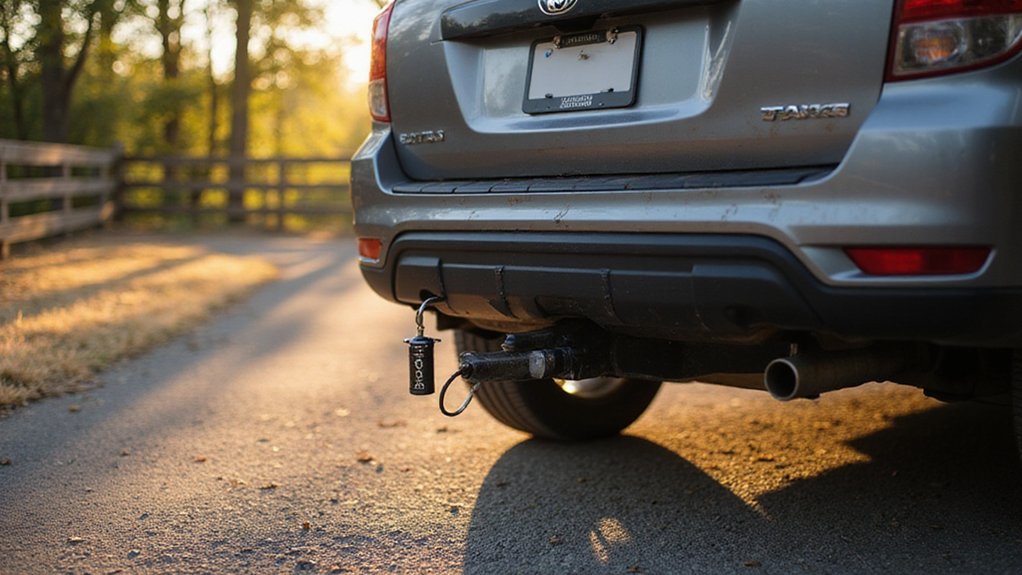
A tow hitch is the essential mechanical link that connects your vehicle to the trailer. It is mounted to your vehicle’s frame, providing a secure attachment point for towing. Without a hitch, attaching or pulling a load safely becomes impossible. The hitch supports vertical tongue weight, transfers pulling and braking forces to your vehicle, and manages side-to-side forces during turns. This helps keep the trailer aligned and stable, reducing the risk of separation or loss of control. Proper electrical connections for trailer lights and brakes are equally important and must be maintained regularly. The main receiver tube is the square opening that accepts the hitch ball mount, allowing different attachments for various towing needs. Understanding how much vertical tongue weight your hitch can handle is similar to knowing the capacity limits for hauling materials in a wheelbarrow. For example, receiver hitch types are categorized by their class, which determines the maximum gross trailer weight they can safely pull. Routine hitch maintenance—ensuring bolts stay tight and applying anti-corrosion treatments—helps keep your towing setup safe and reliable. Overall, the hitch is the foundational component for any secure, efficient towing setup.
The Main Parts of a Tow Hitch System
A tow hitch system is composed of several essential parts that work together to secure and facilitate trailer towing. The main component is the hitch receiver, which attaches to your vehicle’s frame and features a square opening designed to accept various trailer accessories. Inside this receiver, you place a ball mount, which has a shank that slides into the receiver and supports the trailer ball—the actual coupling point where the trailer connects to your vehicle. To keep these parts secure, a hitch pin and clip are inserted through aligned holes, preventing movement during towing. Safety chains provide an extra layer of security, acting as a backup connection if the primary hitch fails or disconnects. Depending on your moving needs, furniture dollies can be an effective alternative for shifting heavy items without a trailer. For those who need to haul cargo securely in the truck bed instead of towing, a bed extender can provide additional support for longer items. Lastly, the wiring harness connects your vehicle to the trailer’s lights, ensuring proper signaling and visibility on the road. For a more versatile setup, some users build a DIY roof carrier using simple lumber and hardware to transport kayaks without needing a trailer. Regular maintenance of these components—including checking for wear, rust, and proper fit—helps keep everything secure and reliable during your towing adventures.
How the Ball Mount Slides Into the Receiver Tube
Ensure the hitch pin holes in both the receiver and the ball mount are perfectly aligned. This precise alignment allows the retaining pin to pass smoothly through both parts, securing the mount in place. Proper pin alignment also prevents the mount from sliding out during towing. Once the pin is in place, secure it with a clip or lock to keep it from coming loose. Accurate fit and alignment are critical for safety and stability—if these are off, your setup could become unsafe for towing. The correct tools and fitment ensure the hitch components align properly with your vehicle’s frame during installation. Many users find that similar attention to alignment and securing mechanisms is essential when choosing collapsible folding wagons for easy transportation. After confirming proper pin placement, you’re ready to proceed to the next connection step. For added stability, some DIY builders integrate a retractable caster wheel system to support heavy loads when the hitch is not in use.
How the Hitch Ball and Trailer Coupler Lock Together
Once the ball mount is secured in the receiver, you lower the trailer coupler over the hitch ball so the socket fully seats on it, matching their sizes exactly. This connection creates the mechanical linkage that transfers your vehicle’s pulling force to the trailer. Depending on your coupler, you’ll engage a trigger, thumb-style latch, or wrap-around latch to lock it in place. Some systems have an auto-latch feature that automatically secures when the coupler closes; others require you to manually position the latch over the ball. For family trips, a cargo bike can be an excellent alternative for local hauling and short-distance errands. Similarly, a roof rack system is essential for securely transporting kayaks on long trips.
A locked latch prevents the coupler from lifting off during turns, braking, or acceleration. To enhance security and prevent theft, you can add a coupler lock, but you must verify that it is compatible with your latch shape. Regular maintenance—including cleaning debris from the latch, inspecting for wear, and lubricating moving parts—ensures the latch closes fully and stays secure. Don’t forget to attach safety chains as a backup to the primary connection. For extra cargo stability, a truck bed extender can be installed to support longer loads when using the hitch.
Choose the Right Receiver and Ball Size for Your Setup
To choose the right receiver and ball size for your setup, start by measuring your vehicle’s receiver opening. A 1-1/4-inch receiver fits Class I and II hitches, while a 2-inch receiver is designed for Class III and IV. For heavy-duty Class V setups, look for a 2-1/2-inch or 3-inch receiver. Remember, receiver size alone doesn’t determine what you can tow; always check your vehicle’s maximum towing capacity and tongue weight limits to ensure safe operation. For example, a Class 3 hitch can handle up to 8,000 lbs of gross trailer weight. It is wise to consult top garden carts for lightweight towing alternatives that might suit your needs.
Next, match your trailer’s coupler size exactly to your hitch ball. Use a 1-7/8-inch ball for light loads, a 2-inch ball for most general towing needs, and a 2-5/16-inch ball for larger RVs or heavy equipment. Properly select your ball mount type to maintain correct trailer alignment, and verify that both your ball mount and hitch ball are rated to handle your trailer’s gross weight. Always double-check the trailer coupler stamp to confirm the required ball diameter—never estimate or guess to ensure safety and compatibility.
How a Tow Hitch Handles Weight, Braking, and Turning Forces
Your tow hitch must handle three key forces: vertical weight, braking, and turning. Properly managing these ensures safe and stable towing. Aim for a tongue weight that is about 10% to 15% of the loaded trailer’s weight. Too little tongue weight can cause trailer sway and instability, while too much puts excessive load on your rear axle, risking damage and affecting vehicle handling.
During braking, trailer inertia pushes forward through the hitch ball, creating additional stress. To counter this, load distribution systems with spring bars shift some of the trailer’s weight to the vehicle’s front axle, helping maintain balance and improve steering and braking response.
In turns, lateral forces transfer through the coupler into both the trailer and the tow vehicle. Spring bars help manage this articulation, preventing excessive sway and maintaining load spread. If the load is improperly placed, your rear tires will lose grip, making cornering more difficult and potentially dangerous. Maintaining sufficient downward force on the hitch is your best defense against trailer sway oscillations. Balancing vertical weight, braking forces, and lateral loads preserves stability, responsiveness, and a level trailer.
How Safety Chains Prevent Trailer Separation
Safety chains are your secondary retention system designed to prevent trailer separation. They act as a backup link that keeps the trailer attached to your tow vehicle if the coupler, hitch, or drawbar fails. To maximize their effectiveness, you should cross the chains under the coupler, creating a cradle that catches the tongue if separation begins. This crossing helps buy you time to stop safely by preventing the tongue from dropping straight down and potentially causing a loss of control. Use chains that are properly rated, meeting or exceeding your trailer’s gross vehicle weight rating (GVWR), to ensure they can handle the load if needed. For kayak transport, similar principles apply when using top cam straps to secure the hull to roof racks, as they must be rated and crossed to prevent the load from shifting or separating. Just as caster wheels require regular cleaning and maintenance to prevent debris buildup from causing failure, safety chains demand routine inspection to ensure they remain free of rust, kinks, or wear that could compromise their strength. Properly attaching and securing your bicycle trailer requires the same attention to chain and coupler integrity to prevent a dangerous separation.
Attach each chain to strong, secure points on both the vehicle and trailer near the coupling area. Avoid attaching chains to bumpers or weak spots, as these may fail under stress. Always check that hooks are fully seated and locked to prevent accidental disconnection, especially from vibrations while driving. Keep enough slack for turning but avoid so much that chains drag or allow the tongue to drop suddenly. Crossing the chains creates a cradle that prevents the tongue from falling straight down if the primary connection fails, reducing the risk of loss of control or runaway trailer. Properly maintaining and correctly installing safety chains is your essential last line of defense against catastrophic trailer separation.