
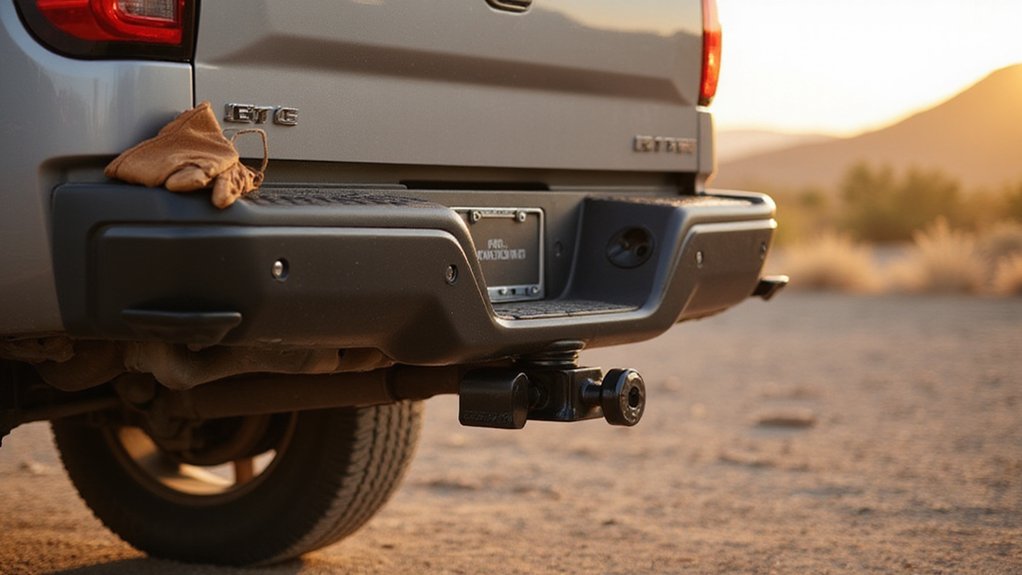
3 Way Hitch Receiver: Uses, Fitment & Buying Tips
If you’re wondering whether a three-way hitch receiver is right for your towing needs, you’re in the right place. It conveniently switches between a ball hitch, pin hitch, and tow strap eye, making it versatile for yard work or light recovery tasks.
Understanding how to choose the right size and setup is key to safe, effective towing. Keep reading for everything you need to know to make it work for you.
How to Check 3 Way Hitch Receiver Fitment and Capacity
Check the hitch’s stamped plate for gross trailer weight and tongue weight ratings. It’s essential to match these numbers with your trailer’s specifications. When the ratings differ between your vehicle manual and the hitch plate, always use the lower figure to stay within safe limits. Typically, tongue weight should be 10 to 15 percent of your loaded trailer weight, and this is often the point where capacity limits are reached first. Just as a wheelbarrow’s rated load is limited by its frame and wheel capacity, a tow hitch’s tongue weight must not exceed its stamped limit to avoid failure. When comparing class 3 vs class 4 options, note that class 4 hitches generally offer higher gross trailer weight and tongue weight ratings, making them better suited for heavier towing jobs. For users who need easy transport of gear without towing, a collapsible folding wagon offers a similar principle of staying within its rated load capacity.
To determine your usable payload, subtract the weight of the tri-ball mount itself from the rated tongue weight. This ensures you’re not exceeding either the hitch or the vehicle’s capacity, providing a clear guideline for safe towing. Always double-check these figures before hitched to avoid overloading and potential safety issues.
Setup Tips and Safety Rules for Towing With a Tri-Ball Mount
Ensure the tri-ball is matched to your trailer coupler size before coupling. Make sure both the vehicle and trailer are stationary and unloaded to prevent movement during setup. Insert the receiver pin into the correct hole that corresponds to your trailer’s coupler size, then secure it with a locking clip to prevent accidental disconnection. Never rotate the mount under load, as this can cause damage or pose safety risks. Proper alignment involves confirming the coupler fully encloses the ball, and setting up the trailer as level as possible for stability. The receiver tube itself must be the correct size for your vehicle’s hitch receiver class, as this determines its maximum towing capacity. Check the jack and ground clearance at your chosen ball height to ensure proper ground clearance. The tri-ball setup rotates to connect to 1 7/8″, 2″, or 2 5/16″ couplers for versatile towing. Attach safety chains only to approved points, crossing them under the tongue for added security. Before starting your trip, verify the functionality of all lighting and brake systems. Periodically check that the hitch pin remains secure during travel. To maintain safe and balanced towing, keep the tongue weight between 10% and 15% of the trailer’s total weight, rechecking tongue height after loading as it may shift. Inspect all hardware before each tow and replace any damaged parts immediately to prevent accidents. Always confirm that the mounting hardware is torqued to the manufacturer’s specifications to avoid loosening from vibration during transit. For additional security, consider using anti-rattle straps to reduce hitch movement and noise during travel.
What Is a 3 Way Hitch Receiver and When to Use It?
A 3 way hitch receiver provides three connection options in a single compact unit, making it highly versatile for rear hitch points on vehicles like ATVs, UTVs, or lawn tractors. It typically includes a ball hitch for small trailers, a pin hitch for utility implements, and a tow strap eye for recovery or short-distance pulling. You should use it when you need to switch between different types of loads quickly without swapping out hitches. It is especially useful in yard work, property maintenance, and light hauling where the ability to change attachments swiftly is more important than maximum towing capacity. For those seeking a top-rated fishing cart to transport gear, many models now integrate similar quick-coupler systems for added convenience. Before purchasing, confirm that the receiver opening matches your vehicle’s hitch size, generally 2 inches, which is a Class 3 or Class 4 receiver size offering up to 10,000 lbs. GTW. This setup allows you to tow a trailer, attach a spreader, or pull a stuck vehicle with the same rear point, saving time and effort. When loosening the integrated tow strap, remember that pressing the release lever fully is critical to avoid jamming the mechanism. It is a practical choice for those demanding quick and easy accessory changes during utility tasks. Always perform a final safety check by verifying that all pins and clips are securely fastened before use, as recommended in any proper installation process.