Hitch Mount Gas Can Carrier: Safe Hauling Guide
Figuring out how to safely haul a gas can on your hitch can seem tricky, especially with weight and security concerns.
You need to consider your hitch’s weight limit, choose the right container, and make sure everything is mounted properly for safety.
Getting it all right keeps you and others safe while on the road, and there’s more to consider for a complete setup.
Assess Weight, Heat, and Crash Risks for Hitch-Mounted Gas Cans
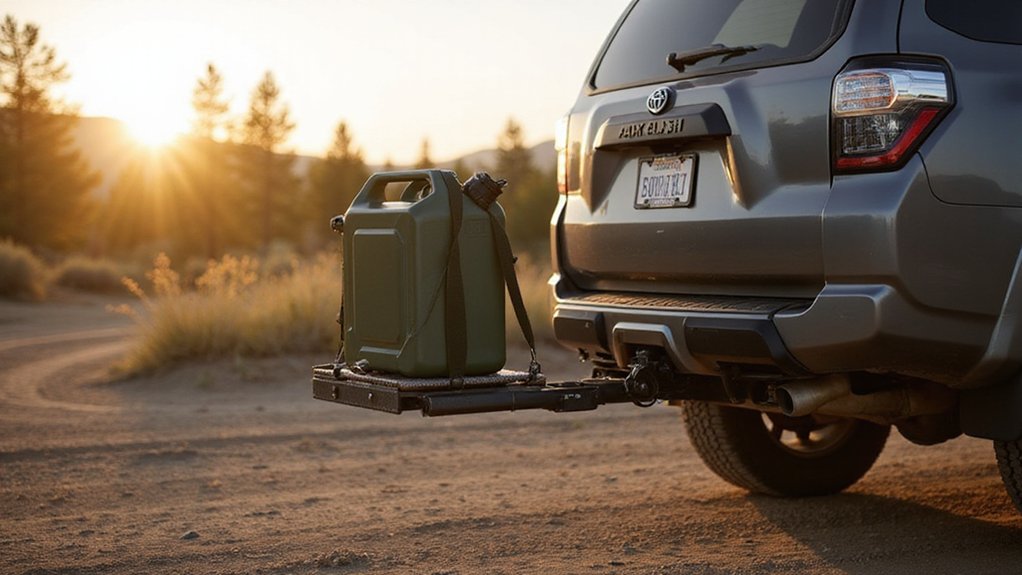
Weight, heat, and crash risks for hitch-mounted gas cans are significant concerns. Two full 5-gallon cans weigh over 60 pounds combined, which can push your hitch toward its tongue-weight limit. This added weight increases stress on your vehicle’s hitch, especially if you include the rack’s weight in the calculation. To manage this load properly, you should compare the combined weight against your hitch’s rated capacity, similar to how you would assess top furniture dollies for their weight limits. For uneven terrain, durable wheel designs help ensure stability when rolling heavy loads across sand. Before mounting, perform a final safety check on the hitch receiver and locking pin to ensure the rack is secure.
Exposure to heat from your exhaust significantly affects these cans. As temperature rises, fuel vapor expands, creating pressure inside the containers. It’s essential to leave sufficient headspace to prevent pressure buildup and leaks, but this does not eliminate the risk of rupture or fire.
Impact vulnerability is another critical factor. Rear-mounted cans lack shielding and are vulnerable in a collision. Even a minor rear-end impact can rupture a container and cause a fire. Securing the cans rigidly helps prevent vibrations that could damage caps or seams, but it cannot fully eliminate the inherent risks of their exposed position.
Choose an Approved Fuel Container and a High-Rated Carrier
Choose an approved fuel container that meets OSHA and EPA safety standards, such as a UL-listed or FM-approved safety can for 5 gallons or less. Look for certification marks like UN3A1 for metal cans or UN3H1 for plastic cans, which confirm the container is designed for fuel transport. Don’t rely solely on appearance; verify that the container’s certification indicates compliance with safety standards. For additional reliability, use sturdy cam buckle straps to secure the fuel can within the carrier, preventing any shifting during transit. When selecting a carrier, ensure its load rating exceeds the combined weight of the empty carrier and the filled cans. Opt for a heavy-duty, powder-coated steel carrier with reinforced corners and secure tie-down points. Make sure the container sits upright within the carrier, with enough clearance for the handle and lid. Proper certification and safety features are essential for maintaining compliance and ensuring secure transport. To ensure the carrier sits level on your vehicle, you must measure the tow hitch drop to align the carrier height with the receiver.
Mount the Can Away From Exhaust, Lights, and Overhang Limits
To mount a fuel container safely, position the unit away from your tailpipe, muffler, and overhang limits. Keep the container clear of heat sources to prevent vapor buildup and warping plastic. Ensure brake lights, turn signals, and reflectors are visible from behind at all times. If the load blocks factory lamps, add approved auxiliary lighting at the rear edge of the load to maintain proper visibility compliance. Consider using heavy-duty caster wheels for easier maneuvering of the gas can carrier when loading or positioning it. For the best connection, select a hitch adapter that matches your vehicle’s receiver size and weight rating. Review the carrier’s folding mechanism to ensure it locks securely during transit, preventing rattling or detachment on rough roads.
Also, stay within your vehicle’s rear overhang limit, which is typically 4 feet beyond the body. If your load exceeds this, you must use red lamps and reflectors at the extreme rear or display red flags during daylight. Clearly mark the farthest rear point of the load. Remember not to block your license plate, rear camera, or backup sensors. Conduct a final walk-around to verify that all lights, reflectors, and license plate markings remain visible from a direct rear view.
Secure Your Hitch-Mounted Gas Can Against Bumps and Stops
Securing a stable platform is crucial for preventing load shift during braking and acceleration. Start by using a threaded anti-rattle system to tighten the connection between your hitch and the carrier. This helps eliminate wobble at the receiver, providing a more rigid link that reduces vibration. Once the hitch is secure, fasten the gas can with ratchet straps to dedicated anchor points. Using multiple straps enhances side-to-side control and minimizes movement during bumps and stops. To prevent tipping, opt for a higher-sided basket or cradle that offers additional contact points, which limit rocking during sudden braking. Finally, apply anti-rattle hardware to prevent straps from loosening on rough pavement—regularly inspect strap tension and hitch tightness before departure and recheck after the first mile or two. For securing the can itself, bungee cords with clips can be used as an additional retention method to absorb minor shocks and provide a secondary hold. Weighing the price, capacity, and everyday practicality of your carrier setup ensures you choose the right system for your specific towing needs without overpaying for unneeded features. For those prioritizing reliability, a carrier with a class hitch rating ensures the unit can handle the added fuel weight without risking damage or instability.
Check State Laws on Overhang Flags and Lighting Before Travel
Many states require a red flag when your load extends more than 4 feet beyond the rear of your vehicle. The size and placement of these flags vary: Virginia mandates a 12-inch red flag, while New Jersey and California require an 18-inch flag or cloth at the extreme end of the load. The flag must be attached at the farthest point of the load, not just on the hitch. During daytime travel, you usually need one flag if your load is 2 feet wide or less, and two flags if it exceeds that width. At night, replace the flags with red lamps that are visible from at least 500 feet. When crossing state lines, you must follow the strictest rules of any state you pass through to stay compliant and ensure safety. Choosing a carrier that mimics the stair-climbing stability of top hand trucks can prevent the load from shifting and obscuring visibility markers. Understanding the basic push cart mechanics of weight distribution helps you position the carrier so the load does not tip or swing during transit. Securing the carrier with a top-rated strap from a dolly review can prevent load shift that might obscure these required markers.