
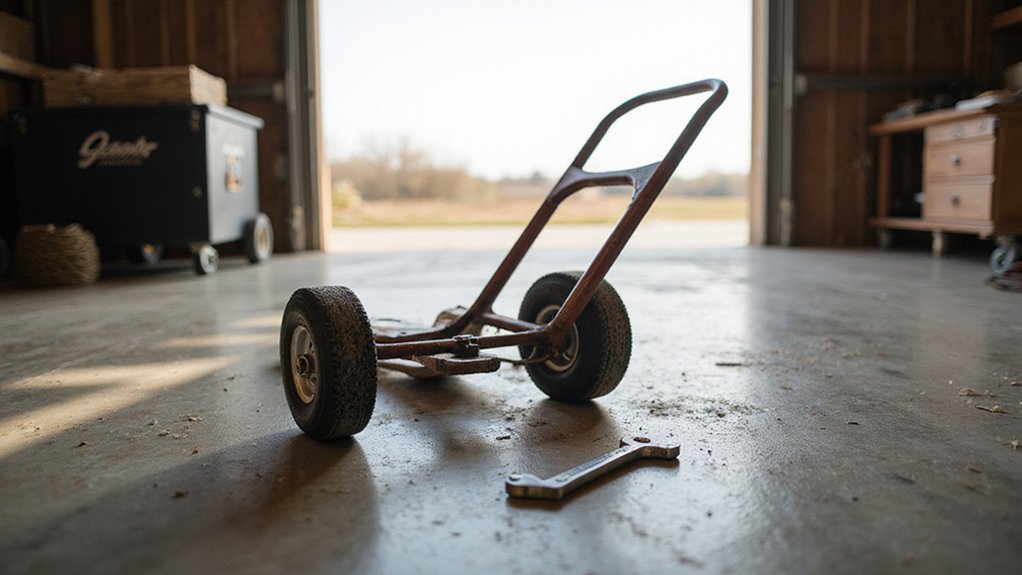
How to Replace Hand Truck Wheels: DIY Step-by-Step Guide
Got a hand truck that’s wobbling or hard to roll? Replacing its wheels is simpler than you might think and can save you from buying a whole new one.
By the end of this, you’ll know how to measure, remove, and install new wheels so your hand truck rolls smoothly again.
Keep reading to get all the step-by-step details.
Key Measurements for Replacement Hand Truck Wheels
To ensure a proper fit for your replacement hand truck wheel, you need to measure five key dimensions. First, measure the wheel diameter across the tire tread, not the rim. This measurement is crucial because tire wear can distort the reading, so compare it with the sidewall markings for accuracy.
Next, measure the tread width and the overall wheel width separately. An excessively wide wheel can rub against the frame, causing damage and reducing maneuverability. For hub compatibility, measure the hub length from bearing face to bearing face; an incorrect length can push the rim beyond the axle space, preventing proper installation. For a sense of material volume, consider that a cubic yard is a common unit for bulk loads like gravel or dirt. Understanding how a receiver hitch works can help when attaching a hand truck to a vehicle for transporting heavy loads.
Then, check the bore size of the wheel against your axle diameter, with common sizes around 5/8 inch. A mismatched bore size can make installation impossible or unsafe. Finally, identify the bearing type and leave enough clearance for washers and cotter pins to ensure smooth rotation and secure attachment. Getting these measurements right will help you select a wheel that rolls smoothly and fits securely. When selecting replacement parts, consider using a no-welding method to adapt the wheel mounting hardware, as this can simplify your build and reduce overall costs.
Common Hand Truck Wheel Sizes: 8, 10, or 12 Inches
Hand truck wheels are commonly available in three sizes: 8, 10, and 12 inches in diameter. Selecting the right size depends on your specific needs. Eight-inch wheels are ideal for light-duty trucks where space saving and easy maneuverability are priorities. They tend to have narrower tire treads and load ratings around 200 to 450 pounds. For moving heavy furniture over carpet, furniture sliders offer an alternative solution for easier repositioning. Many users find that a garden cart with pneumatic tires provides better shock absorption for outdoor use.
Ten-inch wheels offer a versatile middle ground. They handle thresholds and uneven surfaces more effectively than smaller wheels, with load capacities reaching up to 650 pounds. This size works well with both centered and offset hub designs, making it a popular choice across many carts and hand trucks.
Twelve-inch wheels are suited for heavy-duty tasks or high-clearance requirements. They excel at rolling over rough terrain or obstacles and can support loads of 600 pounds or more. Keep in mind, when choosing a larger wheel, ensure the width, hub type, and bore size match your truck’s specifications to avoid fit issues. For secure attachment during transport, it is important to maintain correct tie-down angles when strapping the hand truck in place.
Solid, Foam-Filled, or Pneumatic: Which Wheel Works Best?
Foam-filled wheels provide a flat-free ride with more cushioning than solid wheels, making them suitable for both indoor and outdoor use. They handle debris better and require less maintenance than pneumatic wheels. However, they do not absorb shocks as well as pneumatics, so if a smooth ride over uneven terrain is your priority, pneumatics are the better choice. Foam-filled wheels strike a balance: they are low-maintenance and durable for mixed surfaces but offer less comfort on rough terrain compared to pneumatic options. For safety during installation, always ensure the final safety check is completed before using your equipment. For buyers seeking a versatile option, this balance is similar to what you’d find in top garden carts that include a seat. For optimal performance on mixed surfaces, pairing these wheels with a quality tool cart ensures reliable mobility in your workspace.
Tools and Safety Gear for Removing Stuck Wheels
To remove a stuck wheel safely and effectively, you’ll need specific tools and safety gear. Needle-nose pliers are ideal for removing cotter pins, while a flat-head screwdriver helps dislodge push nuts. A breaker bar provides the extra leverage needed for stubborn bolts, making it easier to turn them without damaging the heads. For rust bonds, gentle taps with a hammer and a wood block can break the corrosion without harming the axle. Penetrating oil, such as PB Blaster, loosens rust and corrosion; apply it generously and allow it to soak before attempting to turn the fasteners. Additionally, you can drive the vehicle back and forth with the lug nuts slightly loosened to generate force from wheel rotation, producing a loud pop that indicates the wheel has detached. Using high-quality tie-downs can also provide secure anchoring for the vehicle during the process. Selecting a top furniture dolly can make repositioning heavy loads much easier during your setup. For those lifting the vehicle onto a stand, consider a carrier that offers adjustable stability to prevent tipping.
Safety gear is essential to protect yourself during the process. Work gloves shield your hands from cuts and pinches, and safety glasses guard your eyes from metal shards or debris that might fly loose. Using wheel chocks behind and in front of the tires stabilizes the vehicle, preventing movement during removal. Additionally, a wire brush helps clean rust and dirt from the mounting surfaces, ensuring a better fit when reinstalling the wheel. Before you start, lay out all your tools nearby—rushing can lead to injuries or damaged parts.
Remove the Old Wheel Without Damaging the Axle
To remove the old wheel without damaging the axle, start by identifying the fastener type to avoid causing harm. For cotter pins, straighten out the bent legs before pulling the pin free. Lock washers usually need to be pried off—they are typically not designed for reuse. In nut-and-bolt setups, hold the axle steady while unscrewing the nut. Press-fit wheels often require a puller rather than brute force to remove.
After removing the retainer, gently slide the wheel off using steady pulling. If it’s stuck, apply lubrication with penetrating fluid to loosen rust or corrosion. Carefully rock the wheel back and forth; avoid forcing it, as twisting slightly helps break corrosion bonds. Refrain from excessive hammering, as it can deform or damage the axle and complicate reinstallation. For extremely stubborn cases, you can build a custom powerful puller from on-hand materials, such as using a bottle jack and chain loops around the wheel spokes. For a simpler solution, consider using a collapsible folding wagon to transport heavy items instead.
For stubborn wheels, use a wooden drift to tap them off, which prevents direct strikes on the axle. A 3-jaw puller works well for press-fit wheels. Throughout the process, support the axle to prevent bending or bending-related issues. Stop once the wheel moves freely—applying continued force increases the risk of damaging the axle.
Clean and Inspect the Axle Before Fitting
Before fitting a new wheel, thoroughly clean and inspect the axle to ensure a smooth, reliable fit. Begin by wiping away all dirt, grease, and old lubricant from the entire axle surface. Use a degreaser if heavy buildup is present, and remove mud, rust flakes, or debris that could interfere with wheel seating, as these can affect tire inflation and brake adjustment later. For hand trucks with bearings that match wheelbarrow sizes, selecting durable pneumatic tires can help absorb shock during heavy loads. Keep the axle dry unless a light protective lubricant is specified. It is also critical to clean the back mating surfaces and center bores to prevent corrosion buildup that could cause the wheel to shift or loosen over time. When considering the overall strength of your hand truck, note that choosing an axle with a higher load capacity can prevent bending under heavy use. Understanding the elastic stretch limits of the bungee cord used to secure your load can help prevent over-extension and failure during transport.
Next, check for surface damage. Look for rust, scoring, nicks, or burrs that could harm your new bearings. Examine the contact zone for bending or uneven wear patterns. Use a fine file or emery cloth to remove minor imperfections. Finally, inspect cotter pin holes, axle ends, and mounting faces to ensure they are smooth and free of corrosion. Confirm that retention points are not blocked by rust. A clean, debris-free axle will help ensure proper wheel rotation and extend the life of your hand truck.
Fit and Secure the New Hand Truck Wheel
After cleaning the axle, fit and secure the new hand truck wheel by first ensuring the axle diameter matches the wheel bore. Confirm brake compatibility if your model has a brake system, since some wheels require specific hub designs for clearance. Slide the wheel onto the axle, centering it properly so the retaining hardware engages evenly.
Place washers on both sides as needed to control spacing, leaving enough room for the retainer to sit securely. Choose the correct retention style: insert a cotter pin and bend both legs outward, or seat a retaining ring firmly. If using cap or lock nuts, tighten them until snug but avoid over-tightening, which can restrict hub rotation. For added security on uneven terrain, consider using top cam straps to fasten the wheel assembly in place. Make sure the wheel remains centered and all hardware sits flush before moving on.
Test for Smooth Rolling and Straight Tracking
Position the hand truck on a flat, smooth surface to accurately evaluate the wheel assembly’s movement without interference from floor irregularities. Roll it several feet straight forward and observe for wobbling, hopping, or side-to-side drifting. A rhythmic vibration or pulsing during this test often indicates poor wheel balancing, which can strain the axle over time. For comparison, note how rolling carts with shelves typically offer a stable, multi-wheel base that distributes stress more evenly than a two-wheel hand truck, much like a ratchet strap evenly secures a load across a truck bed. Much like selecting the correct ball mount vs hitch ball ensures proper towing alignment and safety, choosing the right wheel assembly for your hand truck prevents tracking issues under load.
Next, spin each wheel by hand to check for smooth, free rotation. Listen for any grinding or scraping sounds that suggest debris or damage. Confirm that both wheels spin similarly in duration and ease, stopping gradually without resistance. Uneven tire pressure can cause one wheel to drag or pull, so ensure consistent inflation for balanced spinning.
Finally, push the hand truck forward using light, steady pressure to verify that the frame tracks straight without pulling to one side. Repeat the motion in reverse to catch any intermittent binding in the wheel or axle. Place a typical load on the truck and listen carefully for clicking, rumbling, or other irregular noises. The hand truck should remain manageable during starts, stops, and turns. If issues are present, check for loose hardware or debris and address before proceeding.
Maintenance to Make Your New Wheels Last Longer
Regular cleaning and lubrication are essential for extending the life of your new wheels. After using your hand truck in wet or dirty conditions, clean the wheels and axle hardware with mild soap and warm water to remove dirt and debris that can cause abrasive wear. Dry everything thoroughly to prevent rust formation. Wipe off excess grease or lubricant, as leftover residue can attract dirt and grit, which damage bearing lubrication.
Apply lubricant to the bearings and axles on a routine schedule, using a small amount of oil or grease. After applying, spin the wheel to work the lubricant in evenly. Avoid over-lubricating, as too much can attract more dirt and create unnecessary build-up. During regular inspections, check wheel alignment for signs of cracks, flat spots, or corrosion that could indicate damage. Tighten loose bolts promptly to prevent vibration and further harm. For pneumatic wheels, keep the tire pressure at the recommended level to ensure smooth operation and longer wear. Store your hand truck in a dry environment, avoid overloading, and be cautious on rough terrain to minimize stress on the wheels.