How to Inflate a Wheelbarrow Tire: Correct PSI Tips
Getting your wheelbarrow tire properly inflated can make all the difference in how it handles and lasts.
If you’re wondering how much air to put in, knowing the correct PSI and the right inflation tips can keep your work smooth and safe.
By the end of this, you’ll know exactly how to get your tire to the perfect pressure for any job.
What PSI Does Your Wheelbarrow Tire Actually Need?
Most pneumatic tires for wheelbarrows operate best between 20 and 40 PSI. For light gardening tasks, 15 to 25 PSI helps protect the tire tread and enhances traction on soft ground. When hauling general loads, aiming for 20 to 30 PSI provides a good balance of comfort and ease of movement. If you’re transporting construction materials, inflating to 30–35 PSI gives better load support. For heavy-duty contractor use, 35 to 40 PSI is ideal, but only if your tire is rated for that pressure. Overinflating beyond the recommended PSI can damage the rim, so always match the air pressure to your specific load and terrain for optimal performance and longevity. For moving heavy furniture, a properly inflated tire can help you transport items more easily, similar to how a furniture dolly reduces strain during moves. For navigating sandy terrain, consider using a beach cart with wheels designed for easy sand travel. Selecting the correct tire pressure is just as important as choosing the right receiver hitch class for your towing needs.
How to Find the Right PSI on Your Wheelbarrow Tire Sidewall
Look for Sidewall markings near the rim bead, typically small text reading MAX PRESS or Max PSI. This number indicates the maximum pressure your tire can safely handle, not the recommended inflation level for regular use. It’s common to see the tire’s size code, such as 4.80-8, along with PSI or kPa listings nearby. The Max PSI mark is a safety limit you should never surpass—if it says Max PSI: 35, do not inflate above 35 PSI. When both PSI and kPa are listed, treat the PSI value as your absolute maximum. Your goal is to inflate the tire below this limit, ensuring safety and optimal performance. Remember, these markings show capacity limits, not your wheelbarrow’s ideal working pressure. Unlike a stroller wagon, which prioritizes canopy comfort and style for passengers, a wheelbarrow tire focuses on structural capacity and load stability. For heavy loads, a standard wheelbarrow in a yard might require firmer inflation to maintain stability. Before adjusting pressure, wipe away dirt and debris from the valve stem with a damp cloth to prevent grit from entering the core, a practice that keeps the seal clean and functioning smoothly.
How to Inflate Your Wheelbarrow Tire Safely and Seat the Bead
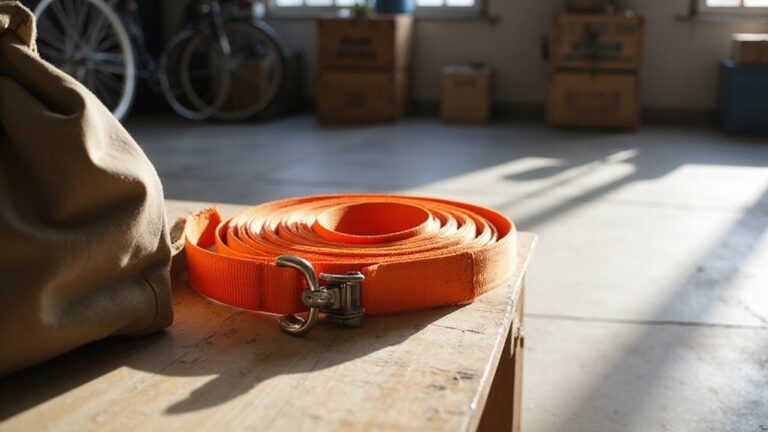
To inflate your wheelbarrow tire safely and seat the bead correctly, start by wearing safety glasses and gloves to protect against debris and unexpected blows. Keep clear of the sidewall and never stand directly over the tire assembly during inflation. Use a hand pump or a controlled air source, such as a low-volume compressor, rather than a high-volume one, to prevent overinflation or accidents. Before tightening the ratchet strap, use a retaining clamp to grip the tire near the rim without damaging it, which helps align the assembly. Perform a final safety check of all connections before beginning inflation to ensure nothing shifts under pressure. While checking, also confirm that the strap’s teeth are fully engaged and that the handle is in the release position to avoid unexpected tension during setup.
Before adding air, ensure that the rim, valve stem, and tire bead are properly aligned. Clean the bead and rim contact surfaces thoroughly—scrubbing away dirt and debris prevents air leaks. Inspect the valve for any damage or signs of dry rot and confirm that the tube isn’t pinched, which could cause leaks. For similar outdoor gear, a Radio Flyer wagon canopy provides durable shade and protection from the elements. Additionally, verify that the ratchet strap’s webbing is free of frays or cuts, as a damaged strap can slip mid-inflation and cause the assembly to shift.
Apply a soapy water solution to the bead as a lubricant to help it slide into position during seating. To seat the bead, wrap a ratchet strap around the tire tread and tighten it to push the sidewalls outward. Inflate the tire slowly, watching for a uniform bead line and listening for a distinct popping sound that signals the bead has seated properly. Ensure steady pressure throughout the process to avoid damage or uneven sealing. Keep the compressor nozzle clear of the valve stem and release air in short bursts if needed, which also helps you maintain precise control.
What Happens With Under-Inflated or Over-Inflated Wheelbarrow Tires
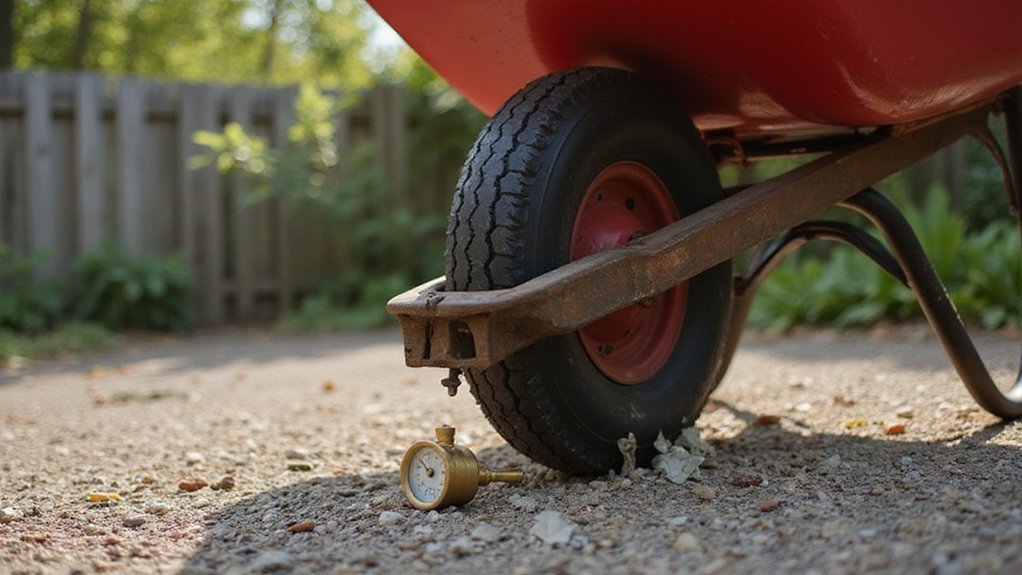
Running a wheelbarrow tire with incorrect pressure—either too low or too high—leads to several issues. Under-inflation causes excessive sidewall flexing and tire deformation, which generates heat and weakens the casing. This results in increased rolling resistance, making pushes more strenuous, and uneven tread wear at the shoulders, forming classic wear patterns. Over-inflation reduces the contact patch, stiffens the ride, and concentrates pressure in the center tread, leading to accelerated center wear and decreased traction. Both problems shorten tire lifespan and raise safety concerns: low pressure risks sudden failure, while high pressure increases the chance of blowouts on impact. To prevent these issues, check your tread—shoulder wear indicates low pressure, while center wear signals high pressure—and adjust the inflation before loading your wheelbarrow. For example, checking PSI with a gauge can help match cargo load stability for balanced handling. For smoother operation on uneven ground, consider pairing your tire pressure adjustments with a durable garden cart that features larger wheels and a sturdy frame to reduce strain. When selecting a cart, collapsible folding wagons offer easy portability and storage for heavier loads.
When to Use 15 PSI vs. 40 PSI for Different Terrain
Use 15 PSI on soft terrain like lawns, flower beds, or mud. Lower tire pressure broadens the contact patch, allowing your wheelbarrow to float instead of digging in. This makes it ideal for sand, loose soil, and other loose or soft ground where maximizing flotation and grip takes priority over rolling speed. For larger loads, a yard cart for lawn mower can make these adjustments easier.
On the other hand, 40 PSI is better for hard surfaces when hauling heavy loads. Higher pressure minimizes tire deflection and reduces the risk of pinch flats when moving rocks or concrete on pavement. It allows for more efficient rolling but offers less traction on soft or uneven ground. Always check your tire’s sidewall for its maximum PSI before inflating to avoid over-inflation and potential damage. Matching your tire pressure to the terrain and load protects both your lawn and your gear.
How Often to Check Your Wheelbarrow Tire Pressure
Check your wheelbarrow tire pressure at least once a month during regular use. Monthly checks help identify natural air loss and slow leaks before your tire’s performance drops. Don’t rely on visual inspection alone—use a gauge to get an accurate cold-pressure reading. Cold tires mean the rubber isn’t heated from friction or sunlight, providing a true measure of the pressure.
If you use your wheelbarrow weekly or more frequently, check the pressure every week to prevent soft tires during work. For heavy daily use, inspect the tires before each job to avoid the frustration of soft, underinflated tires that make pushing harder. Always check the pressure before moving large loads, as low PSI increases push effort and the risk of pinch flats. For truck owners who also haul wheelbarrows, top ratchet straps are essential for securing the load during transport. When securing a wheelbarrow to a camping trailer, a compatible bike rack can also help organize your gear.
Temperature fluctuations also influence tire pressure. During hot or cold spells, check more often to ensure proper inflation. After your wheelbarrow has been stored for a while or after any impact or bump, recheck the pressure immediately. Maintain the valve stem by ensuring it stays clean and sealed tightly, which helps prevent slow leaks over time. If you notice uneven wear on dual tires, consider rotating them to evenly distribute wear and maintain consistent pressure across both tires. When selecting a tow hitch for your motorcycle, ensure it is rated for the weight of your wheelbarrow if you plan to tow it.
How to Keep Your Wheelbarrow Tire at the Correct PSI Long-Term
To keep your wheelbarrow tire at the correct PSI long-term, inflate it to the pressure printed on the sidewall, which is usually between 20 and 40 PSI. Maintaining this range prevents damage caused by overinflation or underinflation. Check the pressure monthly with a reliable gauge, as tire cord quality degrades faster when pressure is incorrect. Regularly inspect and tighten the valve stem cap to prevent slow leaks from a loose core. If the tube shows signs of aging or frequent leaks, replacing it can stop chronic seepage. Protect the tire from temperature fluctuations by adjusting PSI after significant weather changes. Storing your wheelbarrow indoors helps slow rubber aging and helps preserve PSI over time. Also, look for cuts or debris that may cause air to leak gradually. For securing loads during transport, using top ratchet straps ensures reliable and adjustable tension without damaging the gear. For added stability when moving heavy loads, consider workbench casters that use a low-profile caster design to reduce wobble and strain on the tire. Proper inflation keeps the tire’s shape, reduces pinch-flats, and extends its overall lifespan. For securing loads during transport, high-quality cam straps provide reliable and adjustable tension without damaging the gear.