What Are Ratchet Straps? Uses, Parts & Load Ratings
If you’ve ever wondered how to securely transport cargo without it shifting or falling apart, ratchet straps might be your best bet. They’re simple yet effective tools that tighten and lock webbing to hold loads in place.
By understanding the key parts—the webbing, hooks, and ratchet mechanism—you can choose the right strap for your needs and spot potential issues before it’s too late.
Keep reading to learn how to make the most of these essential securing tools.
What a Ratchet Strap Is and How It Secures Cargo
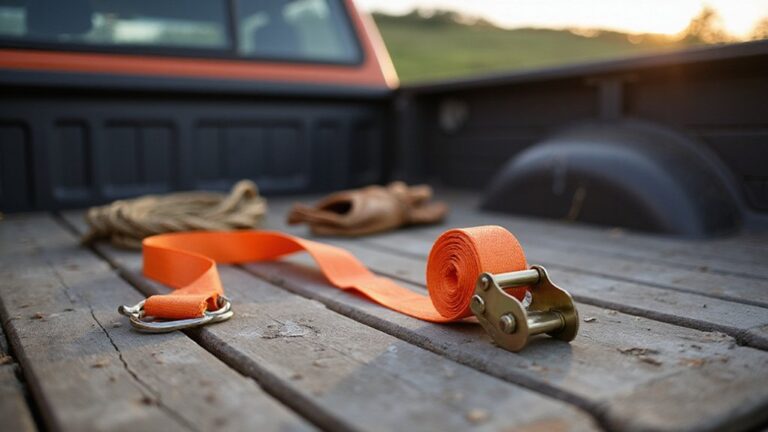
A ratchet strap secures cargo by using a webbing sling combined with a mechanical ratcheting device that tightens and locks tension in place. To use one, you wrap the strap around the load and attach its hooks to anchor points. Then, operate the ratchet mechanism repeatedly to remove slack and increase tension until the load is stable. The ratchet locks the webbing, maintaining tension during transit and preventing cargo movement. For those seeking the best gear, reviewing top pick comparisons helps identify models that balance quality, performance, and value. Like a wheelbarrow, a ratchet strap operates on the lever principle to multiply force for efficient tightening. Similarly, a tow hitch ski rack uses a secure mounting system to keep cargo stable and prevent shifting during travel. Always observe safety precautions by avoiding overloading the strap beyond its working load limit. Proper load distribution is essential; you should position and balance your cargo correctly before fastening it down. Over-tightening can damage items or compromise strap performance. Tighten the webbing until it lies flat and taut, approximately 30 to 50 percent of the strap’s rated capacity, creating a firm hold that prevents shifting, sliding, or bouncing during transport.
The Parts of a Ratchet Strap: Webbing, Hooks, and Fittings
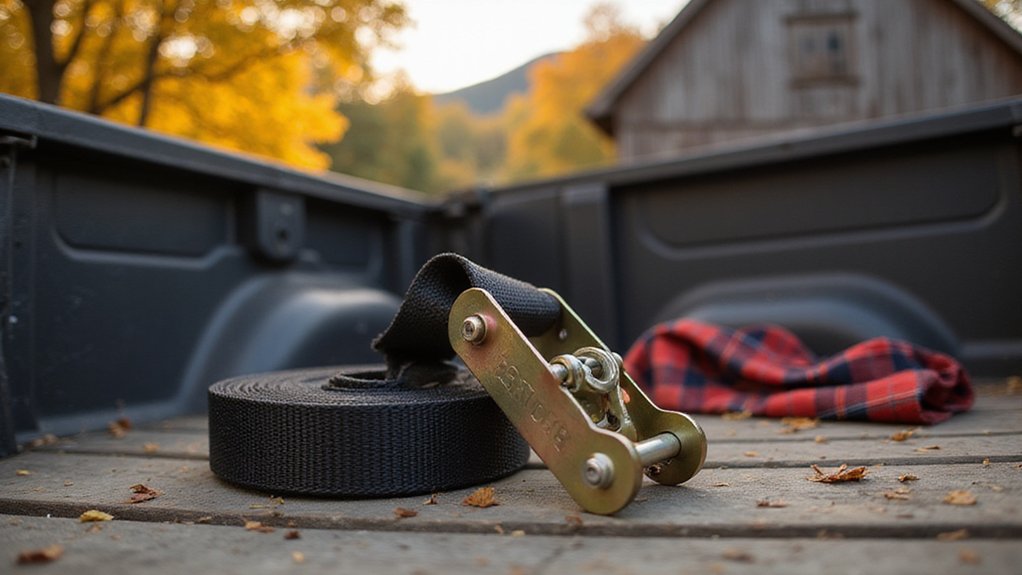
End fittings are the connectors that attach your webbing to anchor points—examples include S-hooks, wire hooks, flat hooks, or D-rings. These fittings must be compatible with your vehicle’s anchor system to ensure secure fastening. They are sewn onto the webbing, so it’s important to check the stitch junctions regularly for signs of wear or damage. Properly inspecting these connections helps prevent slippage or failure during transportation. For moving heavy items, these straps work effectively with top furniture dollies to keep loads stable and balanced. When securing bicycles, using a rear rack that is rated to handle the load ensures the webbing and fittings remain under their working load limits. For DIY projects like building a lawn mower cart, these straps can secure components without welding.
Working Load Limit vs. Breaking Strength: What’s the Difference?
The breaking strength of a strap, such as 7,500 pounds, indicates the maximum force it can withstand in a lab setting before failing. However, this number isn’t the figure you should rely on for everyday use. The actual safe working load, called the Working Load Limit (WLL), is typically a third of that breaking strength—in this case, around 2,500 pounds. This safety margin accounts for real-world conditions like shock loads, vibration, and shifts in the cargo, which can impose sudden or uneven forces on the strap. Using the breaking strength as your load limit is risky because it leaves no buffer for unexpected jolts or stresses during transport. Always secure cargo based on WLL to ensure safety, and remember that material durability, while important, doesn’t replace the need for proper load calculations. For example, choosing a top trailer hitch basket can also help distribute weight evenly and reduce shifting. Similarly, selecting bungee cords with balls can provide additional flexibility for securing lighter loads with reliable tension. Proper tensioning technique also plays a critical role, as overtightening can damage the strap while undertightening allows cargo to shift, both of which compromise the WLL’s safety margin.
How to Match Ratchet Strap Size to Your Cargo Load
Matching the size of your ratchet strap to your cargo load involves focusing on three main factors: length, width, and Working Load Limit (WLL). First, measure your cargo’s total length, including any overhang. Choose a strap that is at least 1.5 times this measurement to ensure enough slack for secure fastening and adjustments. For width, select based on the weight of your load—use 1-inch straps for light loads up to 1,100 pounds WLL, 2-inch for medium loads around 915 to 3,335 pounds WLL, and 3- or 4-inch straps for heavier equipment. To stay within safe limits, make sure the combined WLL of your straps meets or exceeds at least 50% of your cargo’s weight. For irregularly shaped or very long loads, chains or additional fastening methods might be more reliable than larger straps. Also, consider the strap material: polyester resists UV rays and stretch, making it ideal for outdoor hauling. To avoid damaging the strap, always hand-over-hand the webbing through the ratchet mechanism to prevent cinching with loose tail ends. Using multiple straps often provides better security than relying on a single oversized strap, especially for complex loads. To ensure your strap fits the cargo’s contact points, you can apply similar measuring steps used for wheelbarrow tires to check the strap’s width against the anchor points. For loads that shift easily, consider using a folding bike with trailer setup to see how a balanced, low-center-of-gravity frame improves stability during transport.
Red Flags to Check Before Every Ratchet Strap Use
Before using a ratchet strap, it’s crucial to inspect the strap thoroughly for red flags that could indicate failure. Start with label compliance—if the Working Load Limit (WLL) tag is missing, illegible, or damaged, the strap should be taken out of service. Without a visible proof of capacity, you cannot ensure it’s suitable for road use. Next, carefully examine webbing wear: look for cuts, tears, fraying, or fibers that appear melted from heat or chemicals. Ultraviolet fading or discoloration also weakens the webbing over time. Pay close attention to stitching: any breaks, pulls, or missing threads near the hooks can compromise the strap’s integrity. Inspect the hardware—buckles that are bent, cracked, or corroded, as well as slipping ratchet teeth or a bent pawl, all require the strap to be discarded immediately. For a reliable purchase, consult Top Ratchet Straps for Trucks to compare the best options and ensure you choose a model that meets safety standards. Always consider that a damaged strap is as unsafe as using a faulty stair-climbing hand truck when hauling heavy loads. For safe cycling transport, you might also review top bike and trailer reviews for smart compatibility with your gear. Finally, check for contamination such as mold, knots, or hardened spots, which can hide hidden damage. When in doubt, replace the strap to maintain safety and performance.
How to Inspect and Store Ratchet Straps for Long Life
To ensure your ratchet straps last longer and perform reliably, regular inspection and proper storage are essential. Begin by examining the webbing carefully for signs of fraying, cuts, or UV damage like bleaching. These issues indicate weakened material strength and signal it’s time to replace the strap. Check all hardware, including ratchets and hooks, for cracks, rust, or sticking parts, and verify that load-limit labels remain clear and readable. Before storing, make sure any straps that are wet are completely dry to prevent mold or mildew growth. Clean off dirt or debris using a soft brush to keep the webbing in good condition. For bikers who carry gear, pairing these straps with a camping trailer for bike ensures secure cargo transport on the road. Many users also find it convenient to secure items using the same straps on a yard cart for lawn mowers for heavy or bulky loads. When selecting new straps, review top strap reviews to compare the best options for your specific dolly or hauling needs.
For storage, coil the straps loosely to avoid kinks or unnecessary stress. Store them in fabric bags or containers to keep them protected from dirt and damage. Hang the straps in a cool, dry, and ventilated area, away from direct sunlight, chemicals, or sharp objects that could cause harm. Separating straps from other gear not only prevents abrasion but also preserves their integrity. Following these steps extends the life of your ratchet straps, ensuring they stay safe and effective for many uses.