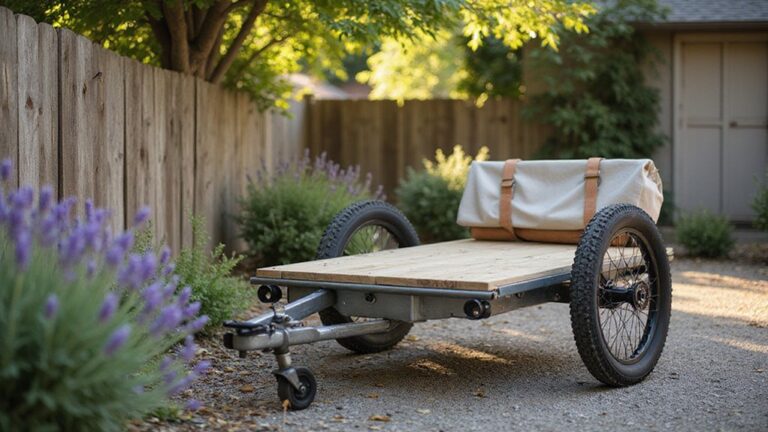

DIY Furniture Dolly: Build a Rolling Mover in an Hour
Need an easy way to move heavy furniture without straining your back? Building a simple rolling furniture dolly can make the job much easier and cost less than buying one.
With just a few basic materials and about an hour of work, you can create a sturdy platform to help you push or slide bulky items safely.
Keep reading to see how you can build your own.
Build a Furniture Dolly Instead of Buying One
Building your own furniture dolly from scrap wood and basic hardware can save you money and give you a custom fit. Instead of paying around $25 for a store-bought option, you control the materials and load capacity. You can choose plywood thickness based on your actual weight needs, ensuring durability without overpaying for unnecessary load ratings. Selecting the right swivel casters with bolt patterns that match your frame guarantees smooth movement and prevents wobbling or failure. Custom sizing allows you to perfectly center your furniture, like a sofa or cabinet, for improved stability. Plus, you avoid renting a dolly for a short move or buying one you’ll rarely use afterward. The whole process takes under an hour, and you can tailor every dimension for strength and easy maneuverability. By selecting wood without knots, you enhance the dolly’s integrity and load-bearing ability, as clear quality wood prevents structural weak points during heavy use. Similarly, choosing heavy-duty casters like those found on top-rated yard carts can increase your dolly’s capacity for moving larger loads. To match your truck’s bed dimensions and ensure a secure fit, you can apply similar assembly methods used for truck kayak carriers. For additional inspiration, review the top furniture dollies if you want to compare your custom build’s features against professional options.
Gather Plywood, Four Swivel Casters, and Basic Tools
Before you cut or assemble anything, gather 3/4-inch plywood, four swivel casters, and the basic tools you’ll need. Choose plywood sized for your furniture’s footprint; a 2-by-1-foot piece works well for smaller projects. While MDF or OSB are alternatives, plywood offers superior stiffness and resistance to flex under load. You’ll also need a saw, drill, pencil, clamps, and safety goggles. Mark the positions for the casters about an inch from each corner on the plywood’s underside. Pre-drill pilot holes to prevent splitting, then secure each caster tightly with screws matching your plywood’s thickness. For maximum strength, consider using 11 layers of phenolic resin-faced plywood for the platform. To keep your dolly rolling smoothly over time, check that all four wheels pivot freely and tighten any loose hardware after the first few uses. For those moving heavy loads, choosing a design inspired by durable garden cart performance can improve platform stability. Regular caster maintenance helps prevent wobble and ensures durability.
Cut the Platform and Add Underside Support Blocks
Cut the plywood to size for the platform, aiming for a 2-by-1-foot blank. Plan your cuts so you minimize waste—trim oversize pieces in a logical order to get straight, square edges. This precision is important for accurate caster placement later. Unlike a utility dolly, this design uses plywood instead of a lightweight aluminum frame. For those moving heavy loads, a rolling cooler cart design can provide a durable and portable base for your project.
Next, turn the platform upside down. Near each corner, cut support blocks from 2-by-4s to about 10 inches long. Place these blocks 1 inch in from the edges and ends of the plywood. Apply wood glue to each block, then clamp them flush with the underside of the platform. Use 1.5-inch screws to secure each block through the plywood into the support blocks, creating a sturdy foundation. These support blocks distribute weight evenly and provide solid mounting points for the casters, preventing the platform from sagging or splitting under load. For even greater stability, consider the foam block support principles used for securing kayaks during transport.
Choose the Right Caster Load Rating for Your Furniture
To choose the right caster load rating, start by estimating the total weight your furniture will carry, including any items stored on it. Divide this total by the number of casters you plan to use, but assume only three casters support the load to account for uneven flooring. Multiply that number by a safety factor of 1.5 to 2.0 to accommodate mixed household conditions. This approach ensures your caster’s load capacity isn’t just a bare minimum, providing a margin for safety. Opting for casters with a higher rating than the minimum helps improve caster durability and prevents damage to your flooring. Remember, the dynamic movements, such as turns and shifts, exert additional stress on the swivel parts—so always size your casters above the static weight for smooth rolling and to avoid early failure. For an even more robust build, consider incorporating a design that uses a steel channel frame similar to the durable construction found in Garden Way carts. The principle of distributing weight evenly is comparable to how Thule roof racks securely balance kayaks during transport. Similarly, reviewing the trailer weight ratings from top motorcycle trailer reviews can inform safer load calculations for your dolly.
Attach Four Swivel Casters for 360-Degree Movement
To allow your dolly to turn in any direction without a fixed front end, attach one swivel caster near each corner of the base. Precise placement is important: position each slightly inward from the edge so the mounting plate rests on solid wood, preventing wobbling. Keep the corner spacing even to minimize drag and ensure smooth pivots around doorways and tight corners. Use the caster’s plate as a template to mark hole positions, then drill pilot holes to prevent splitting the wood. Dry-fit each caster first to check clearance and flatness before securing them permanently. Tighten all screws or bolts firmly, as loose plates cause wobble and reduce maneuverability during turns. When selecting a receiver hitch for towing, ensure your vehicle’s rating matches the dolly’s load capacity. Unlike a push wagon, which favors directed control, a swivel-caster dolly excels at multidirectional navigation in tight spaces. With four independently rotating swivel casters, every wheel moves freely, giving you 360-degree movement and a balanced, agile dolly. Each caster includes a non-slip pad at the top to prevent furniture scratches and damage. Always perform a final safety check before moving a loaded dolly, just as you would when securing a bicycle trailer.
Test the Dolly and Move Your First Load Safely
Before loading your first piece of furniture onto a dolly, check its weight capacity and keep your test load well below the maximum. Most DIY dollies can handle around 1,000 pounds, but staying within a safe margin prevents surprises. Use the actual weight of the item, not an estimate, and always prioritize safety precautions. Center the furniture over the dolly’s core to ensure proper weight distribution. Remove drawers or cushions to lighten the load if possible. Secure tall or slippery items with straps to prevent shifting. Push the dolly rather than pull it on a flat, obstacle-free path, and move slowly when navigating turns. When lifting furniture, use your legs, keep your back straight, and consider enlisting a second person for bulky pieces. After your initial short test roll, stop to recheck wheel mounts and fasteners for any looseness. Confirm that the load has not shifted during the test. If steering feels unstable, reduce the load and test again. Fix any weak points before proceeding with a full move. For added stability, consider how a rear rack design can inform your dolly’s platform balance, just as quality bicycle racks distribute weight evenly for safe hauling. Just as you would check the hardware on a truck bed extender after installation, re-tighten any bolts or screws on your dolly before committing to a heavy load. Using bungee cords with hooks provides an extra layer of security for tall or oddly shaped loads.