
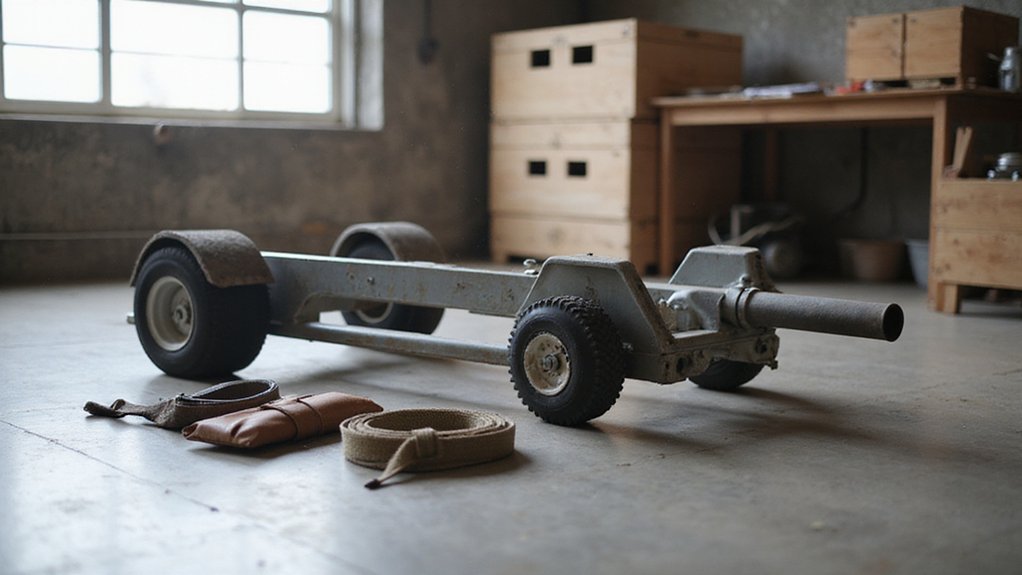
DIY Hand Truck: Build Your Own Heavy-Duty Hauler
Struggling to move heavy loads without hurting your back? Building a sturdy hand truck tailored to your needs can make a big difference. By choosing the right materials and sizing the frame correctly, you’ll create a reliable, heavy-duty hauler that transfers weight smoothly and safely.
Keep reading to learn how to design a hand truck that works as hard as you do.
Design a Heavy-Duty Hand Truck Frame for Your Load Capacity
To build a frame that doesn’t fold under pressure, start by designing a direct load path that transfers weight straight to the axle, bypassing your hands. Keep the load’s center of gravity low to reduce bending moments and minimize the risk of tipping over during movement. An ergonomic handle should be positioned so it doesn’t bear the full load; instead, let your legs handle most of the effort. Set the load height to provide clear forward visibility, ensuring you do not have to crane your neck or peek around the cargo. The tongue or toe plate must slide fully under the load before tilting the truck back. Make sure the frame centers the load over the wheel axis for stable pushing and handling. Never guess at capacity—design the frame to a specified working load limit. For single-person operation, keep the load at or below 100 kilograms to prevent overstressing the structure. For comparison, many commercial options like four-wheel wheelbarrows distribute weight across multiple axles for improved stability. When designing your frame, consider that a single large wheel provides better maneuverability over uneven terrain than smaller wheels. Additionally, incorporating features inspired by bed extenders can help secure long items that overhang the platform, preventing them from shifting during transport.
Pick the Best Material: Steel, Aluminum, or Wood
Steel is the strongest choice for a hand truck frame, offering unmatched rigidity and durability under heavy loads. However, its weight makes it challenging to carry, especially up stairs or over uneven terrain. Aluminum strikes a balance between strength and weight; it provides a high strength-to-weight ratio, making it easier to maneuver without sacrificing much durability. Aluminum also resists corrosion naturally, which is a plus in wet environments, although it may not be as tough as steel when subjected to constant heavy abuse. For those seeking a ready-made alternative, top furniture dollies provide a convenient and pre-assembled solution for easy moving. Always check the load rating before hauling to avoid frame failure or injury. For transporting kayaks, a specialized Thule roof rack offers a secure and lightweight alternative to a hand truck.
Wood is best suited for handles rather than the main frame. It dampens vibrations, feels comfortable to grip, and is easy to work with. But moisture can cause wood to warp or rot over time, reducing its longevity. Costs vary: steel is typically cheaper upfront but requires painting or coating to prevent rust, which adds to maintenance. Aluminum costs more initially but reduces long-term upkeep. Wood is the least expensive to purchase but tends to wear out faster, leading to more frequent replacements. Depending on your needs—shop work, portability, or budget—you can choose steel for maximum strength, aluminum for a lightweight and corrosion-resistant option, or wood for a cost-effective handle material.
Size the Nose Plate and Axle for Maximum Stability
To maximize stability, the nose plate and axle must be sized as a matched system. The plate depth should be at least one-third of your load’s length—so a 10-inch load requires a minimum 3.3-inch plate. Wider plates, such as 18 inches, provide better support for boxy items and help reduce rocking. If you’re handling taller loads, deeper plates up to 24 inches can improve balance. Pair the plate with a wide axle placement to keep the center of gravity within the support triangle, preventing wobble. Prioritize function over cosmetic finishes when selecting materials. Oversizing either component unnecessarily raises manufacturing costs without offering additional stability. For example, a 500-pound truck might need an 18 by 7.5-inch plate, while a 550-pound off-road load could require a 25 by 12-inch plate. Always ensure that plate area, axle spacing, and wheel size align with your load’s specific profile to achieve maximum control. For guidance on balancing these factors, refer to top options in reviews of the best hand trucks. Properly tensioning the assembly is as critical as the sizing, requiring the same careful approach used when you thread a ratchet strap to secure the load. For moving bulky loads across carpet, similar friction-reducing principles apply as those found in quality sliders designed for smooth gliding.
Select Heavy-Duty Hand Truck Wheels for Your Terrain
To match your terrain, select heavy-duty hand truck wheels suited for the roughest parts of your route. For outdoor use over curbs or gravel, pneumatic wheels are ideal—they feature air-filled tires that absorb shocks and bumps, providing a smoother ride. However, they are prone to punctures and require maintenance. Solid rubber wheels work well on flat, indoor surfaces because they eliminate the risk of flats but offer a harsher ride. Foam or flat-free wheels strike a balance by reducing maintenance and providing some cushioning, making them versatile for mixed terrains. Balloon tires on beach carts similarly excel over soft sand by providing excellent flotation and shock absorption. Ensure your hand truck’s load is secured against shifting to prevent damage when navigating uneven drops. A DIY furniture dolly can be built to similar heavy-duty standards using plywood and casters from the same wheel selection principles.
Tire tread plays a key role: treaded tires grip snow, mud, or uneven ground, while smooth tires roll quietly on polished floors. Wheel size impacts performance as well; 10-inch diameters handle cracks and small obstacles smoothly. Wider treads, measuring between 2.5 to 3.5 inches, distribute the load more evenly on soft terrain. Always choose wheels based on the worst patch you expect to encounter, ensuring reliable mobility across your entire route.
Weld the Frame, Mount the Wheels, and Apply a Rust-Proof Coating
To weld the frame, mount the wheels, and apply a rust-proof coating effectively, follow these steps. First, thoroughly clean your mild steel parts to remove rust, mill scale, and dirt, since these contaminants compromise weld quality. Use a wire brush or grinder to achieve a clean, smooth surface. When welding, employ proper techniques such as welding from alternating sides to control distortion and ensure full-penetration fillet welds at stress points. Grind the welds smooth but avoid removing too much material from critical joints, which could weaken them. For safety, always confirm that the hauler’s center of gravity remains stable once loaded, similar to how you would perform a final load check after installing a truck bed extender.
Next, mount the wheel brackets square to the frame to ensure proper tracking. Tighten the axle hardware enough to eliminate any looseness but avoid overtightening, which can cause bearing binding. For rust protection, apply a powder coating over a clean, profiled surface to create a durable barrier. If the equipment will be exposed to outdoor elements, first use a zinc-rich primer for cathodic protection, which offers an extra layer of corrosion resistance. Always inspect your welds and mounts periodically. Chips or scratches should be repaired immediately to prevent rust from spreading under damaged areas. Regular maintenance of coatings and welds keeps your hauler reliable and corrosion-free.