
What Is a Hand Truck? Types, Uses & Buying Tips
Struggling to move heavy or bulky items without risking your back? A hand truck can make the job much easier by shifting the weight onto wheels, reducing strain and increasing your strength.
With different types designed for specific loads and surfaces, choosing the right one ensures safer, faster moves.
Keep reading to find out which model suits your needs best.
What Is a Hand Truck and How Does It Work?
A hand truck works by leveraging a simple mechanical system to make moving heavy or bulky items easier. You start by sliding its toe plate under a tilted load, then pull the frame backward. This motion engages the wheels, which serve as the fulcrum in a class-one lever system, shifting the load onto the wheels. For wheels that attach with a threaded post, verifying the stem size and fit before installation prevents wobble or damage during use. The panel cart assembly process similarly relies on precise part alignment to ensure a stable frame under heavy loads.
The design redistributes the weight from your arms to the wheelbase, reducing physical strain and enabling ergonomic handling. This mechanical advantage multiplies your force, allowing you to move heavier objects with less effort. To keep the load stable during transport, ensure the weight is centered and the heaviest part stays low against the frame. Proper weight distribution helps maintain balance as you roll the load rather than carry it.
Before using a hand truck, inspect the wheels and frame for any damage or wear. Then, tilt the load carefully, slide the toe plate beneath it, and slowly roll it to your destination. Lower the load gently by raising the frame to an upright position, making sure it’s secure before setting it down. Pneumatic tires are often recommended for outdoor use due to their ability to absorb shocks and handle rough terrain.
What Are the 5 Main Types of Hand Trucks?
There are five main types of hand trucks, each designed for specific tasks and load types. The standard upright model is your go-to for general moving. It features an L-shaped frame and toe plate, making it ideal for transporting boxes, small appliances, and similar loads. For buyers prioritizing ease of movement, reviews often highlight top furniture dollies for their ability to glide smoothly on flat surfaces. When securing loads on these models, having quality and performance in your straps ensures items remain stable during transit.
A convertible hand truck offers versatility by switching between two-wheel and four-wheel modes. This adaptability makes it suitable for handling a range of loads, from small boxes to larger, heavier items. The conversion process is straightforward, typically involving a simple mechanism to change modes as needed.
For stairs or uneven terrain, a stair-climbing hand truck uses wheel clusters with multiple rollers. These wheel configurations reduce user effort and make vertical transport easier by gripping steps or inclines securely. Such models are especially useful in environments with frequent stairs or steps.
When moving heavy, bulky items like refrigerators or large appliances, an appliance hand truck is essential. It usually includes features such as straps and wings to stabilize and secure the load during transport, reducing the risk of tipping or sliding.
Finally, drum or cylinder trucks are specialized for round industrial loads. They incorporate shaped supports and cradles to prevent rolling during movement, ensuring stability even with cumbersome or heavy cylindrical objects. For lighter indoor moves, a furniture dolly is often preferred for its flat platform and easy glide on smooth surfaces.
Why Upright Hand Trucks Excel for Boxes and Crates
Upright hand trucks are ideal for moving boxes and crates because their vertical frame design keeps loads stable and prevents shifting or falling during transit. The nose plate easily slides under stacked items, making loading quick and effortless. The two-wheel tilt-back mechanism balances the load as you roll, allowing for smooth, one-person operation without strain. This mechanical advantage reduces the effort needed, even when handling bulky or heavier boxes. For buyers looking to compare top options, garden cart reviews can help identify the best choice for outdoor tasks. These models offer a wide range of load capacities—from 80 pounds for lighter tasks up to 1,500 pounds for heavier loads—so you can select the right size for your typical crate weight. Comfort features such as larger, softer grips help minimize hand fatigue, and ergonomic designs reduce back twisting and repetitive lifting. For medium-weight and short-distance transport within warehouses or during deliveries, upright hand trucks provide stable, vertical movement that aligns well with your workflow, making the task faster and more efficient. Evaluating durability and wheel quality is just as critical, as top-rated models often prioritize these factors to ensure long-term reliability. The lever principle of a wheelbarrow shows how a similar mechanical advantage allows a single person to lift and move heavy loads with less effort.
When a Convertible or Stair-Climber Hand Truck Is the Smarter Choice
A convertible or stair-climber hand truck is the smarter choice when your route includes stairs or a mix of load types. These models offer versatility that upright hand trucks lack. With a convertible design, you can switch from a two-wheel hand truck to a four-wheel cart, making it easier to handle different loads, such as stacked boxes or flat items. This single frame also allows for occasional stair work, saving space for storage. For those who frequently move heavy lumber or long materials, building a custom lumber cart can provide a more stable platform and higher weight capacity than a standard hand truck. To avoid damaging the hand truck or the truck bed, always follow the manufacturer’s safety checks when fitting any accessory to a vehicle.
Stair-climber models are designed specifically for stairs, featuring six-wheel systems that evenly distribute loads and minimize back strain. They provide better control over curbs and stair flights without requiring team lifts. Both types improve safety by eliminating manual carries on inclines, reducing slip-and-fall risks. However, keep in mind that stair capacity is generally 40-60 percent lower than flat terrain ratings. Always check load limits for stairs separately. To maintain smooth operation on these models, regularly clean the caster wheels to remove debris that can cause sticking or uneven rolling.
Before purchasing, measure your storage space and stair width to ensure the tool fits your most common routes. Choosing the right model depends heavily on your typical environment—select the one that best matches your stairs and load types for optimal efficiency.
Appliance, Cylinder, and Specialty Hand Trucks Explained
Appliance hand trucks are designed to carry heavy, tall appliances like refrigerators and washers up to 1,200 pounds. They feature reinforced steel frames and pneumatic wheels, making them durable enough for demanding loads. The low-profile loading surface allows you to slide appliances on easily, while ratchet straps secure the items firmly in place. To prevent shifting during transport, always engage the locking mechanism on the ratchet strap before moving. This setup simplifies maintenance and moving tasks, especially when dealing with large, unwieldy equipment. For transporting bulky items in a vehicle, consider using a truck bed extender for added support and stability. A DIY cooler cart can be built without welding to carry heavy loads similarly, using simple materials and tools.
How to Match a Hand Truck to Your Warehouse, Retail, or Construction Site
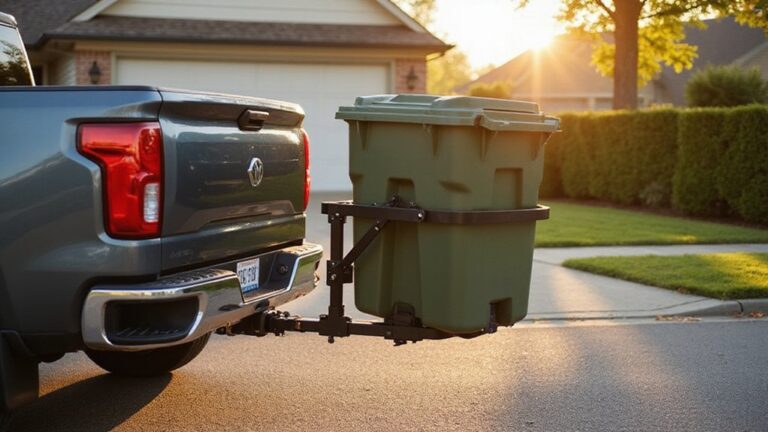
To match a hand truck to your environment, start by assessing the floor conditions and the typical load weight. For warehouse use, select large-diameter wheels—at least 8 inches—to easily roll over imperfections and debris. Opt for a capacity that is 20 to 30 percent higher than your heaviest expected load to ensure safety and durability. Pneumatic tires are ideal for gravel or uneven surfaces, while mold-on rubber wheels work best on smooth concrete floors. For heavy or bulky items, consider a model with a wider frame and deeper nose plate for better balance. If you frequently move heavy loads across long distances, a cart with a hitch cargo carrier attachment can improve stability and reduce strain.
In retail settings, prioritize quiet, floor-friendly wheels made of thermoplastic rubber (TPR) or polyurethane (PU). Compact frames enhance maneuverability in tight aisles, making your movements smoother and less disruptive. On construction sites, look for pneumatic tires and oversized wheels to handle rough terrain. When transporting heavy tools or materials, a truck box bike rack can also be adapted for securing loads. Stair-climbing models with extra-large wheels are essential for navigating debris and steps efficiently. Always compare the wheel durability and folding mechanisms against top collapsible folding wagons to ensure portability matches your transport needs.
Always add extra headroom to your weight capacity to meet safety standards and prevent overloading. Consider your warehouse layout—narrow doorways or long transport distances influence your choice. Ergonomic handles reduce fatigue during repeated use. Additionally, ensure the nose plate fits your typical loads, providing proper support to keep heavy or bulky items stable during transport.
Aluminum vs. Steel: Which Hand Truck Frame Handles Your Loads Best?
Steel hand truck frames are the better choice for carrying loads above 300 kg because of their superior strength and durability. Steel handles heavy impacts and bending without failure, making them suitable for demanding daily use. They are also generally more affordable upfront, but you must take care to prevent rust, especially in wet or humid environments. For securing heavy loads during transport, top ratchet straps offer a reliable hold that complements the frame’s strength.
On the other hand, aluminum frames are much lighter—about one-third the weight of steel—reducing fatigue during repeated lifts and maneuvering. They have a natural oxide coating that resists corrosion, making them ideal for outdoor, damp, or salt-exposed conditions. However, aluminum frames tend to be more expensive if they are extruded rather than welded, and their strength limits make them better suited for lighter loads or frequent, less heavy transport. Match your frame choice to your heaviest loads for optimal performance and longevity.
Pneumatic, Solid, or Plastic: Which Hand Truck Wheel Wins?
Solid rubber wheels are the best choice if you want to avoid flat tires entirely. They are highly durable and require minimal maintenance, making them ideal for warehouse use or indoor environments with smooth surfaces. While they provide a firmer ride compared to pneumatic wheels, their puncture resistance ensures your hand truck stays operational without downtime. These wheels are especially suitable when the priority is consistent performance and reduced maintenance needs. A push cart with solid wheels offers reliable mobility for frequent indoor tasks without the risk of sudden breakdowns.
7 Load-Specific Tips to Avoid Buying the Wrong Hand Truck
Ensure load stability by placing heavier items on the bottom and keeping the center of gravity low. Securing everything with straps prevents shifting during transportation. Match the hand truck to your load’s shape: bulky items need wide frames, while tall loads should not block your view. For stairs or uneven routes, opt for a stair-specific design. Keep in mind that real-world handling is more important than rated weight alone; always confirm you can control the load safely.