
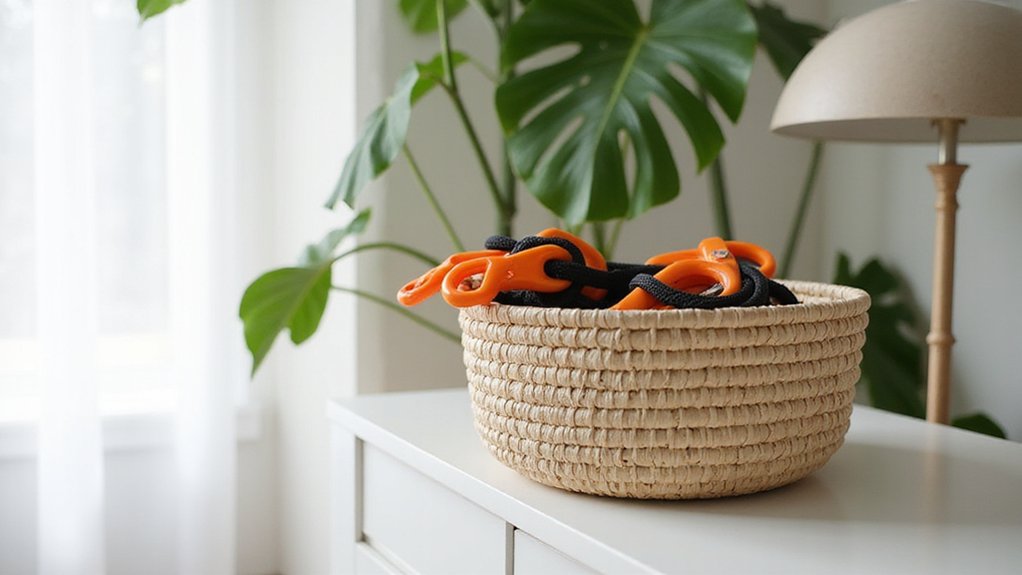
How to Store Bungee Cords: Simple Organizing Ideas
Struggling to keep your bungee cords neat and tangle-free? Proper storage can extend their lifespan and make your projects easier.
By following simple steps—like cleaning them before organizing and storing them in the right place—you can keep your cords accessible and in good shape.
Keep reading for straightforward tips to organize your bungee cords effectively.
How to Clean and Dry Bungee Cords Before Storage
Before storing your bungee cords, start by removing any loose dirt, such as mud, sand, or dust, using a soft cloth or brush. Shake out debris from the hooks and attachment points to ensure nothing is trapped inside. For more stubborn grime, wash the cords gently with mild soap and lukewarm water, using a soft sponge to scrub lightly. Avoid harsh chemicals or bleach, as these can damage the elastic material. Rinse thoroughly to eliminate all soap residue and prevent any build-up. For securely securing items like a kayak to your vehicle, consider top cam straps designed for heavy-duty use. If you prefer a more versatile carrier, a collapsible folding wagon can simplify transporting your gear. For families looking to haul larger loads, a cargo bike offers an excellent alternative for everyday transport.
Next, dry the cords properly to prevent damage during storage. Air dry them in a well-ventilated area until completely dry—this can take several hours depending on humidity. Do not use heat sources like hairdryers, radiators, or direct sunlight, as excessive heat can weaken or deform the elastic. As your cords dry, inspect them for cracks, fraying, or exposed fibers. Any signs of damage mean they should be replaced because cleaning cannot restore lost strength. Once fully dry and inspected, they are ready to be stored safely.
Never Store Bungee Cords Under Tension
Never store bungee cords under tension. Keeping them stretched or taut for extended periods causes long-term damage to their elastic core, reducing both bounce and overall lifespan. To maintain their elasticity, always ensure the cords are completely relaxed when stored. Locking a cord in a stretched position prevents it from returning to its natural shape, leading to a loose, saggy condition over time. This not only diminishes performance but also creates a safety hazard, as a recoiling cord can unexpectedly rebound if it slips. Avoid hooking cords end-to-end or wrapping them tightly around storage pegs, as these practices store energy that degrades the latex or rubber. Instead, always return each cord to a slack, neutral position, keeping it relaxed and intact for longer durability and safety. For a safer approach, consider using furniture dollies to transport heavy items without straining bungee cords. Unlike bungee cords, cam buckle straps provide a secure tie-down without stored elastic energy. To protect carpet surfaces when moving heavy items, furniture sliders for carpet offer a smooth glide that prevents damage and reduces strain on securing equipment.
Best Ways to Hang Bungee Cords for Quick Access
To hang bungee cords for quick access, use wall-mounted storage solutions that keep cords organized and visible. Mount a wire shelf either horizontally or vertically, with its openings serving as hanging points for individual cords. This setup allows you to grab the right cord instantly without untangling a jumble. Alternatively, install a pegboard or wall hooks, placing each cord on a dedicated hook to keep them separated and easy to reach. For a compact, grid-like arrangement, drive screw-eyes into a wall strip in staggered rows, creating a quick and adjustable hanging system. Using closed-loop holders designed specifically for cords helps keep them off the floor and prevents tangling. Adding color coding by hook or shelf section allows you to identify and select the correct cord at a glance. Label each hook or section with the cord’s intended use, streamlining the retrieval process. For tight spaces, consider overhead lines or open-frame racks, ensuring they’re mounted away from water sources and tripping hazards. Open storage options provide clear visibility, so you can regularly check the condition of your cords and ensure they’re ready for immediate use. For a portable alternative, a Bungee Buddy organizer with an adjustable buckle strap and sturdy handle keeps cords securely wrapped and tangle-free during transport or outdoor tasks. When mounting your hanging system, always perform a final safety check to confirm that all hooks and screws are securely fastened to prevent cords from falling. For those who frequently transport gear outdoors, a top-rated kayak cart can simplify moving heavy equipment while keeping bungee cords organized nearby. Apply similar secure-fitment principles from the Burley bike trailer guide to ensure your hanging system withstands daily use and load variations.
Sort Bungee Cords by Size, Strength, and Use
To efficiently sort bungee cords, organize them by length, diameter, strength, and use case. Start with length: short cords measuring 6 to 12 inches are ideal for securing bags and banners, while medium lengths are suitable for camping gear. Long cords spanning 36 to 60 inches work best for trailers and cargo. Next, sort by diameter: 3 to 6 millimeters for light-duty tasks like bundling; 6 to 10 millimeters are better for canopies and tarps; and 11 millimeters or more for heavy-duty marine or industrial applications. Keep load ratings visible—everyday cords handle 20 to 40 pounds, whereas heavy-duty options support 75 to 200 pounds. Assign clear use cases such as cargo securing, tarp fasteners, or home storage. For bicycle racks, using shorter bungee cords ensures a snug fit without excess slack. Implement a labeling system that includes size, strength, and category, and incorporate color coding to quickly distinguish light, medium, and heavy-duty cords at a glance. This method ensures you select the right bungee cord quickly and confidently, with no second-guessing. For heavy loads, consider also storing Garden Way carts to simplify transporting larger gear. For a similar approach to securing heavy loads, remember that correct ratchet strap technique is critical for avoiding common loosening errors.
Use Bins, Reels, or Tubes to Keep Bungee Cords Tangle-Free
Using Bins, Reels, or Tubes helps keep bungee cords tangle-free by matching storage solutions to how often you use them. For bulk storage, clear, stackable bins are ideal because they allow you to see and access multiple cords at once. Label the bins and use color coding for quick identification. This approach also prevents the hooks from catching on each other when cords are piled loosely. For those who need heavy-duty organization, consider building a truck kayak carrier to store large gear alongside your cords. Selecting a lawn mower cart that fits your yard tools can also complement your storage system. Understanding the difference between a ball mount and hitch ball helps ensure your storage cart connects securely.
Reels are best for cords you use frequently, as they let you wind and unwind quickly without snagging. This setup reduces friction and makes cord deployment smooth. Make sure to wind the cords tightly and neatly to prevent tangles.
PVC tubes offer compact, portable storage for cords you need on the go. Put the cords inside with end caps on each side to prevent knots and tangles during transport. This method keeps the cords protected and organized in tight spaces.
Using the right container type for each situation prevents hook-to-hook tangles that can happen from loose piles. Always return each cord to its designated spot after use to maintain order. When stored properly, your cords stay organized, easy to find, and ready when you need them.
Protect Stored Bungee Cords From Heat, Sun, and Abrasion
To protect stored bungee cords from heat, sunlight, and abrasion, store them in a cool, dry, shaded area. Avoid leaving them in hot vehicles or near heaters, as high temperatures accelerate rubber deterioration. Use opaque containers or shaded cabinets to shield cords from ultraviolet light; clear containers on sunny walls allow UV rays to damage the material. Even inside, unfiltered daylight can age the cords over time. Always follow the manufacturer’s load ratings to prevent overstretching during use, which can create micro-tears that worsen with improper storage. For additional protection during transport, consider using a padded sleeve or wrapping the cords in a soft cloth to mimic the easy DIY wagon handle upgrades that shield straps from friction. Check the elastic core regularly for signs of cracking, as heat exposure accelerates this failure point.
Prevent abrasion by keeping the cords away from rough surfaces, sharp edges, and metal hooks. Avoid dragging them across concrete or placing them against unfinished wood. Instead, use padded or smooth-contact surfaces to prevent sheath damage. Store the cords relaxed, free of tension, in a dust-free and well-ventilated space. This combination of cool temperatures, light protection, and gentle handling helps keep your bungee cords durable and ready for use.
How to Recheck Elasticity Before Reusing Stored Bungee Cords
To recheck elasticity before reusing stored bungee cords, start with a simple stretch test. Gently pull each cord and then release it, observing how quickly and fully it snaps back to its original length. Compare this to a known good cord or your recorded baseline. If it stretches significantly more under light load or takes longer to recoil, internal fatigue may have set in, indicating it’s time for retirement.
Next, measure how much the cord elongates under a small, consistent load—typically a light pull that doesn’t stress the cord too much. An increase in elongation compared to the baseline suggests reduced strength and elasticity. If the elongation exceeds the service limits you’ve recorded, the cord should be replaced. For added stability during this test, you can secure the cord around a solid anchor, much like how foam blocks provide a secure base for kayaks.
In addition to elasticity, inspect the entire length of the cord with your hands. Look for fraying, cuts, hardened or stiff spots, or uneven sections. Pay particular attention to the ends and connectors, as these are common weak points. Visible damage combined with poor recoil or increased stretch confirms the need for replacement. Any cord that feels different or fails these tests should be considered unsafe. Always log your findings and replace cords that no longer meet safety standards. Your safety depends on cautious, thorough checks. This inspection method parallels the approach used for office chair casters, where systematic checking of connection points prevents mechanical failure.