
Wheelbarrel or Wheelbarrow? The Correct Spelling Explained
Have you ever wondered how to spell that handy gardening tool—wheelbarrow or wheelbarrel?
The correct spelling is wheelbarrow, ending with “-ow,” much like “borrow.” People often confuse it because “barrow” sounds similar to “barrel,” but they’re different.
Keep reading to see why getting this right matters and how to remember it easily.
Why Everyone Misspells “Wheelbarrow” as “Wheelbarrel
Because “wheelbarrow” ends with a sound that’s nearly identical to “barrel” in casual speech, you’re likely to spell it as “wheelbarrel” when you write based on pronunciation alone. The subtle phonetic differences lead to a common mistake: hearing the last syllable as the familiar word “barrel,” rather than the less common “barrow.” Historically, the word combines “wheel” with “barrow,” an old term for a flat carrying frame. Nowadays, most speakers are less familiar with “barrow,” so your brain substitutes “barrel,” a more concrete noun that seems to fit the shape of the container. This phonetic confusion, often called an eggcorn, feels entirely logical because of how your speech compresses the middle syllables, making “barrow” sound even more like “barrel.” As a result, you frequently misspell it without realizing the mistake stems from how you speak, not from the word’s true origins. For example, when moving heavy loads, you might need a furniture dolly instead. If you are swapping out old wheels for new ones, installing caster wheels requires the correct tools and a careful fitment check. For secure transport of such equipment on a trailer, choosing ratchet straps for boats ensures heavy gear stays fastened during transit.
Which Spelling Is Correct: “Wheelbarrow” or “Wheelbarrel”?
You should always spell it as wheelbarrow. The correct spelling combines “wheel” and “barrow,” reflecting its history as a tool used for carrying loads. Many people mistakenly write “wheelbarrel,” but this form is incorrect and not supported by any major dictionary. The word’s origin comes from the traditional gardening and construction tool, where the “barrow” refers to a type of cart or carrier. Its design evolved significantly from simple ancient single-wheeled conveyances to the versatile two-wheeled versions seen on modern job sites. Modern collapsible folding wagons offer easy transportation that is far more convenient than traditional wheelbarrows for hauling gear. When selecting a kitchen work table or storage solution, a utility cart can serve a similar purpose for moving heavy items. Remember, “wheelbarrel” is a common error—stick with wheelbarrow in your writing to avoid confusion or mistakes.
What Is a Wheelbarrow, Anyway? (Definition and Common Uses)
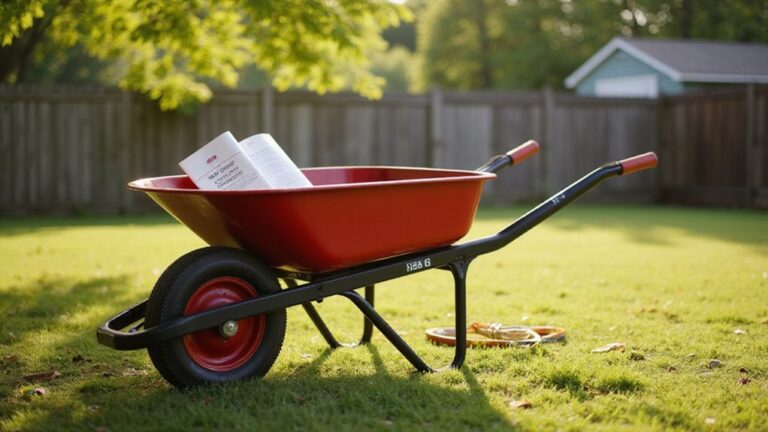
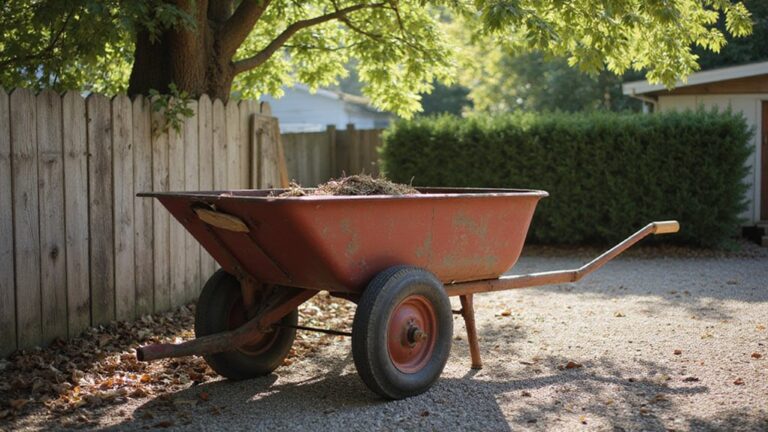
A wheelbarrow is a small, hand-propelled vehicle designed to move heavy or bulky loads with less effort. Its origins date back to ancient China, where it significantly improved farming and construction by enabling one person to transport materials that would otherwise require multiple trips. Typically, it features a single front wheel for balance, a tray or basin for the load, and two handles at the rear for pushing and steering. Different cultures have variations; some Asian models have a larger, central wheel suited for muddy terrain, while Western versions often have two wheels to improve stability on uneven ground. You can use it in your garden to carry soil, compost, or debris, and on construction sites to move cement, bricks, or gravel. This simple tool helps reduce the number of trips needed and lessens physical strain, making short-distance transport of heavy or awkward loads much easier. Unlike a DIY kayak cart, a wheelbarrow typically uses a single large wheel and a deep tray rather than a flat platform frame designed for hauling a watercraft. The overall design leverages the lever principle, placing the fulcrum at the wheel to multiply your lifting force at the handles.
Where the Word “Wheelbarrow” Really Comes From
The word “wheelbarrow” traces back to the 14th century, combining “wheel” from Old English *hweol* with “barrow,” an older term for a carrying frame or basket derived from the verb *beran*, meaning “to bear” or “to carry.” In Middle English, it appeared as *whele-barowe*, which simply described a device—a barrow fitted with a wheel—used for transporting loads. This invention was a significant step in the evolution of agricultural tools, allowing farmers to move heavier loads more efficiently. As the tool gained popularity, regional variations in its design emerged, but the name remained tied to the core “barrow” concept. Knowing this origin helps clarify why the correct spelling is “wheelbarrow” rather than “wheelbarrel”—the focus has always been on carrying, not a barrel. Proper load-shifting prevention techniques are crucial when moving heavy items on a wheeled frame.
The “Barrow” vs. “Barrel” Confusion in “Wheelbarrow
Although “wheelbarrow” is the correct spelling, many people mistakenly write “wheelbarrel” because “barrel” feels more familiar as a container word. This confusion happens because “barrel” is a common term for a round storage vessel, making it seem like the right choice. However, the original and correct word is “barrow,” which refers to a hand-cart used for carrying loads. Historically, “barrow” meant a simple carrying device, not a container. Both British and American English consistently use “wheelbarrow,” and reputable dictionaries recognize “barrow” as the proper form. Mixing “barrel” into the term combines two unrelated words—one for the device and one for the container—creating unnecessary confusion. Remember, “barrow” relates specifically to the carriage function, not a round storage shape. Sticking with “wheelbarrow” ensures clarity and correctness in your writing.
Why Your Pronunciation Tricks You Into Misspelling “Wheelbarrow
Regional accent influences can cause you to mispronounce “wheelbarrow,” which then tricks your brain into spelling it wrong. Your dialect might soften or merge vowel sounds, or even drop some consonants, especially at the end of words. As a result, you might hear “wheelbarrow” as something closer to “wheelbarrel,” leading you to write it that way on your first attempt. This auditory distortion makes it harder to remember the correct spelling because what you hear isn’t aligned with the standard pronunciation. Similarly, selecting the wrong cam straps for kayak can compromise both security and ease of use, just as a misheard word leads to a persistent spelling error. When hauling your kayak by bike, choosing a proper trailer system ensures your load stays stable and reduces the risk of accidents on uneven terrain, much like standardizing your pronunciation helps anchor the correct spelling in your memory. Just as replacing worn caster wheels requires identifying the correct size and load rating to ensure a lasting repair, matching your pronunciation to the standard spelling reinforces the correct written form.
3 Simple Tricks to Remember the Correct Spelling
To remember the correct spelling of “wheelbarrow,” apply these three simple tricks. First, split the word into wheel and barrow—not barrel. Visualizing the word as two familiar parts helps it stick. The double e in wheel and double r in barrow create distinct patterns that are easy to scan for. Second, use a meaning cue: a wheelbarrow carries loads, so it ends with barrow (which is associated with carrying). This connection links the spelling directly to its function. Third, create a quick checklist: verify that the word ends in -ow, not -el, and that the middle contains -rr-. When you mentally scan the word following these points, you reinforce the correct spelling and avoid mistaking it for barrel. These mnemonic tricks make remembering “wheelbarrow” straightforward and help prevent common misspellings. For further reinforcement, consider adding simple DIY handle upgrades to improve your wheelbarrow’s usability and comfort. For securely transporting these upgrades, using cam buckle straps ensures a tight and stable hold during movement. To protect your wheelbarrow when loading it with heavy sand or gear, adding a durable beach wagon can offer extra stability on soft terrain.
What Major Dictionaries Say About “Wheelbarrow” (and Why “Wheelbarrel” Is Wrong)
Major dictionaries like Merriam-Webster, Cambridge, and Longman all list wheelbarrow as the correct spelling. The primary entries consistently define it as a one-wheeled carrying cart. They do not include wheelbarrel as an accepted form. Instead, wheelbarrel appears only as a nonstandard or incorrect variant. The accepted spelling reflects the word’s historical roots in Middle English *wheel-barrow*, a compound of *wheel* and *barrow*, which was an old term for a carrying frame. The spelling -row maintains this original structure, whereas -rel has no basis in the language’s history or dictionary standards. Consequently, in formal writing, you should always use wheelbarrow to ensure correctness and clarity. When selecting gear, it helps to consult top bungee cord reviews to evaluate quality and value for practical tasks. This same attention to correct terminology is important when installing a truck bed extender safely, as precise language prevents confusion during setup. For instance, understanding correct ratchet strap loosening avoids the frustration of jammed mechanisms.
What Are the Most Common Spelling Mistakes With “Wheelbarrow”?
The most common spelling mistakes with “wheelbarrow” are due to how the word sounds and are often mistakes you can easily make if you’re not careful. Many people mistakenly write wheelbarrel because they associate the ending with the familiar word “barrel,” which sounds similar. Others split the word into wheel barrow or add a hyphen as wheel-barrow—both are common variations but are not correct. Regional speech patterns can reinforce these errors, especially when the ending sounds like “-rel,” leading to confusion. Memory-based mistakes also occur since “-barrow” is less familiar than the other forms. To avoid these errors, remember that the correct spelling is the single, closed compound wheelbarrow. Just as a Schwinn bike trailer requires precise assembly to avoid confusion, remembering the correct spelling of “wheelbarrow” prevents common errors. For instance, reading detailed product comparisons of similar equipment can clarify which features truly matter over time.
How to Use “Wheelbarrow” in Everyday Writing (Examples Included)
To use wheelbarrow naturally in your writing, treat it as a standard noun that pairs with action verbs like *push*, *load*, or *tip*. For example, you might write, “I loaded the wheelbarrow with soil” or “She tipped the wheelbarrow into the garden bed.” Use the singular form *wheelbarrow* when referring to one tool, and the plural *wheelbarrows* when there are multiple. Choose concrete verbs such as *wheel*, *fill*, or *store* to specify the action clearly. For instance, “You can store the wheelbarrow in the shed,” or “He wheeled the wheelbarrow across the yard.” Always include specific context words like *soil*, *gravel*, or *garden* to make your meaning immediately understandable.