What Is a Receiver Hitch? Classes, Sizes & Uses Explained
Have you ever wondered what a receiver hitch really is and how to pick the right one for your vehicle? It’s essentially a metal bar that bolts onto your frame, providing a square opening to connect trailers, bike racks, or cargo carriers.
The key is choosing the right class and size to match your hauling needs, whether light or heavy-duty.
Keep reading for the full breakdown.
What Exactly Is a Receiver Hitch?
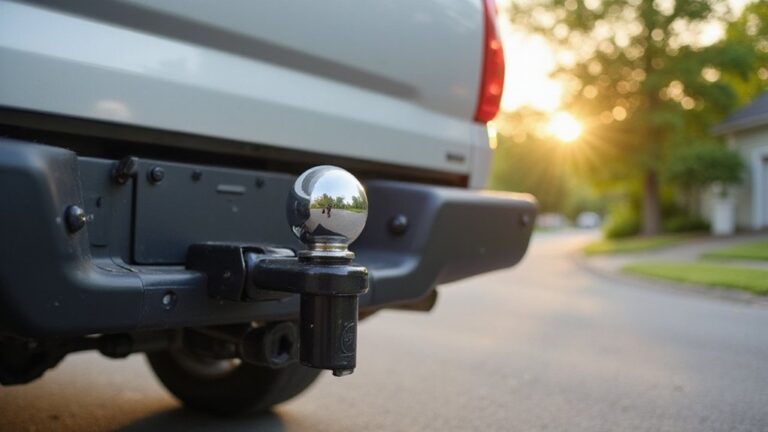
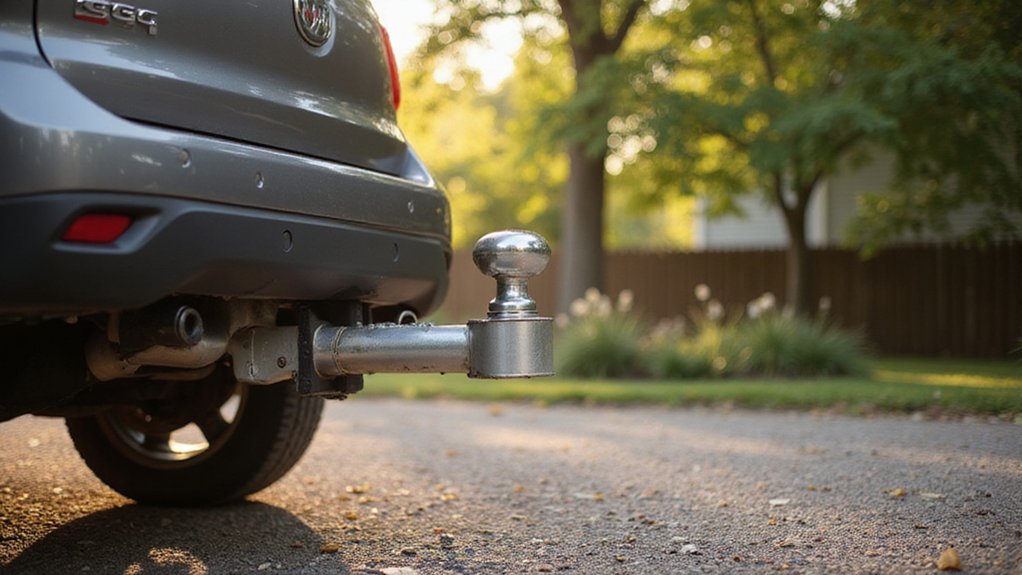
A receiver hitch is a device mounted directly to your vehicle’s frame that provides a standardized square tube opening for attaching various accessories. Its main function is to create a modular interface rather than a single-purpose mount, allowing you to swap out components as needed. The hitch is secured to the vehicle’s frame either by bolts or welding, forming a sturdy connection point for towing gear. For example, top cooler cart picks often rely on a receiver hitch for secure attachment during outings. Similarly, when performing a repair like a DIY Wheelbarrow Tire Repair, a receiver hitch can help transport the wheelbarrow to a work area. A common method for tangle-free storage of hitch accessories involves rolling them up neatly to avoid knots.
You insert compatible accessories into the receiver tube, which is hollow and shaped like a square. To prevent movement during use, you secure these accessories with a hitch pin or locking pin. This design standardizes the opening size, making it compatible with a variety of attachments such as ball mounts, bike racks, or cargo carriers. Because of this, you don’t need to replace the entire hitch assembly to change its function—simply swap out the accessory insert. The versatility and universal fit make receiver hitches the most common and practical option for towing and hauling needs.
Which Receiver Hitch Class Fits Your Vehicle?
The receiver hitch class that fits your vehicle depends primarily on your tow rating and the receiver opening size. Start by checking your vehicle’s maximum trailer weight rating; your hitch should never exceed this limit, since the lowest-rated component controls the maximum capacity. Your hitch’s hardware must stay at or below this number for safety and compatibility. Next, examine your receiver opening size: a 1-1/4-inch opening usually indicates a Class I or II hitch, suitable for lighter loads like small trailers or bike racks. A 2-inch opening corresponds to Class III or IV, designed for medium to heavy-duty towing, including larger trailers and SUVs. For the heaviest applications, such as large RVs or heavy equipment, look for a 2-1/2-inch or 3-inch receiver, which are classified as Class V. Always verify the specific weight ratings on your vehicle’s manual or the sticker inside the hitch door to ensure proper match and safety. Additionally, hitch classes describe load capacity and vehicle compatibility for proper selection. For securing motorcycles on these hitches, ratchet straps provide a reliable tie-down method that prevents shifting during transit. Before loading any cargo, confirm that your hitch’s total weight capacity accounts for the added stress of a furniture dolly when moving bulky items. For those needing to secure loads, reviews of the best strap for dolly can guide buyers to find the right fit.
Receiver Hitch Sizes: Which One Do You Need?
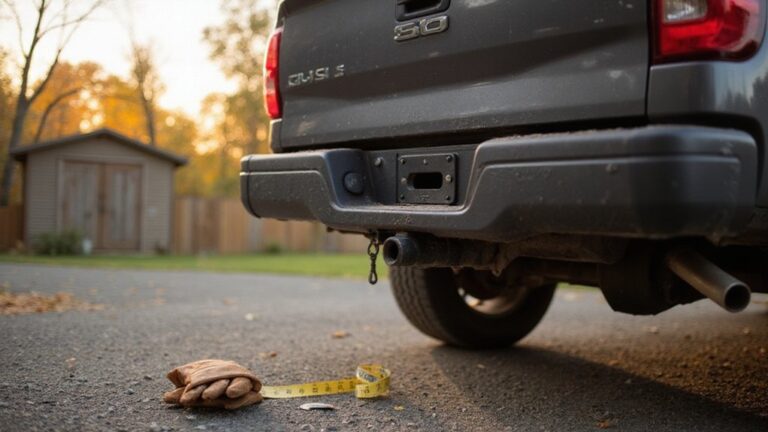
The receiver opening size you need is the one already on your vehicle or the one your towing demands. To determine it, measure the inside width of the square receiver from edge to edge using a tape measure or caliper. Common sizes are 1.25, 2, 2.5, or 3 inches. A 1.25-inch receiver typically suits compact cars and light SUVs, while a 2-inch receiver is standard for midsize vehicles and half-ton pickups. Heavy-duty trucks like 3/4 and 1-ton models usually use a 2.5-inch receiver. Always verify your receiver size before installing a hitch to ensure a proper fit for accessories. For attachments that don’t fit, a reducer sleeve can sometimes help, but a larger shank won’t fit into a smaller opening. Regularly clean your receiver to remove debris, which can interfere with proper alignment and towing security. Measure accurately first, then select the correct size. For lighter hauling needs, consider a folding wagon with brakes to conveniently transport gear without a traditional trailer. When choosing a hauler, understanding wheelbarrow strengths can help you decide between different types of equipment for yard work and transport tasks. For securing heavy loads during transport, using top ratchet straps ensures your cargo stays stable and safe.
What Can You Tow With a Class I or II Receiver Hitch?
A Class I receiver hitch can tow up to 2,000 pounds of gross trailer weight and supports a maximum tongue weight of 200 pounds. It’s suitable for small utility trailers, bike racks, or teardrop campers. Proper installation and following towing safety practices ensure you stay within these limits, maintaining safe handling and receiver durability. Both Class I and Class II hitches typically use a 1-1/4 inch receiver size. For yard work, knowing how many wheelbarrows in a yard helps you gauge the volume of materials you can haul with a small trailer. Understanding the difference between a ball mount vs hitch ball is crucial for selecting the correct attachment for your trailer coupler. For example, coupling the hitch to a yard cart for lawn mower can simplify transporting heavy loads like soil or mulch.
A Class II receiver hitch offers a higher capacity, with a maximum gross trailer weight of 3,500 pounds and a tongue weight of 350 pounds. It is ideal for towing small boat trailers, jet skis, or pop-up campers. Typically installed on minivans or crossovers, it provides greater towing flexibility. However, always verify your vehicle’s rated towing capacity and stay below both the hitch and vehicle limits to avoid compromised handling or safety hazards.
What Can You Tow With a Class III or IV Receiver Hitch?
Class III and IV receiver hitches are suitable for towing heavier loads, with capacities up to 8,000 pounds gross trailer weight (GTW) for Class III and up to 10,000 pounds GTW for Class IV. These hitches are ideal if you need to tow small travel trailers, utility trailers used for landscaping, boat trailers for personal watercraft, or cargo trailers. Both hitch classes use a 2-inch receiver opening, which is standard for most mid-sized towing needs. For example, a Draw-Tite 75599 Max-Frame Class III Receiver Hitch offers a 3,500-pound GTW rating for specific 2001-2006 Acura MDX and 2003-2008 Honda Pilot models.
Your towing capacity depends not only on the hitch class but also on your vehicle’s manual and the specific hitch model. Proper installation is essential for safety and performance. You can enhance capacity using weight-distribution systems on certain setups, but you must never exceed the lowest rated component in your towing system. Always verify the maximum towing weight with your vehicle’s specifications and the hitch manufacturer before attaching a load.
When Do You Need a Class V Receiver Hitch?
You need a Class V receiver hitch when your towing requirements surpass the limits of Class III or IV hitches. Typically designed for heavy-duty applications, these hitches are essential for hauling large travel trailers, multi-car haulers, or flatbeds with heavy equipment. They usually have a 2-1/2-inch receiver opening and offer gross trailer weight ratings ranging from 12,000 to 20,000 pounds, with tongue weights up to approximately 2,700 pounds. For users hauling lighter gear, a utility cart with drawers can offer convenient organization without needing a heavy-duty hitch. Securing heavy loads with a high-quality locking mechanism is vital, as the weight of the trailer and gear increases the risk of theft or accidental detachment. Regular inspection and maintenance of the hitch are crucial to ensure safety, especially given the high loads involved. Make sure to select trailer accessories like ball mounts and cargo carriers that match the receiver size to prevent compatibility issues. Although weight-distributing systems can increase your capacity, the towing limits of your vehicle still govern safe operation. While a Class V hitch offers the highest capacity, a Class IV hitch may be a more practical choice for everyday towing needs that don’t require the extreme ratings. Avoid choosing a Class V hitch unless your loads often exceed the maximum capacities of lighter classes, to ensure both safety and optimal performance.
How to Match Your Trailer Weight to the Right Hitch Class
To match your trailer weight to the right hitch class, start by using the fully loaded trailer’s gross trailer weight (GTW) and tongue weight and compare them to the hitch’s ratings. Do not rely on the empty trailer weight—cargo, fluids, and additional gear all add significant weight. For example, a Class I hitch handles up to 2,000 pounds GTW and 200 pounds of tongue weight, making it suitable for light loads. Step up to a Class II hitch, which supports up to 3,500 pounds GTW and 350 pounds tongue weight, ideal for small utility trailers. For mid-size campers or larger trailers, a Class III hitch manages up to 8,000 pounds GTW and 800 pounds tongue weight. Heavy-duty setups that exceed these weights should use Class IV hitches rated for up to 10,000 pounds GTW and 1,000 pounds tongue weight, with some Class V hitches built for commercial towing up to 20,000 pounds. Understanding the principles of a hand truck can help clarify how leverage and load balancing apply to trailer tongue weight management. Caster wheels on a hand truck provide stable maneuverability when moving heavy loads, similar to how a properly balanced trailer tracks smoothly. Always verify that your vehicle’s tow rating exceeds or matches the trailer and hitch combination. The receiver size may be the same, but compatibility depends on your vehicle’s maximum towing capacity. Use load distribution techniques when necessary to keep the tongue weight below the hitch’s maximum rating for safety and control. It’s wise to build in a safety margin by choosing a hitch class rated above your trailer’s fully loaded weight, ensuring a safer, more reliable towing experience. Applying proper tension to your ratchet straps secures the load against shifting during transit, just as hitch class selection ensures your trailer weight is safely managed.
Why Receiver Hitch Weight Limits and Adapters Matter
The lowest weight rating in your towing setup determines the maximum safe load you can haul. Every component—from the receiver hitch to adapters and accessories—has its own weight limit, and you must stay within the smallest rating among them. Adapter geometry plays a crucial role because moving the load farther from the hitch pin increases leverage, often cutting your tongue weight capacity by up to 50%. It’s important to note that using a reducer sleeve does not reduce load capacity; it simply changes the physical size of the opening. However, it does not alter the load distance or leverage effect, so the same safety considerations apply.
Always check each component’s weight rating against safety regulations, not just the receiver’s class rating. Ignoring a lower-rated adapter can overload your trailer frame or lead to instability, especially when attaching heavier items like bike racks or cargo carriers. For weight distribution systems, confirm whether separate adapter ratings exist, as they do not automatically override your receiver’s maximum capacity. Ultimately, you must prioritize the lowest rating in your entire towing chain to ensure safe and stable hauling.