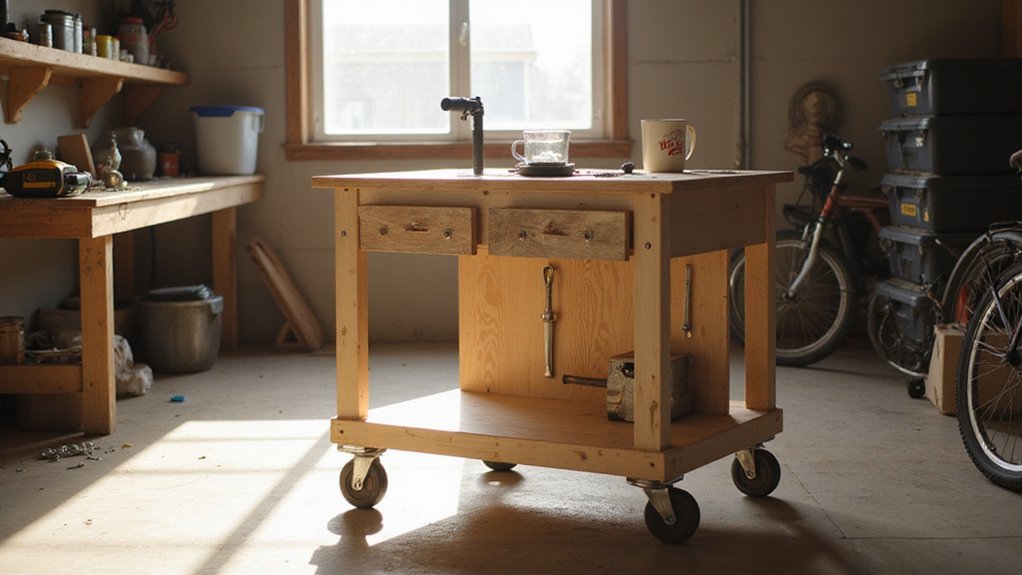
DIY Shop Cart: Build a Rolling Garage Workstation
Struggling to keep your tools organized and accessible in your garage? Building a rolling workstation might be just what you need for a workspace that moves with you and keeps everything within reach.
With sturdy materials and smart storage features, your new cart will handle heavy loads and help streamline your projects.
By the end, you’ll know how to build a durable, mobile garage workstation that keeps your gear organized and ready to go.
Keep reading for the step-by-step instructions to make this practical project yours.
What a Rolling Shop Cart Does That Workbenches Can’t
A rolling shop cart offers unmatched mobility that a fixed workbench can’t match. By allowing you to move your tools and supplies directly to your project, it eliminates the need for constant trips back and forth. This hands-on approach keeps your workspace more dynamic and efficient. Keeping your most-used tools on a rolling cart means everything is within arm’s reach as you work, helping you complete tasks faster and with fewer interruptions.
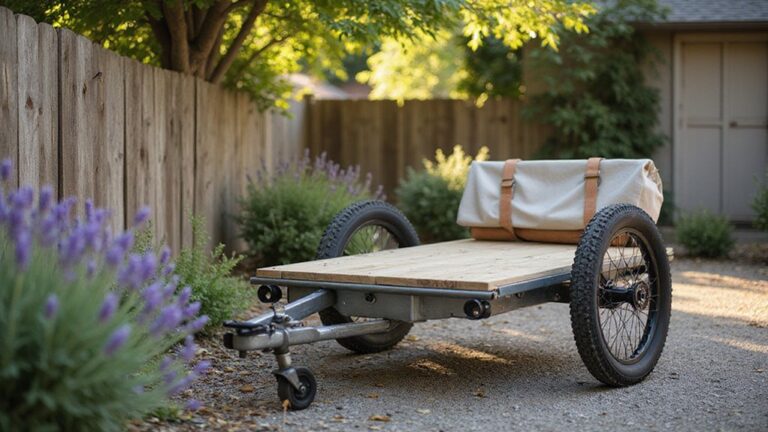
For larger projects or when working on multiple areas, you can easily reposition the cart without breaking your workflow. Locking casters add stability during use, so your tools stay put when you need them—no accidental rolling or shifting. This setup also reduces clutter, which decreases trip hazards and creates a safer work environment. Overall, a rolling shop cart enhances your productivity by bringing the tools and materials right to your work zone, keeping your workflow smooth and your workspace organized. To further secure heavy items on the cart, top-rated bungee cords offer reliable elasticity and durable hooks for safe transport. Understanding the capacity of a wheelbarrow helps you gauge how much material you can haul in a single trip when loading your cart for outdoor projects. For those adapting the cart to haul long gear, the bike kayak trailer design principles can guide how to build an extended frame for larger loads.
What Size Rolling Shop Cart Fits Your Garage?
The ideal rolling shop cart size depends on your garage’s available floor space. Aim for a cart that is 18 to 24 inches wide if your garage is tight, as this preserves access and maneuverability. For more spacious garages, a wider cart—up to 36 inches—can emulate a complete workstation without obstructing movement. Depth matters too: if your cart exceeds 24 inches, you’ll need at least a 36-inch aisle to navigate comfortably. The height of your cart should match your work surface so you can transfer parts easily without bending or stretching. Knowing how to properly release tension prevents damage when loosening ratchet straps to unload heavy items. For securing heavy loads on your cart, consider top ratchet straps from the truck industry for reliable tie-downs. Choosing models built for high-quality performance ensures your cart stays stable during heavy use.
Before settling on a size, use painter’s tape to outline the cart’s footprint on the garage floor. This simple test helps you visualize how it fits and ensures it won’t block car doors or restrict circulation. Remember that your cart’s dimensions directly influence your tool organization and material accessibility, so choose a size that balances storage needs with your garage’s layout.
Best Plywood and Materials for a Long-Lasting Build
For your shop cart’s top and frame, selecting the right plywood is essential to ensure durability and stability. Opt for void-free birch or furniture-grade sheets, as they stay flatter and resist screw pullout better than standard construction plywood. This reduces warping and splintering over time. To enhance moisture resistance in a garage environment, seal all edges with polyurethane or add hardwood edge banding. Laminating two 3/4-inch birch sheets creates an ultra-stiff, 1½-inch top that can support heavy tools without flexing. Avoid marine-grade plywood for this dry build; instead, choose MR-grade or quality birch for a good balance between durability and cost. Finally, adding a sacrificial hardboard layer on top allows for easy replacement when worn, saving you from rebuilding the entire cart. For moving heavy tools onto the cart, consider integrating a furniture dolly to simplify repositioning. When you are ready to fasten the frame together, always perform a final safety check on all clamps and bolts to ensure nothing shifts during use. Since the cart will often be rolled over uneven garage floors, equipping it with pneumatic wheels improves shock absorption and maneuverability compared to rigid casters.
Which Casters Work Best for a Rolling Shop Cart?
Choosing the best casters for your shop cart depends mainly on your flooring and load requirements. Heavy-duty swivel casters with a total-lock feature are ideal, as they provide stability and control during use. Polyurethane wheels are a versatile choice—they handle smooth concrete floors well while supporting heavy loads without damaging the surface. Rubber or TPR wheels offer quieter operation, which is helpful when noise is a concern. Nylon or steel wheels are extremely durable but can be harsher on your floors and may add weight to the cart. Locking features are essential for safety; total-lock casters lock both the wheel’s rotation and swivel movement, preventing your cart from drifting on uneven or inclined surfaces. This stability is especially important when working with power tools like drills or planers. Larger diameter wheels, typically 4 or 5 inches, roll more easily over cracks and thresholds, reducing the effort needed to move your cart. For rough concrete floors, opting for bigger wheels made from resilient compounds ensures smoother movement and reduces wear. Usually, two locking casters are sufficient to keep your cart steady while maintaining maneuverability. For instance, a single 4-inch polyurethane wheel can support up to 450 pounds, demonstrating the substantial weight capacity of these casters. Quality bungee cords with clips can also be useful for securing tools or materials to your cart during transport. To further prevent your cart from shifting during heavy use, consider applying techniques for load-shifting prevention that are commonly used to secure kayaks on roof racks. Regularly cleaning debris and dirt from the wheel bearings and treads with a simple damp cloth and mild soap will keep your casters rolling smoothly and extend their lifespan.
How Much Weight Can Your Cart Handle?
The total weight your shop cart can handle depends on its load capacity, which includes the cart’s own weight plus all tools and materials stored. Typically, aiming for a total capacity between 400 and 500 pounds is a good baseline for medium-duty gear. However, it’s crucial to select a caster rating that exceeds your expected maximum load to ensure safety and longevity. Remember, only three casters bear weight at any given time when the cart is rolling over uneven surfaces or ramps, which effectively reduces capacity. Always factor in the dynamic load—how the cart performs under movement—rather than relying solely on static weight ratings, as furniture dolly capacity often decreases significantly under rolling conditions. For securing heavy loads during transport, you can use ratchet straps designed for marine-grade strength and corrosion resistance. Overestimating capacity and overconstructing your build helps prevent tipping, caster failure, and other safety risks. For a similar approach, you can model your base on a milk crate design for a sturdy and lightweight frame.
Storage Layouts That Keep Tools Visible and Accessible
Vertical zoning is the first step to an effective storage layout. Use pegboards and magnetic strips on side walls and back panels to keep your most-used tools visible and within reach. These quick-access organizers allow you to spot missing wrenches instantly and eliminate the need to dig through drawers, saving time. Hooks and rails can hold various hand tools, freeing up deep drawers for bulkier gear like larger power tools and hammers. Arranging vertical spaces efficiently sets the foundation for a streamlined and accessible tool storage system. For those who prefer a ready-made solution, investing in a cart with high-quality wheels ensures mobility and stability comparable to a custom build. Reviewing models with heavy duty utility cart features can help match the performance and value of your own build. Before finalizing your design, compare options based on weight capacity and frame material to ensure your workstation handles everything from lumber to toolboxes without sagging.
Build Sequence: Square the Carcass First
To ensure your shop cart is square from the start, address the carcass first. Use your square and a measuring tape to check that all corners are at 90 degrees. Start by making precise, flat cuts on your stock—any twist or misalignment there will carry through the entire build. Dry-fit all components before fastening anything down; this helps you spot potential issues early. Measure diagonals from corner to corner—if they’re equal, your frame is square; if not, you need to correct it. Always apply even pressure when using clamping tools to avoid warping the frame during adjustments. For a rolling workstation, consider the best yard carts for inspiration on durable wheel and frame designs.
To fix a skewed carcass, use clamps or wrap a tightened twine loop around the longer diagonal. Gently pull to shorten it until both diagonals match. Apply even pressure to avoid bowing the frame. Once it’s square, secure it with the back panel or a fixed shelf to lock everything in place. Avoid using the back panel as a way to straighten a crooked carcass—this can cause additional distortion. Recheck the squareness after attaching major components to catch any drift early. Following this sequence—assemble, measure, correct, then attach panels—ensures your shop cart remains true and minimizes headaches during assembly.
Smart Add-Ons That Turn Your Cart Into a Workstation
Adding smart features transforms your shop cart into a fully functional workstation. Start by mounting a power strip on an upright to keep plugs off your work surface and reduce cord clutter. This setup allows you to easily access power without tangling cords or creating hazards. Incorporate dedicated charging stations for cordless tool batteries and chargers so you can quickly swap out power sources without searching for outlets. For improved maneuverability, swapping fixed wheels for locking swivel casters enables 360° movement and secure stabilization during work.
For cable management, route cords through covered channels or ducts to protect wiring and keep your workspace tidy. Use hook-and-loop fasteners to bundle cables together, making it simple to adjust or reorganize your tools as needed. Install adjustable task lighting near the front edge of the cart to illuminate your work area and minimize shadows during detailed assembly or inspections.
Locking swivel casters ensure stability when the cart is stationary, while soft-tread wheels protect your floors during movement. With these smart add-ons, your cart becomes a versatile workstation that improves efficiency and organization.